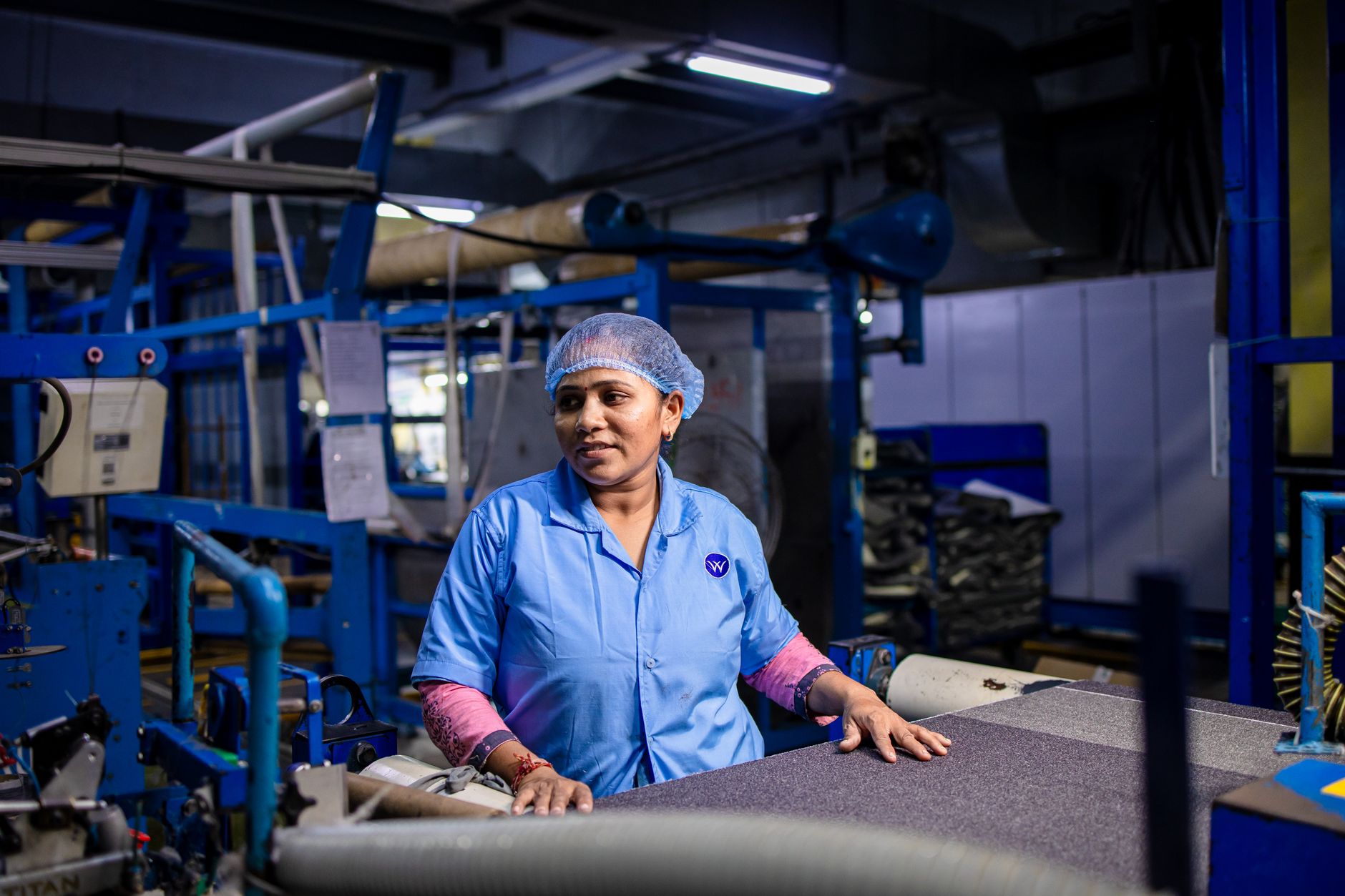
Union Minister Ashwini Vaishnaw recently announced a significant development for India's manufacturing sector, stating that 10% of Micron Technology's global manufacturing output is expected to be based in India. This statement, made during a period of intense focus on boosting domestic production and attracting foreign investment, signals a major step forward in India's ambition to become a global manufacturing hub. The announcement highlights the growing confidence in India's capabilities and its potential to integrate into complex global supply chains.
Micron's Investment and India's Manufacturing Ambitions
Micron Technology, a leading global provider of memory and storage solutions, has committed to a substantial investment in India. This investment is not just about setting up a manufacturing facility; it represents a strategic move to leverage India's growing talent pool, its improving infrastructure, and the government's supportive policies. The 'Make in India' initiative, coupled with the Production Linked Incentive (PLI) schemes, has created a conducive environment for global companies to establish and expand their manufacturing operations in the country. Vaishnaw's statement underscores the success of these initiatives in attracting high-value manufacturing, particularly in the semiconductor and electronics sectors, which are critical for modern economies.
The Significance of Semiconductor Manufacturing in India
The semiconductor industry is the backbone of the digital economy. Chips are essential components in everything from smartphones and computers to automobiles and advanced defense systems. Historically, India has been a consumer rather than a producer of semiconductors, relying heavily on imports. This has created vulnerabilities in its supply chains and limited its technological self-reliance. Micron's investment in India, particularly in manufacturing, is a game-changer. It signifies a shift towards domestic production of these critical components, reducing import dependence and fostering innovation within the country. The establishment of a significant manufacturing footprint will not only create jobs but also catalyze the growth of ancillary industries and R&D capabilities.
Eligibility and Requirements for Manufacturing Investment
While the specifics of Micron's project are proprietary, general eligibility criteria for large-scale manufacturing investments in India typically involve:
- Significant Capital Investment: Projects usually require substantial financial commitment, often in the billions of dollars.
- Job Creation Potential: The ability to generate a large number of direct and indirect employment opportunities is a key factor.
- Technology Transfer and Skill Development: Companies are expected to bring advanced technology and contribute to upskilling the local workforce.
- Alignment with National Priorities: Investments that align with government objectives, such as boosting exports, reducing imports, or promoting high-tech manufacturing, receive preferential treatment.
- Compliance with Regulations: Adherence to environmental, labor, and other regulatory standards is mandatory.
The Indian government, through various agencies, facilitates such investments by providing a single-window clearance system, offering incentives, and ensuring policy stability. For a company like Micron, the eligibility would be assessed based on the scale of its proposed operations, the technology it brings, and its long-term commitment to India.
Documents Required for Major Manufacturing Projects
Setting up a large manufacturing unit involves extensive documentation. While the exact list varies, common requirements include:
- Project Proposal: Detailed project report outlining the scope, technology, investment, employment generation, and expected output.
- Environmental Clearances: Approvals from the Ministry of Environment, Forest and Climate Change and state pollution control boards.
- Land Acquisition Documents: Proof of land ownership or lease agreements.
- Industrial Licenses: Approvals from relevant industrial promotion agencies.
- Financial Viability Reports: Audited financial statements and projections.
- Memoranda of Understanding (MoUs) or Agreements: With government bodies or other stakeholders.
- Tax Registrations: GST registration, PAN, etc.
The government often streamlines these processes for strategic investments to expedite project execution.
Charges, Fees, and Incentives
Large manufacturing projects, especially in strategic sectors like semiconductors, are often supported by a package of incentives rather than incurring significant charges. Key aspects include:
- Production Linked Incentives (PLI): Financial incentives provided on incremental sales of manufactured goods.
- Fiscal Incentives: Tax holidays, customs duty exemptions on capital goods, and concessional corporate tax rates.
- Infrastructure Support: Government assistance in developing necessary infrastructure, such as power, water, and logistics.
- Subsidies: Direct financial support for setting up facilities or for specific R&D activities.
While there are standard fees for various regulatory approvals and licenses, the overall financial package for strategic investments is designed to be highly attractive, often outweighing any initial charges.
Interest Rates and Funding
For a global manufacturing giant like Micron, the interest rates on loans for setting up facilities are typically influenced by global financial markets and the company's creditworthiness. However, the Indian government also plays a role through:
- Interest Subvention Schemes: Providing loans at subsidized interest rates for specific sectors.
- Facilitating Debt Financing: Assisting in securing long-term debt from Indian financial institutions or international lenders.
- Equity Participation: In some cases, government entities might consider strategic equity participation.
The focus is on making capital accessible and affordable to ensure the project's viability and competitiveness.
Benefits of Micron's Manufacturing in India
The establishment of Micron's manufacturing unit in India offers a multitude of benefits:
- Economic Growth: Significant contribution to GDP through investment, production, and exports.
- Job Creation: Direct employment for thousands and indirect employment for many more in supporting industries.
- Technological Advancement: Access to cutting-edge semiconductor manufacturing technology and know-how.
- Supply Chain Resilience: Diversification of global semiconductor supply chains, reducing reliance on single regions.
- Skill Development: Training and upskilling of the Indian workforce in advanced manufacturing techniques.
- Boost to 'Make in India': Reinforces India's position as a preferred destination for high-tech manufacturing.
- R&D Ecosystem Growth: Potential to foster a vibrant semiconductor R&D ecosystem in India.
Risks and Challenges
Despite the immense potential, there are inherent risks and challenges associated with such large-scale manufacturing projects:
- Geopolitical Factors: Global trade tensions and geopolitical shifts can impact supply chains and market access.
- Technological Obsolescence: The rapid pace of technological change in the semiconductor industry requires continuous investment in upgrades.
- Skilled Workforce Availability: Ensuring a consistent supply of highly skilled labor for specialized roles can be challenging.
- Infrastructure Gaps: While improving, certain infrastructure elements like consistent power supply and logistics might still pose challenges.
- Regulatory Environment: While supportive, changes in policies or regulations could impact long-term project viability.
- Competition: Intense global competition from established players in the semiconductor manufacturing space.
Mitigating these risks requires proactive planning, strong government-industry collaboration, and continuous adaptation.
Frequently Asked Questions (FAQ)
What is Micron Technology?
Micron Technology is a global leader in memory and storage solutions, providing innovative products like DRAM, NAND flash, and NOR flash memory for a wide range of applications, including computing, networking, and mobile products.
What is the significance of 10% global manufacturing in India?
It signifies a substantial commitment by Micron to establish a significant manufacturing presence in India, contributing to India's goal of becoming a global electronics manufacturing hub and diversifying global supply chains.
What kind of jobs will be created?
The project is expected to create a mix of jobs, including highly skilled roles in engineering, manufacturing operations, research and development, as well as semi-skilled and support staff positions.
When will the manufacturing facility be operational?
The timeline for operationalization typically spans several years, involving phases of construction, equipment installation, testing, and ramp-up. Specific details are usually announced by the company.
What role does the Indian government play?
The Indian government plays a crucial role by providing policy support, financial incentives (like PLI schemes), facilitating land acquisition, ensuring regulatory clearances, and supporting infrastructure development.
Is this related to India's semiconductor mission?
Yes, this investment is a significant development aligned with India's broader strategy to build a domestic semiconductor ecosystem, attract global players, and reduce import dependence.
What are the potential impacts on the Indian economy?
The impact is expected to be substantial, including increased GDP, job creation, technology transfer, development of ancillary industries, and enhanced export potential.
Are there any risks involved for India?
Potential risks include dependence on global market conditions, the need for continuous technological upgrades, ensuring a steady supply of skilled labor, and managing geopolitical uncertainties.
Disclaimer: This information is for general awareness and educational purposes only. It does not constitute financial, investment, or legal advice. Readers are advised to consult with qualified professionals before making any financial decisions. No guarantees are made regarding the accuracy or completeness of the information provided.