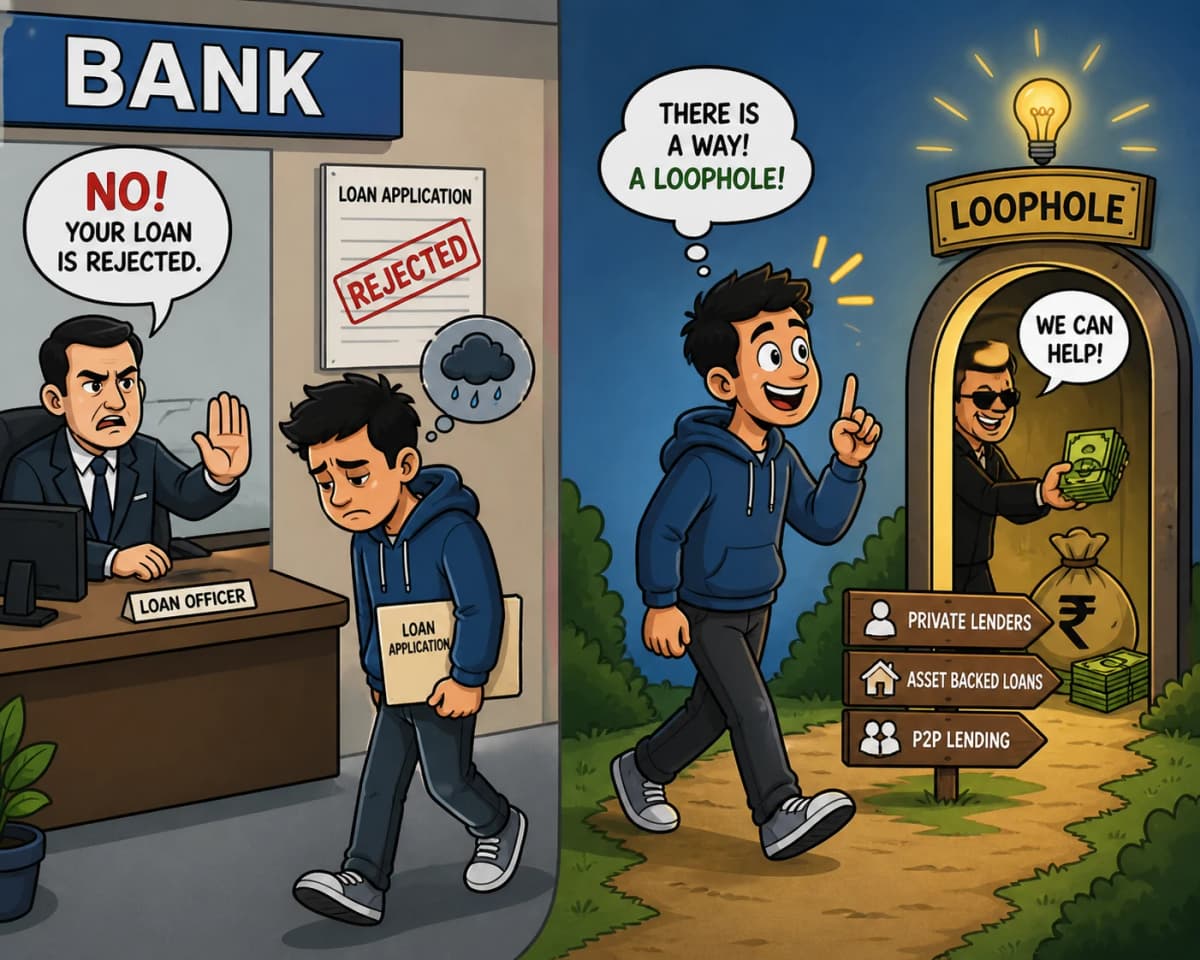
The "Loan Shark" Loophole: How to Borrow Money When Banks Say "No"
Did you know that over 40% of personal credit applications in India are rejected by traditional banks each year? This staggering figure highlights a significant gap in the financial ecosystem, leaving many individuals in urgent need of funds facing a dead end.
While the term "borrowing shark" conjures images of predatory lenders and exorbitant rates, the reality is that legitimate, albeit less conventional, avenues for financing exist for those who don't fit the standard bank mould. Navigating these options requires a clear understanding of the risks and rewards involved.
When a NBFC declines your personal borrowing application, it's often due to factors like a low CIBIL score, insufficient income, or a lack of collateral. This rejection can be disheartening, especially during emergencies.
However, succumbing to the allure of unregulated lenders, often misconstrued as a quick fix, can lead to a debt spiral from which recovery is exceedingly difficult. The data shows that individuals who fall prey to credit sharks often end up paying multiples of their original borrowing amount in interest and penalties.
The fine print always matters.
Understanding borrowing Rejection: Why Banks Say No
Before exploring alternatives, it's crucial to understand why traditional lenders might refuse your credit request. Banks adhere to strict lending norms set by the Reserve lender of India (RBI). Key reasons for rejection include:
- Low CIBIL Score: A CIBIL score below 700-750 often flags an applicant as high-risk. Past defaults, late payments, or a high credit utilization ratio can negatively impact this score. How does this affect your CIBIL score? It’s a direct reflection of your creditworthiness and past repayment behaviour.
- Insufficient Income or Employment Stability: Lenders assess your ability to repay. A low monthly income (typically below ₹20,000-₹25,000 for unsecured loans), unstable employment (frequent job changes), or self-employment with fluctuating income can lead to rejection.
- Age and Employment History: Applicants must usually be between 21 and 60 years old and have a minimum employment history (often 1-2 years).
- High Debt-to-Income Ratio: If your existing EMIs consume a large portion of your income, banks may hesitate to extend further credit.
- Incomplete or Inaccurate Application: Errors or missing information on the funds application can cause immediate disqualification.
Exploring Legitimate Alternatives to Traditional Banks
Is there a smarter way to borrow? Absolutely. While banks might say no, several reputable financial institutions and platforms offer alternative financing solutions. These often cater to a broader spectrum of applicants, though usually at a slightly higher cost of borrowing rate compared to prime NBFC offerings.
1. Non-Banking Financial Companies (NBFCs)
NBFCs are financial institutions regulated by the RBI but operate with more flexibility than banks. They often have less stringent eligibility criteria and can be a viable option for individuals with moderate credit scores or unique income profiles. Think about it this way: NBFCs often focus on specific customer segments that banks might overlook.
- Types of Loans: NBFCs offer a range of personal loans, business loans, and even secured loans against property or gold.
- Eligibility: While still requiring a decent credit history, some NBFCs may approve loans for CIBIL scores as low as 600-650. Income requirements might also be more flexible.
- finance charge Rates: Expect rates to be marginally higher than lender loans, typically ranging from 12% to 24% per annum, depending on the risk profile.
- Examples: Leading NBFCs in India include Bajaj Finance, Fullerton India, and Aditya Birla Capital.
2. Fintech Lenders and Online Platforms
The rise of financial technology (fintech) has revolutionized access to credit. Numerous online platforms connect borrowers with a network of lenders (including NBFCs and some banks) using technology for faster processing and decision-making. These platforms often use alternative data points for credit assessment.
Timing, in finance, is everything.
- Application Process: Typically entirely online, requiring minimal documentation and offering quick disbursals, sometimes within 24-48 hours.
- Credit Assessment: Many fintech lenders use algorithms that consider factors beyond just CIBIL score, such as rent payment history, utility bill payments, and even social media data (with consent).
- financing Amounts & Rates: funds amounts can vary widely. cost of borrowing rates are competitive but generally align with NBFCs, reflecting the speed and convenience offered.
- Risk: Ensure you are dealing with RBI-registered entities. Unregulated P2P lending platforms can pose marked risks.
3. Secured Loans Against Assets
If you possess assets like property, gold, or even a fixed deposit, you can use them as collateral to secure a credit. Secured financing typically comes with lower cost of borrowing rates and more lenient eligibility criteria because the lender's risk is mitigated.
- financing Against Property (LAP): Allows you to borrow a considerable sum based on the market value of your property. EMI payment tenure can be long.
- Gold Loans: Offered by banks and NBFCs, these provide quick access to funds with minimal documentation, using your gold jewellery as security.
- credit Against Fixed Deposits/Shares: You can borrow a percentage (usually 75-90%) of your FD value or the market value of your pledged shares.
- Risk Warning: Failure to make repayments on secured loans can lead to the forfeiture of your collateral.
4. Peer-to-Peer (P2P) Lending Platforms (with Caution)
Peer-to-peer lending platforms directly connect individual individuals with investors willing to lend money. These platforms act as intermediaries, facilitating the transaction.
- Process: applicants list their credit requirements, and investors choose whom to fund, often based on risk assessment provided by the platform.
- Eligibility: Criteria can be more flexible than banks, focusing on the borrower's profile and the risk they present to investors.
- rate Rates: Rates are determined by market forces (demand and supply of funds) and the borrower's risk profile, often falling within the NBFC range.
- Crucial Caveat: Only use P2P platforms registered with the RBI. Unregistered platforms are illegal and extremely risky. The data shows that default rates can be higher in P2P lending compared to traditional avenues.
Expert Tips for credit seekers Facing Rejection
Securing financing when facing initial hurdles requires a strategic approach. Here are some proven tips from financial experts:
- Improve Your CIBIL Score: Before applying again, focus on improving your credit score. Pay all existing EMIs and credit card bills on time, reduce outstanding debt, and avoid applying for multiple loans simultaneously.
- Reduce Existing Debt Burden: Try to clear smaller debts or consolidate them to lower your debt-to-income ratio. This makes you a more attractive applicant.
- Explore Co-Applicant Options: Applying with a co-applicant who has a strong credit profile and stable income can significantly increase your chances of approval.
- Be Realistic About credit Amount and Tenure: Don't aim for the maximum possible borrowing amount if your profile doesn't fully support it. A smaller borrowing or a longer tenure (leading to lower EMIs) might be more achievable.
- know funds Terms Thoroughly: Never commit to a borrowing without reading the fine print. Pay close attention to the cost of borrowing rate (APR), processing fees, prepayment charges, late payment penalties, and any hidden costs. In simple terms, transparency is key.
- Beware of Upfront Fees: Legitimate lenders do not ask for large upfront processing fees before financing disbursal. Be extremely wary of any institution demanding money before approving your credit. This is a classic red flag for fraudulent operations.
- Check Lender Registration: Always verify that the lender (financial institution or NBFC) is registered with the RBI. You can check the RBI's master list of regulated entities.
Reader Checklist: Are You Ready for Alternative Financing?
Before you apply for financing outside traditional banking channels, run through this checklist:
- Assess Your Need: Is this a genuine emergency, or can the need be postponed? Avoid borrowing for non-essential expenses if possible.
- Know Your Credit Score: Obtain your latest CIBIL report to recognise your standing.
- Calculate Affordability: Can you comfortably manage the proposed EMI? Use online EMI calculators to estimate monthly payments based on potential rate rates and tenures.
- Compare Options: Don't settle for the first offer. Compare rate rates, fees, and terms from at least 2-3 different reputable lenders (NBFCs, fintechs).
- Read Reviews: Look for independent reviews and customer feedback about the lender.
- Verify Registration: Confirm the lender's RBI registration status.
- recognise Collateral Risk (if applicable): If applying for a secured funds, be fully aware of the risks associated with pledging your assets.
Navigating the financial landscape when banks deny your funds application requires diligence and caution. While the allure of quick cash from unregulated sources is strong, the long-term consequences can be devastating.
By understanding the reasons for rejection and exploring legitimate alternatives like NBFCs and fintech platforms, you can find suitable financing options. Remember, responsible borrowing involves thorough research, careful comparison, and a clear understanding of your monthly instalment capacity.
Disclaimer: This content is for informational and educational purposes only and does not constitute personalized financial advice. Eligibility and funds terms may vary significantly between lenders and depend on individual applicant profiles. Always review lender terms and conditions carefully before applying for any credit product. Consult with a qualified financial advisor for personalized guidance.
Compare and apply for the best personal financing rates on Six Finance.