10 Lakh Home Loan Interest Rate Comparison: A Guide to the Best Market Deals
Building or purchasing a residential house is an excellent asset-building strategy for any family in India. When you look at a mid-range budget of 10 lakh, finding the right lender can significantly reduce your financial workload.
Even a tiny variation of 0.5% in the loan interest percentage can save or cost you thousands of rupees over your repayment tenure. Conducting a thorough 10 lakh home loan interest rate comparison helps you identify the cheapest lending options and keeps your monthly expenses under perfect control.
Direct Answer Snippets for Quick Reference
Which category of banks offers the lowest 10 lakh home loan interest rate?
Public sector banks in India currently offer the lowest starting interest rates for a 10 lakh home loan, generally ranging from 7.10% to 8.75% per annum. These competitive rates are typically reserved for salaried individuals who maintain a high credit score.
ClearTax
How much do private banks charge for a 10 lakh housing loan?
Major private sector banks provide highly efficient digital processing, with interest rates usually starting from 7.45% to 9.85% per annum. The final rate inside this bracket is carefully calculated based on your employment history, corporate profile, and existing banking relationship.
Can your credit history alter the compared interest rates?
Yes, your credit score is the foundational metric used during a 10 lakh home loan interest rate comparison. Applicants holding a CIBIL score of 750 or above unlock the absolute lowest interest brackets, whereas lower scores push you into much higher interest tiers.
Basic Home Loan+ 1
Sector-Wise 10 Lakh Home Loan Interest Rate Comparison
The Indian home loan market is divided into three distinct types of financial institutions. Each category operates under unique processing systems and targets different consumer segments.
1. Public Sector Indian Banks (The Budget Leaders)
State-backed lenders like the State Bank of India (SBI), Bank of Baroda (BoB), Central Bank of India, and Union Bank of India lead the market in affordability. Their entry-level home loan interest rates start heavily around 7.10% to 7.50% per annum.
The absolute benefit here is the minimal interest overhead, which keeps your monthly commitments low. The trade-off is that public institutions follow traditional, rigid document check models, meaning your file approval might require extra physical verification days.
2. Prominent Private Sector Lenders (The Speed Masters)
Established private institutions like ICICI Bank, HDFC Bank, and Axis Bank format their home finance packages between 7.45% and 10.05% per annum. While their interest rates sit slightly higher than government banks, they balance it with brilliant consumer convenience.
Private banks specialize in offering automated digital pathways, fast doorstep documentation processing, and provisional instant electronic sanction letters. They are an incredible choice if you need to close a property sale deal quickly without long administrative delays.
3. Non-Banking Financial Companies & HFCs (The Flexible Alternatives)
Housing Finance Companies (HFCs) like LIC Housing Finance, PNB Housing Finance, and alternative lenders cater to a wide customer base, with rates stretching from 7.50% to 11.50% per annum.
These firms are highly beneficial if your income papers do not fit standard banking criteria. If you are a self-employed small trader or lack formal income tax filings, HFCs provide custom-tailored relaxations that traditional banks do not permit.
Market Overview of Indicative Home Loan Interest Rates
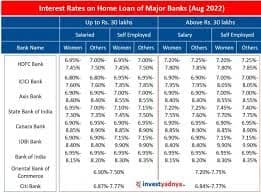
To give you a clear view of the current financial landscape, let let us analyze the baseline starting interest rates for major lenders in the housing sector.
Name of the Lender | Indicative Starting Interest Rate (Per Annum) | General Processing Fee Structure |
|---|---|---|
Central Bank of India | 7.10% onwards | Up to 0.50% of loan value |
Bank of Baroda | 7.20% onwards | Standard flat administration fees |
State Bank of India (SBI) | 7.25% onwards | 0.35% of the total loan amount |
HDFC Bank | 7.75% onwards | Up to 0.50% or standard minimum limits |
ICICI Bank | 8.50% onwards | 0.50% of the disbursed value |
Crucial Factors That Shifting the Compared Interest Rates
Lenders do not print a single standard rate sheet for every citizen. They utilize an individual risk matrix to finalize your exact interest percentage contract.
Policybazaar
The CIBIL Score Threshold
Your credit tracking sheet acts as your primary financial identity. Lenders look at this number first to evaluate how safely you handle your debts.
A score above 750 acts as a golden ticket during a 10 lakh home loan interest rate comparison. It places you straight into the lowest interest bracket, whereas a score below 650 can inflate your annual rate by 1% to 2%.
ClearTax
Salaried vs Self-Employed Matrix
Salaried individuals working with central government bodies, public sector units, or highly rated corporate multinational firms enjoy excellent interest drops. Lenders love predictable, steady monthly paychecks.
Self-employed business owners face slightly higher processing margins because their seasonal monthly revenues experience market fluctuations. Presenting clean, organized income records helps minimize this gap.
The Gender Concession Benefit
To encourage property ownership among women, almost all top Indian public and private lenders offer a special gender concession. Women primary applicants receive a flat interest drop of 0.05% per annum.
Fincash+ 1
While a 0.05% reduction feels microscopic on paper, it translates into a substantial amount of cash savings when calculated across a long 20 or 30-year loan life cycle.
How to Utilize This Comparison to Secure the Best Deal
Do not blindly apply to the bank that shows the lowest promotional headline rate on their public banner. Follow a systematic approach to secure the best deal.
First, check your personal credit score online to see where your profile stands. Next, request a complete, itemized fee breakdown from at least three different lenders to check for hidden charges like legal fees, valuation costs, and documentation taxes.
Finally, prioritize floating interest rate structures. Floating rates are benchmarked directly to the central bank's repo rate benchmarks. This model ensures that whenever the national credit market experiences downward interest trends, your loan rate drops automatically without any hidden manual requests.
Paisabazaar
Conclusion: Compare Wisely Before You Sign
Conducting an updated 10 lakh home loan interest rate comparison is the single most profitable step you can take before building your new home. Public sector banks remain the prime choice for raw interest savings, while private lenders stand unmatched in digital execution speeds and customer convenience.
Take time to polish your credit history score, keep your property legal documentation layout verified, and add an earning female family member as a co-applicant if possible. Plan your finances carefully, make an informed comparison choice, and build your real estate wealth with peace of mind.
Frequently Asked Questions (FAQs)
One: Does a lower interest rate mean a home loan has zero processing fees?
No, the interest rate and the processing fee are two completely separate financial charges. A bank might offer a very low interest rate but levy a higher upfront processing or administrative handling fee during the initial documentation checking phase.
Two: Can I transfer my active 10 lakh home loan to another bank if their rate is lower?
Yes, you can utilize the home loan balance transfer facility to move your remaining debt to a cheaper bank. Since regulatory laws prohibit foreclosure penalties on floating-rate housing loans, you can switch lenders easily to save on future interest.
Axis Bank
Three: Why do public sector banks usually offer lower home loan interest rates?
Public sector banks have access to massive volumes of low-cost capital through millions of retail savings and current accounts across the nation. This deep financial pool allows them to distribute home construction loans at much lower profit margins compared to private entities.
Four: What is the difference between a fixed and a floating home loan interest rate?
A fixed interest rate remains locked at a static percentage throughout your entire repayment timeline, shielding you from market changes. A floating rate shifts up or down in real-time sync with the Reserve Bank of India's benchmark lending policies.
Scripbox+ 1
Five: Can a joint application lower the interest rate on a 10 lakh home loan?
A joint application does not automatically reduce the baseline interest rate unless the primary applicant is a woman eligible for gender concessions. However, it combines your household incomes, which drastically improves your loan approval odds.
Six: Do banks charge higher interest rates for purchasing an open plot compared to a built house?
Yes, most Indian financial institutions classify standalone vacant land or plot purchases under a slightly higher asset risk index. As a result, plot purchase loans often carry an interest rate that is 0.50% to 1% higher than a standard home construction loan.