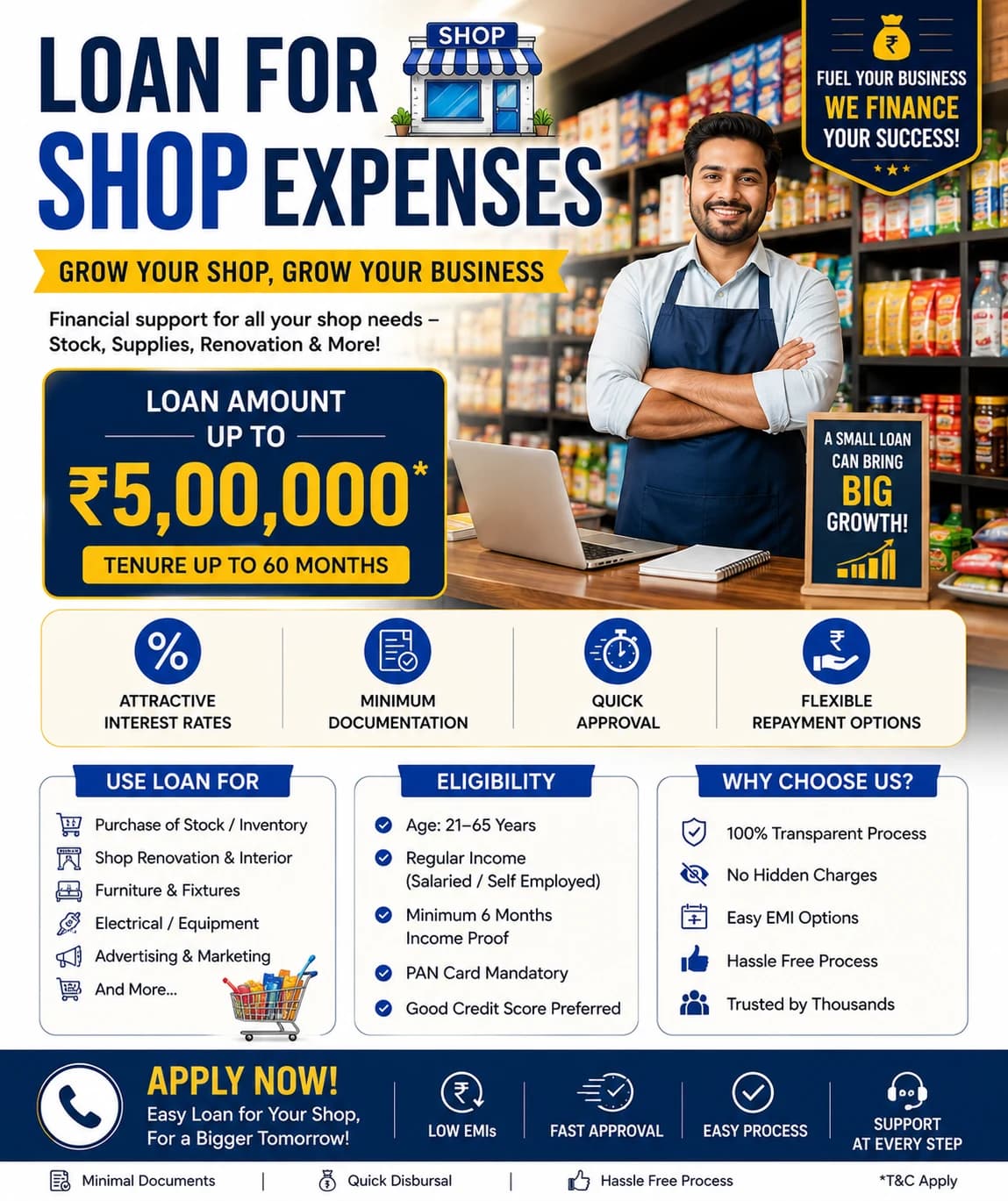
What is a loan for shop expenses?
A loan for shop expenses is a specialized commercial funding option designed to help retail store owners cover daily operational costs. You can use this money to buy inventory, pay monthly rent, upgrade store interiors, or manage cash flow gaps during slow business seasons.
How can a beginner apply for a shop business loan?
To apply for a shop business loan, you must first check your credit score and gather financial documents like bank statements. Next, compare different lenders, fill out an application form online or in person, and submit your proof of income for quick approval.
What are the main requirements for a retail store loan?
Lenders usually require your shop to be active for at least one to two years. You must also show a steady monthly turnover, provide clean bank statements, and hold a valid business registration certificate or shop license to qualify for funding.
Introduction
Running a retail store is an exciting journey, but it requires a steady flow of money. From buying fresh inventory to paying monthly utility bills, the costs can pile up quickly.
Many store owners face times when cash is tight, and that is completely normal. A loan for shop expenses can provide the financial boost you need to keep your business running smoothly without stress.
This guide will walk you through everything you need to know about getting a loan for your shop. We will explain the process in simple terms so you can make the best choice for your business.
Why Do You Need a Loan for Shop Expenses?
Every retail store has regular costs that must be paid on time to avoid disruptions. Securing a dedicated shop business loan helps you manage these costs without dipping into your personal savings.
Managing Monthly Rent and Utility Bills
The cost of renting a prime commercial space can be very high. A business loan ensures you can always pay your landlord on time, even during slow months when sales are down.
Purchasing Bulk Inventory
Buying stock in large quantities often gets you the best discounts from suppliers. You can use your retail store loan to buy bulk inventory ahead of busy festival seasons to maximize your profits.
Renovating and Upgrading the Store
A clean, modern shop attracts more customers and boosts sales. Funding allows you to install bright lighting, modern display racks, or a fresh coat of paint to make your space inviting.
Types of Loans Available for Retail Shops
Not all business loans are the same, so it helps to know your options. Different financial products serve different types of shop expenses.
Working Capital Loans
This type of funding is meant for short-term daily needs rather than long-term investments. A working capital loan helps you pay daily wages, cover minor repairs, and manage routine bills.
Term Loans for Business
A term loan provides a lump sum of money upfront, which you repay over a fixed period with interest. This option is perfect if you plan to expand your shop or open a second location.
Equipment Financing
If your shop needs specialized machinery, like a commercial refrigerator or a modern point-of-sale (POS) billing system, this loan is ideal. The equipment itself usually acts as security for the lender.
+------------------------+--------------------------+----------------------------+
| Loan Type              | Best Used For            | Repayment Period           |
+------------------------+--------------------------+----------------------------+
| Working Capital Loan   | Daily bills & inventory  | Short-term (1-12 months)   |
| Business Term Loan     | Expansion & renovation   | Long-term (1-5 years)      |
| Equipment Financing    | Billing systems & tools  | Medium-term (1-3 years)    |
+------------------------+--------------------------+----------------------------+
Basic Eligibility Criteria for a Shop Loan
Lenders want to make sure you can repay the borrowed money before they approve your application. Knowing the basic requirements will save you time and effort.
Age and Business Vintage
Most banks require the shop owner to be at least 21 years old when applying. Additionally, your retail store should be actively operating for at least one to two years.
Credit Score and Financial Health
A good personal and business credit score shows lenders that you are a responsible borrower. A score of 700 or higher usually unlocks lower interest rates and faster approvals.
Minimum Monthly Turnover
Lenders will check your bank statements to see how much money moves through your business. Having a steady, predictable monthly income proves you can handle the monthly loan repayments.
Documents Required to Apply
Gathering your paperwork beforehand makes the application process much faster. Most financial institutions will ask for the following standard documents.
Identity and Address Proof
You will need to provide official government-issued identification, such as a passport, driver's license, or national ID card. Proof of your home address is also required.
Business Registration Proof
Lenders need to see that your shop is legally registered. You can submit your local shop license, GST registration, or tax certificates to prove ownership.
Bank Statements and Tax Returns
You must typically share your business bank statements for the past six months. Sharing your recent income tax returns also helps verify your annual earnings.
Step-by-Step Process to Apply for a Shop Loan
Applying for financial help does not have to be confusing. Follow these simple steps to ensure a smooth application experience.
Step 1: Calculate Your Financial Need
Sit down with your ledger and write out exactly how much money your shop needs. Avoid borrowing more than necessary, as you will have to pay interest on the total amount.
Step 2: Compare Different Lenders
Do not accept the very first offer you receive. Look at multiple banks and online lenders to compare interest rates, processing fees, and repayment terms.
Step 3: Fill Out the Application Form
Once you choose a trusted lender, complete their application form accurately. Double-check that your contact details and business information match your official documents.
Step 4: Submit Documents and Await Approval
Upload or hand over your paperwork to the lender. Their team will review your application, verify your shop's performance, and send you an approval decision.
Common Mistakes to Avoid When Borrowing
Getting a loan is a big responsibility, and making errors can hurt your business finances. Be aware of these common pitfalls before you sign any contract.
Borrowing Without a Clear Plan
Never take out a loan just because it is available. Always have a specific plan for how every single dollar will be spent to grow your retail store.
Ignoring Hidden Fees and Charges
Some lenders hide extra costs in the fine print, such as high processing fees or prepayment penalties. Always ask for a complete breakdown of all charges before finalizing the deal.
Skipping the Terms and Conditions
It can be tempting to skip reading the long contract, but this is a mistake. Understand your monthly repayment dates and the penalties for late payments to protect your credit score.
Conclusion
Securing a loan for shop expenses is a smart and practical way to keep your retail business growing. Whether you need to restock your shelves, renovate your storefront, or manage unexpected daily bills, the right funding keeps your dreams alive.
By understanding the eligibility criteria, preparing your documents, and comparing lenders, you can find a safe and affordable loan. Remember to borrow responsibly and use the funds wisely to build a successful future for your shop.
Frequently Asked Questions (FAQs)
Can I get a loan for shop expenses if my business is brand new?
Yes, you can get a loan for a new shop, but options might be limited. Startups usually need to look into specialized government schemes, microloans, or provide personal collateral to secure funding, as traditional banks prefer businesses with a track record of at least one year.
What is the average interest rate for a retail store loan?
Interest rates vary widely based on your credit score, business revenue, and the lender you choose. Generally, traditional bank loans offer lower rates, while online alternative lenders might charge higher rates in exchange for faster approval and fewer paperwork requirements.
Do I need to pledge my property as collateral to get a shop loan?
Not necessarily. Many financial institutions offer unsecured business loans for shop expenses, meaning you do not have to pledge your shop or home as security. However, unsecured loans may require a higher credit score and may have slightly higher interest rates.
How long does it take for a shop business loan to be approved?
Online lenders can often review and approve an application within 24 to 48 hours if all documents are correct. Traditional banks take a more thorough approach, which means their verification and approval process can take anywhere from one to two weeks.
Can I use the loan money to pay my shop's monthly rent?
Yes, you can definitely use the funds to cover your rent. Working capital loans are specifically designed to help business owners manage daily and monthly operational costs like rent, electricity bills, and employee salaries during tight cash flow periods.
Will applying for a shop loan affect my personal credit score?
When you first apply, lenders will perform a formal credit check, which can temporarily lower your credit score by a few points. However, making your monthly loan repayments on time will ultimately build and improve both your personal and business credit scores.