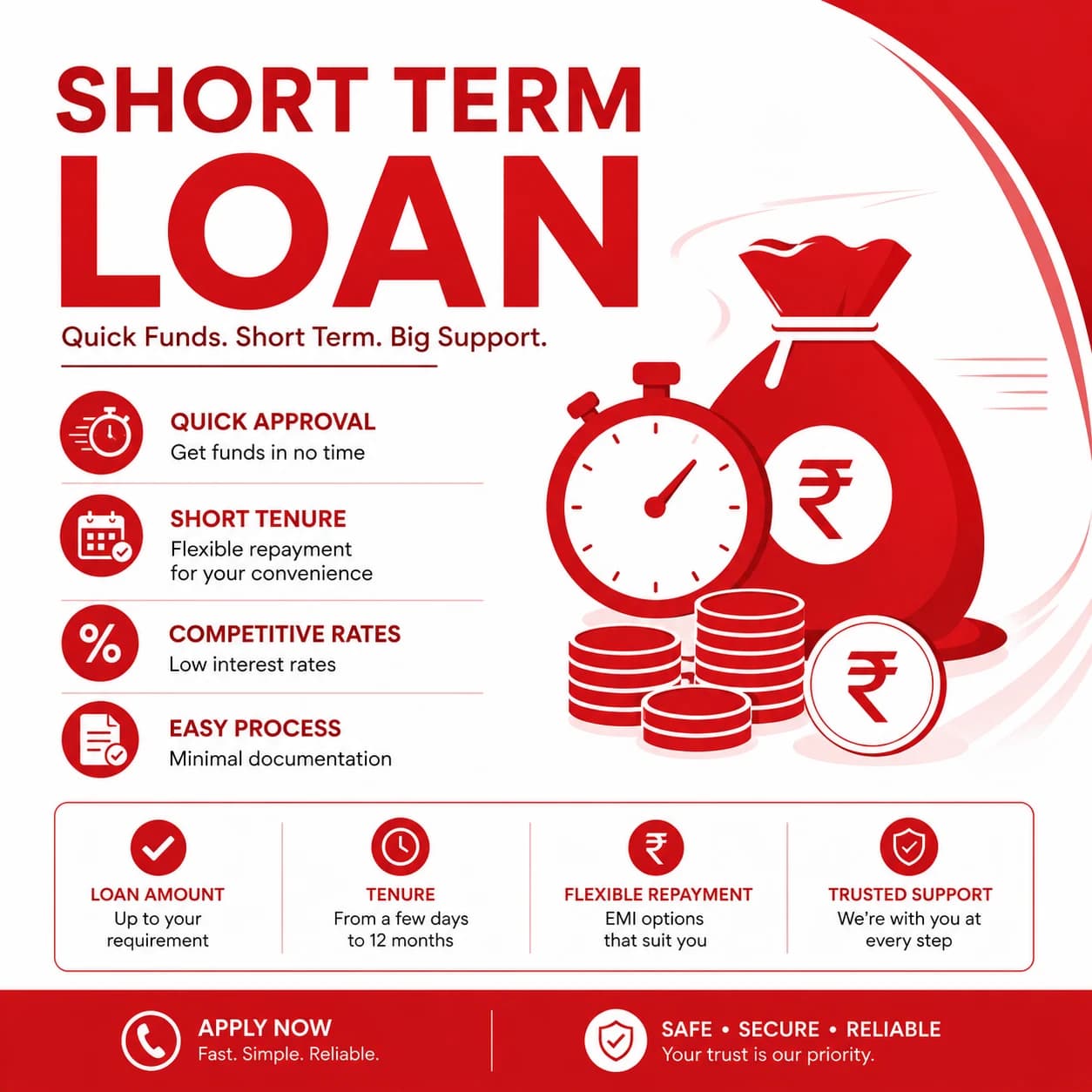
What is a short term loan?
A short term loan is a type of credit where you borrow a specific amount of money and agree to pay it back within a brief period. Usually, these terms range from a few weeks to one year. They are often used for emergencies or immediate expenses rather than long-term investments like a house.
How do short term loans work?
When you apply for a short term loan, the lender reviews your income and credit history. If approved, you receive the funds upfront. You then repay the principal plus interest through scheduled payments. Because the repayment period is fast, the interest rates can sometimes be higher than traditional bank loans.
Who should get a short term loan?
A short term loan is best for individuals who have a steady income and need immediate funds for a one-time emergency. It is important to have a clear plan to pay the money back quickly. These loans are not recommended for long-term debt management or non-essential spending.
What Exactly is a Short Term Loan?
A short term loan is a financial agreement where a lender provides you with a lump sum of money. Unlike a mortgage that lasts 30 years, these loans are meant to be settled fast.
Most people use them for amounts between 100 and 2,000 units of currency. The goal is to solve a temporary problem without being in debt for several years.
Because the lender takes on more risk by giving money quickly, they often charge higher fees. You must weigh the cost of the loan against the urgency of your need.
Common Characteristics
Speed: Funds are often deposited within 24 hours.
Duration: Typically repaid in 3 to 12 months.
Accessibility: Easier to get than a standard bank loan.
Different Types of Short Term Loans
Not all loans are created equal. Depending on your credit score and how much you need, you might choose one of the following options.
Payday Loans
A payday loan is a very short-term option. You usually pay the full amount back when your next paycheck arrives. While convenient, they often carry the highest interest rates in the market.
Personal Installment Loans
These allow you to borrow a set amount and pay it back in monthly chunks. This is often more manageable than a payday loan because the cost is spread out over several months.
Lines of Credit
A line of credit works like a credit card. You are approved for a maximum limit, and you only pay interest on the money you actually spend. This is great for ongoing projects.
How Interest Rates and Fees Work
When you take out a short term loan, you aren't just paying back what you borrowed. You are also paying for the service of borrowing that money.
Annual Percentage Rate (APR)
The APR represents the total cost of the loan over a year. Even if your loan is only for three months, the APR helps you compare it to other financial products.
Processing Fees
Some lenders charge an "origination fee" just for setting up the loan. Always ask if there are upfront costs before you sign the contract.
Late Payment Penalties
If you miss a deadline, the costs can skyrocket. A short term loan can become very expensive if you do not follow the repayment schedule strictly.
The Pros and Cons of Short Term Borrowing
Understanding both sides of the coin is essential for your financial health. Honest borrowing starts with knowing the risks.
The Benefits
Fast Approval: Most applications are online and take minutes.
No Long Commitment: You don't have to worry about debt for years.
Credit Building: If you pay on time, some lenders report this to credit bureaus, which helps your score.
The Drawbacks
Higher Costs: The convenience comes at a price.
Debt Cycles: If you can't pay it back, you might be tempted to take another loan to pay the first one.
Impact on Credit: Missing a payment can hurt your credit score significantly.
Step-by-Step: How to Apply Safely
If you decide that a short term loan is right for you, follow these steps to ensure you stay protected.
1. Check Your Budget
Before looking at lenders, look at your bank account. Can you afford the monthly payment? If the answer is "maybe," do not take the loan.
2. Compare Lenders
Don't click the first link you see. Look for reputable lenders with transparent terms. Read reviews from other customers to see how the lender treats people.
3. Gather Your Documents
You will usually need a valid ID, proof of income (like a payslip), and a bank account. Having these ready makes the process much smoother.
4. Read the Fine Print
This is the most important step. Check for "hidden fees" or "prepayment penalties." A good lender will never hide their terms from you.
Alternatives to Short Term Loans
Sometimes, a short term loan isn't the best answer. Consider these alternatives if you want to avoid high-interest debt.
Credit Union Loans
Credit unions are non-profit organizations. They often offer much lower interest rates on small loans compared to online lenders.
Borrowing from Friends or Family
While it can be awkward, borrowing from someone you know usually involves zero interest. Just make sure to write down a plan so you don't damage the relationship.
Payment Plans
If you owe money for a bill, call the company. Many utility companies or hospitals offer interest-free payment plans if you ask.
Managing Your Loan Effectively
Once the money is in your account, the clock starts ticking. Success depends on how you handle the next few months.
Automate Your Payments
Set up an automatic transfer from your bank. This ensures you never forget a due date and avoids those nasty late fees.
Pay More Than the Minimum
If you find yourself with extra cash, pay down the principal. The faster you pay off a short term loan, the less interest you pay in total.
Avoid Multiple Loans
Never take out a second loan to cover the first. This is a "debt spiral" and it is very hard to escape. Stick to one loan at a time.
Conclusion
A short term loan can be a lifesaver during a financial "storm." It provides quick access to cash when you have nowhere else to turn. However, it is a tool that must be used with caution and discipline.
By understanding the interest rates, choosing the right type of loan, and having a solid repayment plan, you can solve your emergency without ruining your financial future. Always remember: borrow only what you need and pay it back as soon as possible.
Frequently Asked Questions (FAQs)
1. Will a short term loan hurt my credit score?
Applying for a loan usually involves a "hard credit pull," which might dip your score by a few points temporarily. However, making your payments on time can actually help improve your score over the long term.
2. Can I get a loan if I am unemployed?
It is difficult but possible. Some lenders accept alternative forms of income like disability benefits, social security, or freelance earnings. You must prove you have a way to repay the money.
3. How fast can I get the money?
Many online lenders for a short term loan offer "same-day" or "next-business-day" funding. If you apply on a weekend or holiday, it may take slightly longer for the bank to process the transfer.
4. What happens if I cannot pay the loan back on time?
You should contact your lender immediately. Most lenders would rather work out a new payment plan with you than have you default. Ignoring the problem will lead to late fees and credit damage.
5. Are short term loans safe?
They are safe if you use a licensed, reputable lender. Avoid lenders who "guarantee" approval without checking your history or those who ask for money upfront before giving you the loan.
6. Can I pay off my loan early?
In most cases, yes. This is called "prepayment." Check your contract to make sure there are no fees for paying early. Paying early is the best way to save money on interest.