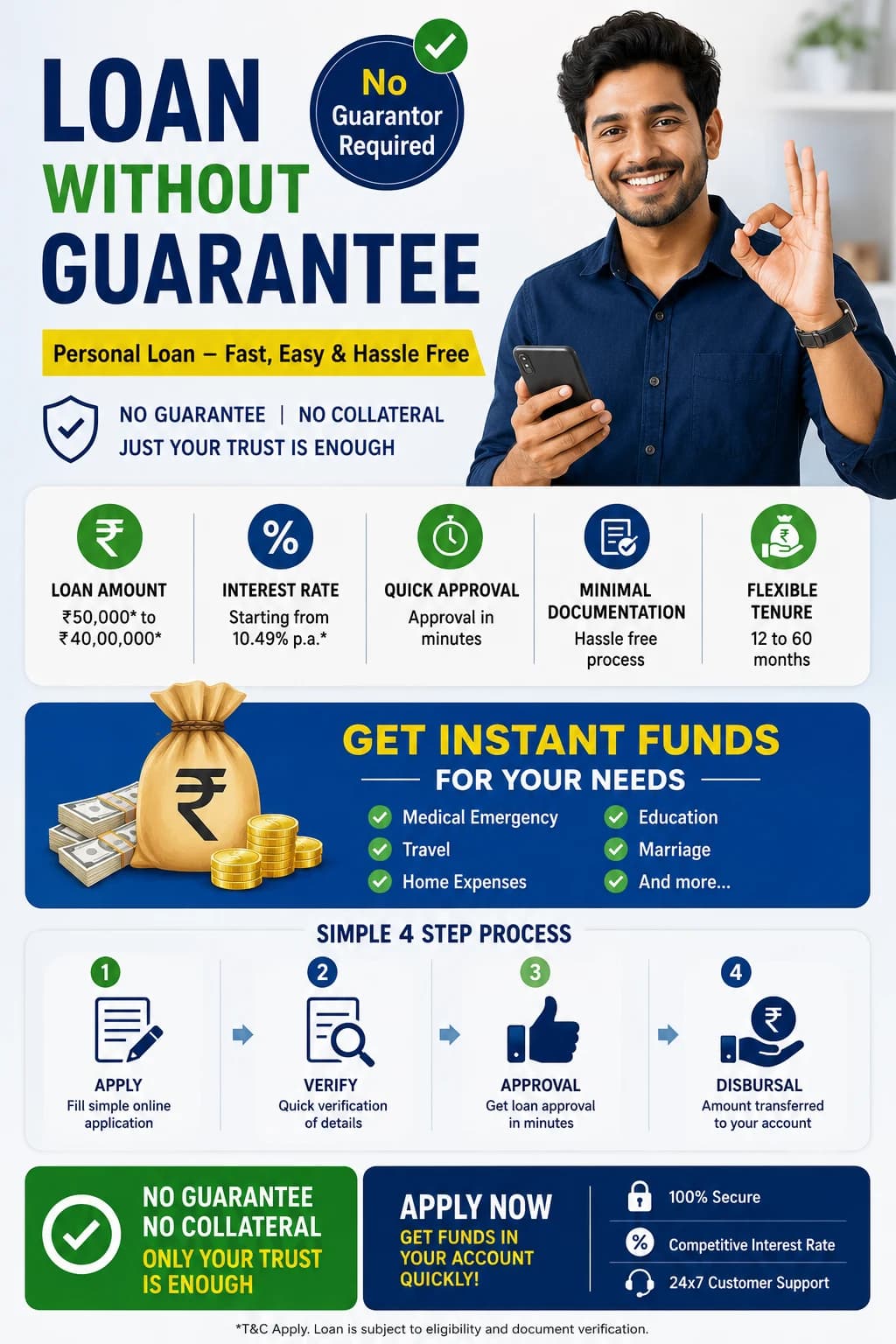
1. What is a loan without guarantee?
A loan without guarantee, also known as an unsecured loan, is a type of borrowing where you do not need to provide collateral (like a house or car) or find a co-signer to back the loan. Lenders approve these based entirely on your credit history and income.
2. Can I get a loan without a guarantor if I have bad credit?
Yes, it is possible, but it is much harder. Lenders view bad credit as a high risk. If they approve a loan without guarantee for poor credit, they will likely charge much higher interest rates and offer smaller loan amounts to protect themselves.
3. What are the requirements for an unsecured loan?
To qualify for a loan without guarantee, you generally need a stable monthly income, proof of steady employment, and a good credit score (usually 670 or higher). Lenders also check your debt-to-income ratio to ensure you can comfortably handle the new monthly payments.
How to Get a Loan Without Guarantee: A Beginner’s Guide
Imagine you need money for an emergency, a medical bill, or to fix your car. However, you do not own a house to use as security, and you do not want to ask a friend to sign your loan papers.
The good news is that you can get a loan without guarantee. These are highly popular financial tools designed for everyday people who need quick funds based on their financial reputation alone.
This guide will break down how these loans work, what you need to qualify, and how to choose the best option for your budget.
What is a Loan Without Guarantee?
When you borrow money, banks usually want a safety net. This safety net can be an asset like land, or a person who promises to pay if you fail.
A loan without guarantee dispenses with these requirements entirely. In the financial world, this is formally known as an unsecured loan or a personal loan.
Because there is no physical asset or second person backing the debt, the lender takes on more risk. They trust you to pay them back based solely on your past financial behavior.
How Do Unsecured Loans Work?
The process for a loan without guarantee is straightforward but requires good financial health. Since the bank cannot seize your property if you stop paying, they look closely at your financial habits.
The Role of Credit Scores
Your credit score is like a financial report card. It tells banks how well you have managed borrowed money in the past.
A high score shows you pay bills on time. A low score suggests you might struggle with payments, making a loan without guarantee harder to secure.
Interest Rates and Terms
Because these loans carry higher risk for banks, they usually have higher interest rates than secured loans.
The repayment terms are fixed. This means you will pay the exact same amount of money every month for a set number of years until the debt is cleared.
Types of Loans You Can Get Without a Guarantor
There are several ways to access funds without needing someone else to vouch for you. Here are the most common options available today.
Personal Loans
These are standard bank loans that give you a lump sum of money upfront. You can use this money for almost anything, from home repairs to consolidating older debts.
Digital Loan Apps
Many modern financial companies offer instant online loans through smartphone apps. These apps use algorithms to check your data and can approve a loan without guarantee in just a few minutes.
Credit Cards
A credit card is essentially a rolling loan without a guarantor. As long as you stay under your limit and pay at least the minimum amount each month, you can borrow repeatedly.
Eligibility Criteria for a Loan Without Guarantee
Lenders use specific rules to decide who gets a loan without guarantee. Meeting these basic requirements will significantly increase your chances of approval.
A Solid Credit Score: Most lenders prefer a score of 670 or higher for competitive interest rates.
Proof of Income: You must prove you earn enough money to pay back what you borrow.
Employment Stability: Banks love stability; having the same job for over a year works in your favor.
Low Debt-to-Income Ratio: Your current monthly debt payments should not consume too much of your monthly income.
Benefits of Choosing a Loan Without Guarantee
Opting for an unsecured financial product has several distinct advantages for everyday borrowers.
No Risk to Your Personal Property
If you take a car loan and stop paying, the bank takes your car. With a loan without guarantee, your house, car, and savings remain completely safe from instant seizure.
Protect Your Personal Relationships
Asking a family member to be a guarantor can cause severe emotional stress. If you cannot pay, your loved ones are forced to pay for you, which can ruin relationships.
Faster Processing Times
Because banks do not need to appraise property or verify a co-signer’s background, approvals are much faster. You can often get the funds deposited into your account within 24 to 48 hours.
Hidden Risks to Keep in Mind
While borrowing without a guarantor sounds ideal, you must be aware of the potential downsides before signing any paperwork.
Higher Overall Costs
To offset their risk, lenders charge higher interest rates on a loan without guarantee compared to a mortgage or a car loan. This means you pay back more money in total.
Strict Legal Consequences
If you defaults on a loan without guarantee, the bank cannot take your house immediately, but they can take you to court. This can lead to wage garnishment and a ruined credit score.
Step-by-Step: How to Apply Successfully
If you have decided that a loan without guarantee is right for your situation, follow these steps to ensure a smooth application process.
Step 1: Check Your Credit Report
Before the bank looks at your credit, you should look at it yourself. Check for any errors or old debts that you can clear up to boost your score quickly.
Step 2: Compare Different Lenders
Do not accept the very first offer you receive. Look at traditional banks, local credit unions, and online lenders to find the lowest interest rates and fairest terms.
Step 3: Gather Your Documentation
Lenders will need proof of who you are and what you earn. Prepare your government identification, recent pay stubs, tax returns, and bank statements.
Step 4: Submit Your Application
Fill out the forms honestly. Lenders double-check all information, and any false data will lead to an instant rejection.
Conclusion
Getting a loan without guarantee is a highly effective way to access funds without putting your assets or your relationships at risk. It relies completely on your personal financial track record and your current income.
While it offers freedom and speed, it also demands high financial discipline due to higher interest rates. Always evaluate your monthly budget carefully to ensure you can comfortably manage the repayments before taking on any new debt.
Frequently Asked Questions (FAQs)
1. Can a student get a loan without guarantee?
It is difficult but possible. Most students lack a steady income history, which lenders require for an unsecured loan. However, some specialized lenders offer small student loans based on future income potential or academic performance rather than a co-signer.
2. Will applying for a loan without guarantee affect my credit score?
Yes, the initial application will cause a temporary drop. When a lender checks your credit report thoroughly, it triggers a hard inquiry, which can lower your score by a few points. However, making your monthly payments on time will eventually raise your score higher than before.
3. What happens if I fail to repay a loan without guarantee?
If you stop making payments, the lender will send your account to a collection agency. This will severely damage your credit score for up to seven years. The lender also has the legal right to sue you in court to recover the funds.
4. What is the maximum amount I can borrow without a guarantor?
The maximum amount depends heavily on your income and your credit score. Some lenders offer up to fifty thousand units of currency for highly qualified buyers, while online apps might limit beginners to smaller amounts until trust is established.
5. Are online apps safe for getting a loan without guarantee?
Many online apps are perfectly safe, but you must be careful. Always verify that the digital lender is registered with official government financial authorities. Avoid any app that demands upfront fees before giving you the loan money.
6. Can I pay off my unsecured loan earlier than scheduled?
Yes, most reputable lenders allow you to pay off your loan early. However, you must read the fine print of your contract. Some banks charge a prepayment penalty fee to make up for the interest profit they lose when you pay early.