10 Lakh Home Loan Balance Transfer Benefits: A Simple Beginner's Guide
Paying off a housing loan can often feel like a long marathon that stretches over decades of your working life. When you initial contract is signed, you might accept whatever interest rate your bank provides just to get your construction moving.
However, as the financial market shifts, other top Indian lenders frequently introduce much lower interest brackets. Embracing the 10 lakh home loan balance transfer benefits allows you to safely switch your running debt to a cheaper bank, instantly dropping your monthly liabilities.
Direct Answer Snippets for Quick Reference
What are the core 10 lakh home loan balance transfer benefits?
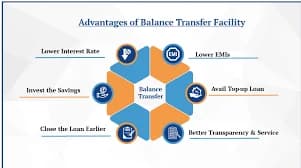
The primary 10 lakh home loan balance transfer benefits include dropping your annual interest rates, lowering your monthly installment amounts, or shortening your total remaining tenure months. It also unlocks access to highly affordable top-up funds and superior digital account management features.
Will moving my home loan cost extra penalty fees?
According to clear guidelines enforced by the Reserve Bank of India, commercial banks cannot charge any prepayment or foreclosure penalties on floating interest rate home loans. You can easily move your outstanding 10 lakh balance to a new bank with zero structural penalty charges.
When is the best time to execute a loan balance transfer?
The most profitable window to switch your loan is during the initial 5 to 7 years of your repayment timeline. Because housing loans carry heavily front-loaded interest structures, clearing your core principal through a lower rate early saves maximum lifetime capital.
What Exactly is a Home Loan Balance Transfer?
Before looking at the deep financial benefits, you must understand how this refinancing mechanism operates under modern banking protocols. It is essentially an exchange of debt between two lending institutions.
When you apply for a transfer, a brand-new bank reviews your clean track record of past EMI repayments and checks your current income stability. If everything looks clean, the new bank pays off the entire outstanding 10 lakh balance to your old lender in a single bulk transaction.
Your old loan account closes permanently, and your original physical property deeds shift securely into the new bank's locker vault. You then begin paying your future monthly installments to the new lender under highly discounted and stress-free terms.
Top Financial Benefits of Transferring Your 10 Lakh Loan
Moving your housing loan account unlocks clear, measurable structural advantages that can boost your daily household savings immediately.
1. Permanent Reduction in Annual Interest Rates
Even a tiny reduction of 0.50% to 1.00% in your annual interest percentage can alter your complete savings chart when calculated across two decades. Lenders fight aggressively to win over clean, disciplined borrowers by offering them promotional entry-level rates.
2. Drastic Drop in Monthly EMI Amounts
If you prefer to increase your monthly household disposable cash, a balance transfer allows you to drop your immediate installment load. This frees up extra money every single month for your children's schooling or personal emergency funds.
3. Shorter Repayment Tenure Timelines
Alternatively, you can choose to keep your monthly installment amount exactly the same while enjoying a lower interest rate. This smart strategy causes your monthly payments to slash your core principal debt at a much faster speed, shaving years off your total loan life.
Accurate Savings Case Study on a 10 Lakh Balance Transfer
To make these financial numbers easy for students and beginners to understand, let us work through a practical real-world math calculation.
Imagine you hold an outstanding loan balance of 10 lakh with a remaining repayment timeline of 15 years. Your current old bank charges you an interest rate of 9.5% per annum, which sets your monthly installment right at 10,442.
You decide to execute a balance transfer to a competitive public sector bank offering a discounted rate of 8.25% per annum. Let us look closely at how the numbers shift side-by-side:
Core Loan Comparison Metrics | Parent Bank (Old Contract) | New Bank (Refinanced Contract) | Net Household Savings Realized |
Outstanding Balance | 10 Lakh | 10 Lakh | Clean debt takeover |
Annual Interest Rate | 9.5% per annum | 8.25% per annum | 1.25% rate drop |
Monthly EMI Payout | 10,442 per month | 9,701 per month | Saves 741 every month |
Total Lifetime Interest | 8.79 lakh total | 7.46 lakh total | Saves 1.33 lakh in cash |
The Secret Weapon: Access to Affordable Top-Up Loans
A massive secondary advantage built into the modern refinancing journey is the opportunity to secure a convenient top-up loan scheme alongside your core transfer.
As you pay off your old EMIs over the years, the physical market value of your constructed residential house or plot naturally appreciates. Lenders utilize this extra equity gap to offer you secondary cash loans.
The key feature of a top-up loan is that its interest rates match standard home loan rates very closely, making it far cheaper than normal personal loans or retail credit card debts. You can utilize these extra funds to finance home renovations, manage wedding events, or pay for higher college education.
Simple Document Checklist to Initiate Your Transfer
To ensure your refinancing files move through the digital banking pipelines smoothly, keep these basic papers compiled inside your folder.
Consent and Outstanding Statements: An official foreclosure letter and a detailed statement of account issued by your current old bank.
Property Deed Track Records: A signed list of original property documents currently locked inside your existing bank's vault facility.
Personal Identity Clearance: Standard copies of your Aadhaar card and permanent PAN card.
Income Validation Records: Your recent three months' corporate salary slips paired with past six months' updated bank account statements.
Conclusion: Take Command of Your Financial Destination
Embracing the complete 10 lakh home loan balance transfer benefits is a highly intelligent, proactive wealth-management strategy for modern homeowners in India. It converts your clean track record of past disciplined payments into immediate bargaining power, forcing the banking ecosystem to reward you with lower interest rates and cheaper EMIs.
Take your time to check your current CIBIL score, calculate the upfront processing fees of the new bank, and execute a smart transfer to wipe out your housing debt quickly and economically.
Frequently Asked Questions (FAQs)
One: Will a home loan balance transfer damage my personal credit score?
Initially, when the new bank reviews your application, they perform a standard credit check known as a "hard inquiry," which can cause a tiny temporary drop of a few points in your file. However, as you begin paying your new, lower EMIs with perfect consistency, your long-term credit health will improve significantly.
Two: Can I transfer my 10 lakh home loan if I missed an EMI last year?
Securing a balance transfer becomes highly difficult if your recent repayment track record reflects broken deadlines or defaults. New lenders look for an absolutely flawless track record covering at least the past 12 to 24 continuous months before they accept your debt takeover profile.
Three: Are public sector banks better for a housing loan balance transfer?
Public sector institutions like the State Bank of India or Bank of Baroda are exceptional choices for maximum raw interest savings because they hold massive pools of low-cost capital. Private banks are often preferred if your primary goal is high-speed digital approvals and paperless tracking.
Four: Do I have to pay regular stamp duty charges again during a transfer?
Yes, because a balance transfer involves drawing up a brand-new loan contract with a different financial institution, you must pay minor local legal fees. This includes standard processing fees to the new lender and state government charges for registering the fresh Memorandum of Entry of Title Deeds (MODT).
Five: Can I get tax deduction benefits on a refinanced home loan?
Yes, your tax write-off eligibility remains completely unchanged and valid after a transfer under the Old Tax Regime. You can continue to claim deductions of up to 1.5 lakh for your principal repayments under Section 80C and up to 2 lakh for your interest components under Section 24b.
Six: What happens to my old loan account once the new bank pays the balance?
Once the new lender completes the digital fund transfer to clear your outstanding 10 lakh debt, your old bank will issue a formal No Dues Certificate (NDC). They will officially close your old loan account and hand over your original land titles directly to the new bank's legal team within 15 to 21 working days.