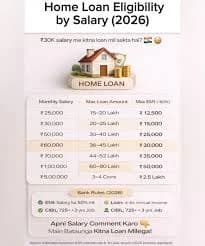
10 Lakh Home Loan Eligibility Salary Required: A Complete Beginner's Guide
Constructing or purchasing your own home is a massive personal achievement. When planning a budget-friendly residential property, a mid-range loan amount of 10 lakh acts as an excellent funding cushion.
However, before visiting a local bank branch, you must understand how lenders judge your loan files. Knowing the precise 10 lakh home loan eligibility salary required parameters allows you to fix your paperwork in advance and secure a stress-free approval.
Direct Answer Snippets for Quick Reference
What is the 10 lakh home loan eligibility salary required?
The minimum net 10 lakh home loan eligibility salary required generally ranges between 15,000 and 20,000 per month. Most prominent Indian banks and housing finance companies mandate this base income level to ensure you can handle your lifestyle expenses comfortably after paying your monthly installments.
How do banks calculate your eligible income limits?
Lenders utilize the Fixed Obligation to Income Ratio (FOIR) to gauge your structural funding eligibility. Under standard banking rules, your future housing loan installment plus any existing debts must never consume more than 40% to 50% of your net monthly take-home salary.
Can you secure a 10 lakh loan with a lower salary?
Yes, if your personal monthly paycheck sits below the 15,000 mark, you can still secure a 10 lakh loan. You can achieve this easily by adding an earning family member as a joint financial co-applicant or by presenting verified secondary revenue sources like monthly rental receipts.
The Core Concept Behind Income Eligibility
When you submit a property funding request, a bank officer does not just look at your gross company earnings. They look closely at your net disposable cash, which is the money left over after all your local taxes, provident funds, and insurance deductions.
Lenders need absolute security that you can pay your loan back continuously for two decades without facing personal bankruptcy. Your salary acts as the direct fuel engine for your monthly installments.
If your income is clean and enters your bank account via standard digital channels on a set date every single month, banks will treat your file with immense trust. This reliability is highly valued during the manual verification process.
Understanding the FOIR Method Used by Lenders
To find out exactly how much income you need, let let us look at the core banking math trick known as the Fixed Obligation to Income Ratio (FOIR).
Most Indian lenders cap your maximum allowable FOIR line at 50%. This means the bank assumes you require at least half of your salary to buy daily kitchen groceries, manage children's schooling, and pay local utility bills.
Let let us work backward to see how this rule impacts a 10 lakh loan request. If you select a standard 20-year repayment tenure at an average interest rate of 8.5% per annum, your monthly installment comes out to roughly 8,678.
Using the 50% FOIR system rule, your net monthly household take-home income must be at least double that installment amount. This lands the required target income right around the 17,356 scale per month, assuming you hold zero current open debts.
What Happens If You Carry Existing Debts?
Many first-time property buyers forget to factor in their active retail card balances or vehicle installments when calculating their financial eligibility. Your open debts directly reduce your loan capacity.
The Debt Impact Breakdown
Suppose your net monthly workplace pay is 25,000. Under the standard 50% limit rule, the total money you can dedicate to all your combined EMIs is capped strictly at 12,500.
If you carry an active motorcycle loan or personal loan that consumes 5,000 every single month, your remaining available margin for a new housing loan drops down to just 7,500.
Because a 7,500 installment capacity is lower than the required 8,678 installment for a 10 lakh debt, the bank's automated algorithm will reject your file or reduce your final approved loan balance.
Primary Factors That Shift Income Eligibility Demands
Lenders change their minimum 10 lakh home loan eligibility salary required benchmarks based on specific personal, structural, and geographic variations.
1. Geographical City Classifications
Your residential location heavily alters the bank's internal safety thresholds. In tier-three towns or rural areas, the cost of living is lower, so banks might accept a net salary of 15,000.
In expensive tier-one metro cities like Mumbai, Bangalore, or Delhi, lenders often increase the baseline income entry line to 25,000 to offset the higher standard lifestyle expenses.
2. Employment Status Classifications
Salaried professionals working with established government entities, public sector departments, or blue-chip multinational brands get access to flexible income terms. Lenders appreciate job security.
Self-employed business owners or retail shopkeepers must show an annual business profit of at least 2 lakh through verified Income Tax Returns (ITR) to qualify for the same 10 lakh funding pool.
3. Your Credit Score Baseline
Your credit tracking score acts as your financial mirror. A CIBIL credit score above 750 proves to the lender that you are a highly disciplined borrower.
A premium credit score can push the bank to relax your maximum FOIR boundary from 50% up to 55% or 60%, allowing you to qualify for a 10 lakh loan on a slightly lower salary.
Smart Strategies to Boost Your Home Loan Eligibility
If your current individual workplace salary does not meet the bank's ideal entry benchmarks, you do not need to abandon your property plans. You can use verified financial strategies to boost your approval odds.
Apply for a Joint Co-Applicant Loan
The single most powerful way to bypass income limitations is by adding an earning family member, such as a spouse, parent, or sibling, as a joint co-applicant.
The bank will club both of your monthly incomes together. If your individual salary is 12,000 and your spouse earns 15,000, your combined eligibility income climbs to 27,000, which guarantees quick approval.
Opt for an Extended Loan Tenure
Stretching your loan repayment period from 10 years to 20 or 25 years drops your monthly installment amount to a much lower level.
A lower monthly installment requires a smaller supporting salary margin under the FOIR formula, making it much easier for lower-income brackets to pass the basic eligibility tests.
Clear Active Short-Term Loans Upfront
Before uploading your home loan application documents, clear off all tiny outstanding liabilities like consumer durable debts, mobile phone financing plans, or credit card dues.
Closing these minor accounts instantly frees up your monthly disposable cash flow, allowing the bank's automated system to allocate your full income capacity toward your new housing loan.
Conclusion: Plan and Document Cleanly for Success
Securing a 10 lakh home loan eligibility salary required clearance is completely achievable for anyone holding a regular, documented monthly income starting from 15,000. By keeping your credit report clean, managing your debt-to-income balance wisely, and utilizing joint application paths, you can clear the bank's eligibility hurdles with ease.
Take your time to organize your formal tax certificates, maintain a healthy balance footprint inside your banking statements, and step into your brand-new home with absolute financial clarity and security.
Frequently Asked Questions (FAQs)
One: Can an applicant working in the unorganized sector get a 10 lakh home loan without salary slips?
Yes, many specialized micro-housing finance groups and small finance banks offer customized informal income programs. Instead of corporate salary slips, their field verification teams will review your local cash registers, diary entries, or shop stock inventories to measure your true monthly earnings safely.
Two: Does a higher down payment reduce the salary requirement for a 10 lakh home loan?
Yes, making a substantial down payment from your personal savings reduces the total amount you need to borrow from the bank. If you lower your required loan balance, your monthly installment drops accordingly, which naturally lowers the minimum salary bracket required for approval.
Three: Can I show my family agriculture income to pass the home loan eligibility check?
Yes, you can include verified agricultural income to boost your overall eligibility score. You must present valid land ownership documents alongside certified grain sale market receipts to prove the consistency and stability of your annual farm revenues.
Four: Why do banks prefer a female co-applicant for affordable housing loans?
Indian financial institutions offer special structural perks to encourage property ownership among women. Registering a woman as a primary or joint borrower unlocks a 0.05% interest rate drop and provides beneficial concessions on local stamp duty registration taxes.
Five: What is the maximum age limit to satisfy home loan income eligibility?
For standard salaried employees, the absolute upper boundary line is capped at 60 years or your official company retirement age. For self-employed individuals, the timeline stretches up to 65 or 70 years, provided your business model continues to show strong audited annual profits.
Six: Will my annual workplace bonuses be counted as part of my eligible salary?
Banks usually place the highest weight on your fixed, guaranteed monthly base salary. Variable components like seasonal performance bonuses or festival overtime pay are treated as supplementary income and are rarely utilized to calculate your core monthly installment capacity.