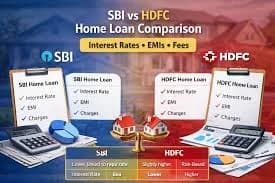
20 Lakh Home Loan HDFC vs SBI Comparison: A Complete Beginner's Guide
Choosing the right bank for your housing loan is just as critical as picking the right property. A small difference in your interest rate or hidden administrative charges can significantly impact your family savings over a long horizon.
If you are planning to borrow a 20 lakh housing loan, two banking giants will instantly top your list: State Bank of India (SBI), the largest public sector lender, and HDFC Bank, the nation's biggest private sector financial institution. Both banks offer highly attractive housing loan programs, but their operations, interest structures, and document verification processes are entirely different.
This comprehensive guide presents an honest, deep 20 lakh home loan HDFC vs SBI comparison. We will break down their interest rates, compare processing fee structures, and calculate exact monthly EMIs to help you pick the perfect financial partner.
Direct Answer Snippets for Quick Reference
Which bank is better for a 20 lakh home loan, SBI or HDFC?
Both banks cater to different borrower needs. SBI is ideal if your priority is securing the absolute lowest interest rate and minimal administrative processing fees. HDFC Bank is preferred if you prioritize lightning-fast digital documentation, quick loan sanction timelines, and premium customer service channels.
What is the interest rate difference for a 20 lakh loan between SBI and HDFC?
SBI links its floating home loans to its repo-rate linked External Benchmark Rate (EBLR), with baseline rates starting around 7.25% for high-credit borrowers. HDFC Bank also benchmarks its adjustable loans to the policy repo rate, with starting competitive rates beginning around 7.20% to 7.75%.
How do processing fees compare between HDFC and SBI for a 20 lakh loan?
SBI charges a low processing fee of 0.35% of the loan amount, which comes out to roughly 7,000 plus taxes for a 20 lakh borrowing. HDFC Bank charges a slightly higher administrative fee of up to 0.50% of the loan scale, equivalent to a minimum baseline of 10,000 plus taxes.
The Base Framework: EBLR vs Private Benchmarks
To understand how a 20 lakh home loan HDFC vs SBI comparison works over time, you must learn how these lenders calculate interest adjustments. Both institutions offer floating interest rate packages linked directly to external market shifts.
SBI utilizes a highly transparent pricing mechanism. Its rates are tied directly to the Reserve Bank of India (RBI) repo rate through the External Benchmark Lending Rate (EBLR) platform. When the RBI adjusts the central repo rate, your active SBI home loan rate moves automatically within a few weeks.
HDFC Bank operates a highly responsive retail lending platform also mapped directly to policy repo movements. This means both platforms offer a high level of transparency, ensuring you benefit immediately whenever market interest environments soften across the country.
Interest Rates and Monthly EMI Comparison
The actual interest rate you receive depends heavily on your professional profile, employment status, and CIBIL credit score. Borrowers with a credit score above 750 or 800 universally unlock the lowest possible premium tiers at both banks.
Let us run a direct financial simulation for a 20 lakh borrowing stretched over a standard 20-year repayment tenure to see how small differences alter your regular household budget.
20 Lakh Loan Cost Breakdown (20 Years Tenure)
Key Financial Metrics | State Bank of India (SBI) | HDFC Bank Limited |
Assumed Baseline Rate | Around 7.25% per annum | Around 7.75% per annum |
Calculated Monthly EMI | Roughly 15,808 | Roughly 16,419 |
Total Lifetime Interest Cost | Around 17.93 lakhs | Around 19.40 lakhs |
Total Cumulative Repayment | Around 37.93 lakhs | Around 39.40 lakhs |
In this scenario, choosing a baseline public sector rate saves you roughly 611 every month. Over a lengthy 20-year lifecycle, this tiny difference trims nearly 1.47 lakhs off your total out-of-pocket interest obligations.
Processing Fees and Upfront Administrative Charges
When running a 20 lakh home loan HDFC vs SBI comparison, you must look closely at your immediate out-of-pocket setup costs. Lenders charge processing fees to cover legal background checks and technical property valuations.
The SBI Fee Scale: SBI keeps its upfront expenses highly competitive. It charges a modest 0.35% of your total loan principal. For your 20 lakh target, this equals 7,000 plus applicable 18% GST. Furthermore, SBI frequently runs full processing fee waivers for pre-approved builder projects and defence personnel.
The HDFC Bank Fee Scale: HDFC Bank applies a standard fee structure of up to 0.50% for salaried workers, which means you pay a baseline fee of 10,000 plus taxes. For self-employed individuals running non-professional businesses, this setup fee can scale higher, up to 1.50% of the loan principal.
Document Screening and Processing Timelines
This is the segment where private sector lenders hold a distinct operational advantage over traditional public sector networks.
HDFC Bank uses highly advanced, paperless digital onboarding systems. If your income files, PAN verification records, and tax returns are clean, their digital platforms can issue an in-principle approval letter in under 48 hours. Their technical field teams complete physical property evaluations rapidly.
SBI follows a highly disciplined, thorough legal screening pathway. Because they check land records, historical title chains, and municipal approvals deeply to protect buyers from future frauds, their manual auditing takes time. An SBI home loan application typically takes two to three weeks to reach final disbursement.
Special Schemes and Hidden Benefits
Both financial entities provide specialized variants of their home loans to give extra financial assistance to specific categories of buyers.
Special Concessions for Women Borrowers
Both SBI and HDFC Bank actively promote women homeownership by offering a dedicated interest rate discount of 0.05% (5 basis points). To lock in this discount on your 20 lakh loan, ensure that the woman is listed as the primary applicant and holds registered co-ownership of the property.
Overdraft and Multi-Option Facilities
SBI offers a highly popular overdraft home loan product called SBI Maxgain. This scheme allows you to park your surplus monthly savings into your home loan account to save on interest, while keeping the cash fully liquid. HDFC Bank offers similar competitive top-up facilities and smart balance transfer structures for existing consumers.
Conclusion
The final choice in a 20 lakh home loan HDFC vs SBI comparison depends entirely on your immediate lifestyle priorities. If your absolute goal is minimizing your lifetime interest burden, avoiding premium fees, and you do not mind waiting a few weeks for legal checks, SBI is an excellent choice for your household.
However, if you are racing against a tight builder deadline, value smooth digital portals, and prefer rapid document processing without repeated branch visits, HDFC Bank is well worth the slightly higher administrative setup cost. Analyze your credit report, compare current branch offers, and select the bank that matches your routine budget with complete safety.
Frequently Asked Questions (FAQs)
1. Do SBI and HDFC Bank charge penalties if I pay off my 20 lakh loan early?
No, both SBI and HDFC Bank strictly follow Reserve Bank of India regulations and charge zero prepayment or foreclosure penalties on individual home loans that operate on floating interest rates. You can make partial or full prepayments whenever you have excess cash.
2. Can I get a 20 lakh loan from HDFC or SBI if my credit score is 680?
A credit score of 680 is considered average. Both banks can still approve your 20 lakh loan application, but you will not qualify for their lowest advertised interest rates. Lenders will add a slight risk premium to your interest rate, making your monthly EMI slightly more expensive.
3. Is it easier to get a home loan if I already hold a salary account with the bank?
Yes, holding a long-term salary relationship gives you a major advantage. Both SBI and HDFC Bank prioritize existing payroll customers by offering them pre-approved loan assignments, minimized documentation checks, faster approval turnarounds, and occasional processing fee discounts.
4. What property types do SBI and HDFC Bank refuse to finance?
Both lenders will refuse to disburse a 20 lakh loan if the underlying property lacks local municipal body approvals, sits on disputed land, or lacks a clear historical chain of title deeds. They also hesitate to finance highly old structures or unauthorized colonies.
5. Can I switch my home loan from HDFC Bank to SBI if SBI offers a lower rate later?
Yes, you can transfer your remaining loan balance from HDFC Bank to SBI through a home loan balance transfer facility. However, ensure that the long-term interest savings from the lower rate easily outweigh the fresh processing fees and legal stamp costs you will have to pay to the new bank.
6. Are insurance policies mandatory when taking a 20 lakh loan from SBI or HDFC?
Buying a home loan protection insurance policy is technically optional, and banks cannot legally force you to buy their in-house insurance products. However, buying a basic term plan is highly recommended by experts to protect your family from carrying the 20 lakh debt burden if an unexpected event occurs.
For an interactive review of borrowing strategies, this Home Loan Interest Rates Comparison Guide can help you master the core mechanics of credit scores, loan calculations, and basic saving tips. Understanding how minor rate differences impact your monthly payment will ensure you negotiate the absolute best possible deal for your home purchase.