Starting a fresh transport business, logistics agency, or delivery fleet is a highly profitable venture in India's expanding economy. Moving goods across cities requires reliable wheels, which means purchasing high-capacity assets like trucks, tippers, cargo vans, or buses. However, buying these heavy-duty commercial vehicles requires a major upfront investment that can stretch your budget.
For a first-time owner with zero background in fleet operations, walking into a bank for credit can feel intimidating. Most traditional lenders hesitate to fund new profiles because they lack a past loan repayment track record in the transport sector.
Fortunately, several leading Indian banks and specialized financial institutions have introduced custom financing frameworks for first-time buyers. Finding the best bank for commercial vehicle loan for new operators allows you to secure up to 100% vehicle funding with manageable repayment terms. This guide breaks down the top bank choices, eligibility rules, and easy online application steps.
3 Direct Answer Snippets for Quick Understanding
Which is the best bank for a commercial vehicle loan for new operators?
HDFC Bank and State Bank of India (SBI) are the top choices for first-time buyers. HDFC Bank provides flexible, customized EMI setups with up to 100% funding on vehicle chassis. Meanwhile, SBI offers competitive interest rates starting from 8.50% per annum under government-backed transport scheme structures.
Can a new operator get a commercial vehicle loan without experience?
Yes, new operators can secure financing by utilizing specialized "First-Time Buyer" (FTB) loan portfolios offered by private banks and NBFCs like Shriram Finance. To clear the background safety gap, lenders will evaluate your personal CIBIL score, request a stable co-applicant, or ask for basic local route contracts.
What is the maximum loan tenure for a new operator's vehicle loan?
For a brand-new commercial vehicle, lenders generally provide an extended repayment tenure ranging from 36 months to 84 months (3 to 7 years). This multi-year window gives new transport operators sufficient time to stabilize their local client networks and clear the principal comfortably out of newly generated route profits.
Understanding the Challenges Faced by New Operators
Commercial vehicle finance operates differently than a standard personal or car loan. Lenders view a commercial truck as a working asset that must generate its own revenue to cover its monthly installments.
When you apply as an experienced fleet owner, banks simply check your old vehicle registration books and past transport income logs to clear your files. For a fresh startup operator, this historical operational proof does not exist.
To overcome this hurdle, the best bank for commercial vehicle loan for new operators will shift its focus from business vintage to your personal financial discipline. They will look tightly at your credit score, household asset backing, and the commercial viability of your proposed transport route to build structural trust.
Top Banks and Lenders for First-Time Commercial Vehicle Buyers
If you want to launch your transport business smoothly, you should target institutions that run dedicated entry-level financing portfolios:
1. HDFC Bank
HDFC Bank is widely recognized for its versatile commercial vehicle lending desk. They offer customized financing setups across all categories, ranging from light 1.5-tonne delivery tempos to heavy 49-tonne trailer trucks. They provide fast digital processing, doorstep administration, and up to 100% funding on select truck models.
2. State Bank of India (SBI)
SBI operates a reliable Transport Operator Loan Scheme that features highly attractive interest rates beginning near 8.50% per annum. While their manual documentation checking takes slightly longer, they provide absolute transparency with minimal hidden management fees, making them ideal for budget-conscious operators.
3. Bank of Maharashtra
This prominent public sector bank runs custom MSME vehicle schemes for small transport operators. They can grant a structural credit limit up to 2 Crore for vehicle purchase, backed completely by the central government's CGTMSE trust framework to skip extra property collateral requirements.
4. Specialized Strategic NBFCs
If strict traditional banking document rules stall your profile, turn to top-tier Non-Banking Financial Companies (NBFCs) like Shriram Finance, Mahindra Finance, or Cholamandalam Investment. These players specialize in rural and semi-urban transit credit, offering quick turnarounds for new operators by analyzing local market dynamics.
Core Eligibility Criteria for First-Time Buyers
To pass the preliminary credit screening systems handled by major commercial lenders without facing rapid file rejections, your profile should satisfy these baseline rules:
1. Robust Personal Credit Score
Since you do not possess historical transport business statements, your personal financial habit serves as your primary anchor. Maintaining a personal CIBIL score of 730 or above proves you pay debts responsibly, unlocking lower interest margins.
2. Residential and Financial Stability
Lenders prefer funding applicants who display stable local roots. Most banks mandate that you own your current residential home or show a continuous stay of at least 2 to 3 years at your current address via registered utility records.
3. Competent Driving or Management Background
While you might not own a transport company yet, having a valid commercial driving license (heavy vehicle badge) or showing a few years of employment experience as a manager inside a logistics firm drastically increases your approval odds.
4. Adding a Strong Co-Applicant
For a fresh operator profile, adding a close family member with a steady independent salary or verifiable income tax returns as a co-signer reduces the bank's risk margin significantly.
Essential Documents Checklist for Online Processing
Bypassing old manual bureaucratic delays requires presenting a highly organized digital document folder to your chosen bank portal. Keep these files ready:
Promoter Personal KYC: Clear digital scans of your PAN card, Aadhaar card, and an active commercial driving license.
Residential Ownership Proof: Recent electricity bill, property tax receipt, or valid house possession certificates.
Vehicle Transaction Papers: The official proforma invoice quotation issued by an authorized commercial vehicle dealership, detailing the body fabrication layout.
Banking History Sheets: Complete personal or business bank account statements covering the past 6 to 12 months to verify existing household cash flow margins.
Step-by-Step Online Application Process
Filing your commercial vehicle loan application digitally minimizes administrative friction. Follow this step-by-step path to secure your fleet asset:
Step 1: Secure a Formal Dealer Quotation
Visit an authorized commercial vehicle showroom (Tata Motors, Ashok Leyland, Mahindra, or Eicher). Obtain a comprehensive proforma invoice listing the exact ex-showroom price, regional RTO registration fees, and commercial insurance costs.
Step 2: Use a Commercial Loan EMI Calculator
Go to the official portal of an MSME-friendly bank. Input your required equipment funding value and adjust the repayment tenure until the calculated monthly installment aligns safely with your projected route income.
Step 3: Complete Your Digital Loan Request
Log in to the selected bank's official business lending portal or use the centralized national JanSamarth portal. Fill out your demographic parameters and select the first-time operator category.
Step 4: Securely Upload Electronic Documents
Submit your personal identity proofs, dealer vehicle quotes, and continuous bank statement files into the lender's secure, encrypted file upload system.
Step 5: Ground Verification and Disbursal
The bank's credit risk management team will check your data logs and perform a quick physical verification of your home premises. Upon final approval, e-sign the contract terms via an Aadhaar OTP. Once you deposit your required margin down payment, the bank will release the loan cash directly to the vehicle dealer to initiate delivery.
Conclusion
Fulfilling the necessary requirements to access the best bank for commercial vehicle loan for new operators is a powerful method to turn your transport ambitions into a stable, thriving commercial reality. By pairing your strong personal credit score with reliable lending partners like HDFC Bank or SBI, you can bridge the experience gap safely.
Remember to prioritize long-term budget stability over quick expansion; select highly fuel-efficient vehicle models, negotiate for extended product warranties from the manufacturer, and maintain absolute payment discipline on your monthly EMIs. By building a clean banking relationship from your very first truck, you can comfortably scale your small logistics operation into a major pan-India transport fleet over time.
Frequently Asked Questions (FAQs)
1. Can a new operator secure a 100% on-road commercial vehicle loan?
While prominent banks like HDFC Bank offer up to 100% financing on the raw vehicle chassis for premium credit profiles, fresh operators are generally required to pay a minor down payment. Lenders typically fund 80% to 90% of the total on-road cost, meaning you must arrange the remaining 10% to 20% margin money out of pocket.
2. What happens to the commercial vehicle if the transport business defaults?
Commercial vehicle finance utilizes vehicle hypothecation as its primary security. This means the bank holds a legal charge over the asset's registration certificate. If a transport business defaults continuously on its EMIs, the bank retains the legal right to physically seize the vehicle and auction it off to recover the outstanding loan balance.
3. Are there any specialized government subsidies for rural transport operators?
Yes, new operators setting up cargo or passenger transit systems in rural or semi-urban areas can route their bank applications through central government initiatives like the PMEGP or Stand-Up India schemes. These programs provide lucrative capital subsidies and interest concessions to encourage rural entrepreneurship.
4. What is the standard interest rate range for an entry-level truck loan?
For a brand-new commercial vehicle, public sector banks offer competitive benchmark-linked interest rates starting around 8.50% to 11% per annum. Private fintech platforms and non-banking financial entities handle higher operational profile risks, so their annual interest percentages generally range from 11% to 18% per annum.
5. Can I use a commercial vehicle loan to purchase a pre-owned or second-hand truck?
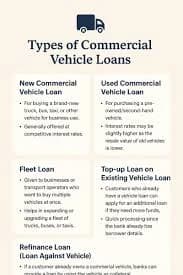
Yes, most major banks and NBFCs independently run pre-owned commercial vehicle finance portfolios. However, for a used asset, the bank's automobile surveyor must physically evaluate the truck's health, the maximum repayment tenure is usually limited to 3 to 5 years, and the vehicle's total age cannot cross 10 to 15 years.
6. Do banks charge an extra penalty for closing a commercial vehicle loan early?
According to regulatory standards, if your logistics setup is officially registered with a free government Udyam certificate as a micro or small enterprise, commercial lenders cannot impose prepayment or foreclosure penalties on floating interest rate loans. Always verify this specific protection clause inside your official bank sanction letter before e-signing.