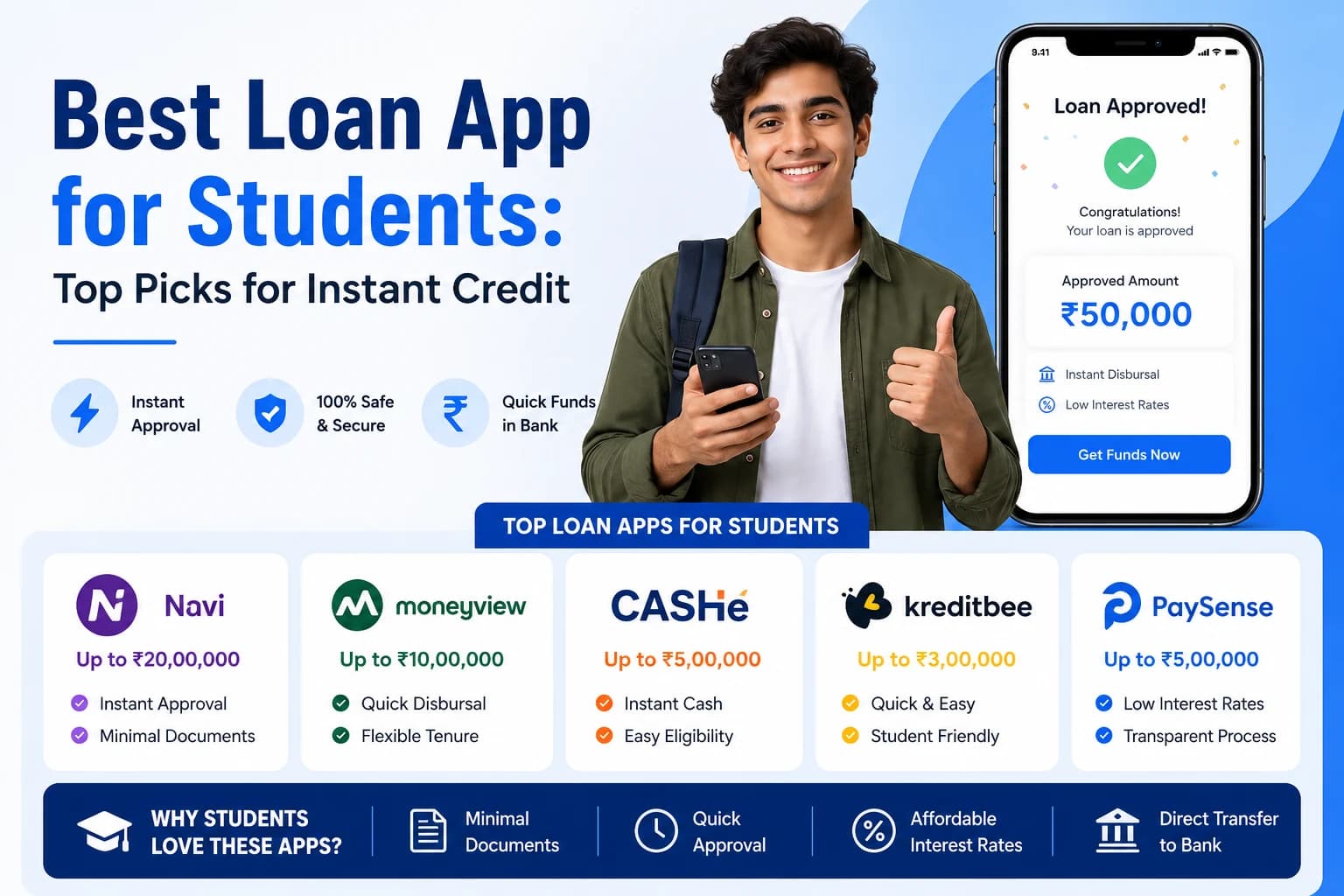
What is the best loan app for students? The best loan app for students is one that offers low interest rates, flexible repayment terms, and does not require a regular monthly salary. Apps like mPokket, Sahukar, and Slice are popular because they focus on small-ticket "pocket money" loans. Always check for RBI registration before sharing your personal data with any platform.
Can I get a student loan without a job? Yes, you can get a loan through a specialized loan app for students even without a full-time job. These apps usually require a valid college ID and Aadium/KYC verification. Instead of a salary slip, they base your credit limit on your academic record or a small co-sign from a guardian.
Are student loan apps safe to use? A loan app for students is safe only if it is partnered with a Non-Banking Financial Company (NBFC) registered with the central bank. Avoid apps that ask for upfront "processing fees" before disbursing the loan or those that demand access to your entire contact list and private gallery.
The Ultimate Guide to Finding a Reliable Loan App for Students
Navigating financial emergencies as a student can be incredibly stressful. Whether it is an unexpected semester fee, a broken laptop, or just running out of monthly expenses, finding a loan app for students can provide a quick safety net.
However, the digital lending space is crowded. For every legitimate app, there are others that might trap you in high-interest debt. This guide will help you identify the best platforms and how to use them responsibly.
Why Students Need Specialized Loan Apps
Traditional banks rarely give loans to students because they lack a credit history or a steady income. This is where a modern loan app for students fills the gap.
These apps use alternative data to verify your identity. They look at your college enrollment and basic KYC rather than a deep financial portfolio. This makes credit accessible to the younger generation.
Top Features to Look for in a Student Loan App
Before you hit the "download" button, you need to know what makes a lending platform trustworthy. Not all apps are created equal.
1. Transparent Interest Rates
A genuine loan app for students will always clearly state its interest rates. Avoid any app that hides the final repayment amount until the very last second.
2. Flexible Repayment Tenures
Students often rely on monthly allowances. Look for apps that allow you to pay back in small installments over 3 to 6 months rather than demanding the full amount in a week.
3. Minimal Documentation
The beauty of a digital loan app for students is the lack of paperwork. You should only need your student ID, PAN card, and Aadhaar card to get started.
How to Apply for an Instant Student Loan
The process of using a loan app for students is usually straightforward and takes less than ten minutes.
Step 1: Download and Register
Choose a highly-rated app from the Play Store or App Store. Register using your mobile number and email address.
Step 2: Complete Your KYC
You will need to upload digital copies of your identity proofs. Most apps require a "selfie" to verify that the person applying matches the ID card.
Step 3: Student Verification
This is the most important part. You must upload your college ID or a recent marksheet. This proves you are currently enrolled in an educational institution.
Step 4: Approval and Disbursal
Once verified, the app will assign you a credit limit. You can then transfer the money directly to your bank account or digital wallet.
Managing Your Debt Responsibly
While getting money from a loan app for students is easy, paying it back is where many face challenges. Being a responsible borrower is a skill you should learn early.
Only Borrow What You Need
It is tempting to take the maximum limit offered. However, remember that every rupee borrowed comes with interest. Only take what is absolutely necessary for your emergency.
Avoid Multiple Apps
Using more than one loan app for students at the same time is a recipe for a debt trap. It becomes difficult to track different due dates, leading to late fees.
Impact on Credit Score
Did you know that these apps report to credit bureaus? Paying back on time helps you build a high credit score, which will help you get bigger car or home loans in the future.
Risks and Red Flags to Watch Out For
The internet can be a dangerous place for a student looking for quick cash. You must stay vigilant against predatory lenders.
High Upfront Fees
If a loan app for students asks you to pay a "security deposit" or "processing fee" before they give you the loan, it is a scam. Legitimate lenders deduct fees from the loan amount itself.
Harassment Practices
Avoid apps that ask for permission to access your "Contacts" or "Gallery." Unregulated apps often use this data to harass your friends and family if you miss a payment.
Short Repayment Cycles
Some predatory apps demand repayment within 7 days. This is often impossible for a student. Stick to a loan app for students that offers at least a 30-day window.
The Benefits of Using a Loan App for Students
Despite the risks, there are significant advantages to using these platforms if you are disciplined.
Financial Independence: You don't have to ask parents or friends for money during small crises.
Emergency Support: These apps work 24/7, providing funds even in the middle of the night.
Building History: For many, a loan app for students is their first interaction with the formal financial system.
Alternatives to Loan Apps
If you are hesitant about using a loan app for students, consider these other options first:
College Emergency Funds: Many universities have small grants for students in distress.
Part-time Jobs: Freelancing or tutoring can provide a steady stream of income without the burden of debt.
Credit Lines for Students: Some fintech companies offer "buy now, pay later" cards specifically for students.
Conclusion
Finding the right loan app for students can be a lifesaver when you are in a pinch. By choosing apps that are transparent, regulated, and student-friendly, you can manage your finances without stress.
Always remember that a loan is a legal obligation. Treat the money with respect, pay your dues on time, and use these digital tools to build a strong financial foundation for your future.
Frequently Asked Questions (FAQs)
1. What is the minimum age to use a loan app for students?
Most legitimate apps require you to be at least 18 years old. This is because, legally, you must be an adult to enter into a binding loan agreement. Some apps may have a higher limit, such as 21, depending on their specific NBFC policies.
2. Can I get a loan if I don't have a PAN card?
Generally, no. A PAN card is a mandatory requirement for most financial transactions and KYC norms in many regions. If you are a student and don't have one, it is very easy to apply for a PAN card online before you try to use a loan app for students.
3. What happens if I fail to repay my student loan on time?
If you miss a payment, the loan app for students will charge late fees and interest on the overdue amount. More importantly, your credit score will drop, making it very hard for you to get any bank loans or even credit cards in the future.
4. How much interest do student loan apps usually charge?
Interest rates can vary widely. Typically, they range from 1% to 4% per month. While this sounds small, it adds up quickly. Always look at the Annual Percentage Rate (APR) to understand the true cost of the loan over a full year.
5. Do these apps require a guarantor or co-signer?
Most small-ticket loan apps for students do not require a guarantor. They rely on your digital KYC and college ID. However, for larger education loans meant for tuition fees, a parent or guardian is usually required as a co-applicant.
6. Is my data safe with a loan app for students?
Your data is safe only if the app follows standard data protection laws and is linked to a regulated bank or NBFC. Check the app's privacy policy to ensure they do not sell your data to third parties and only ask for permissions necessary for the loan process.