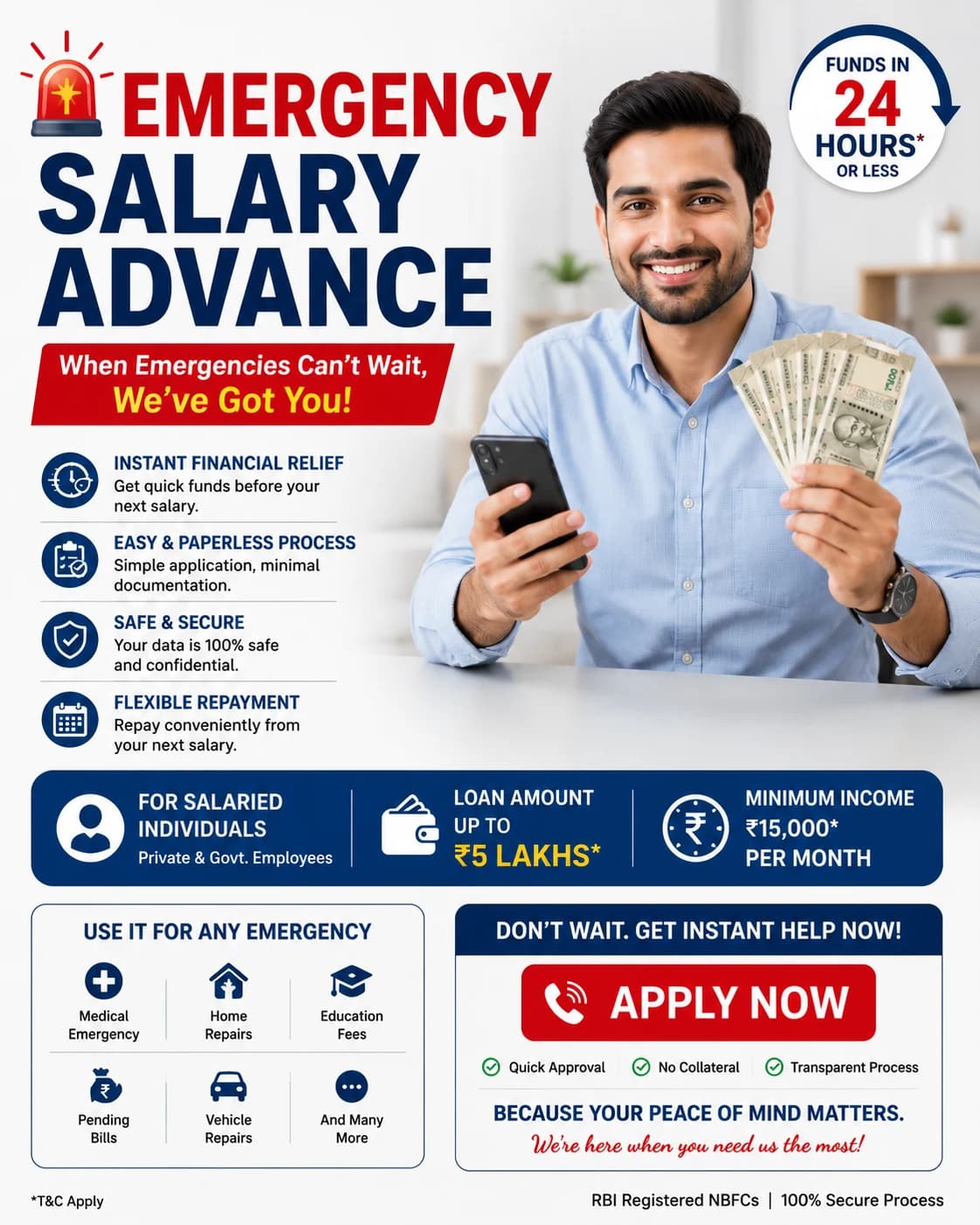
Snippet 1: What is an emergency salary advance? An emergency salary advance is a financial arrangement where an employer pays a portion of your upcoming paycheck before the scheduled payday. It is designed to help employees cover unexpected costs like medical bills or car repairs. Unlike a loan, it is usually interest-free and deducted automatically from your next salary.
Snippet 2: How do I request a salary advance from my boss? To request a salary advance, check your employee handbook for an existing policy first. If one exists, submit a formal written request or meet with HR. Be honest about your emergency, specify the exact amount needed, and propose a clear repayment plan, usually through a one-time payroll deduction.
Snippet 3: Are salary advance apps better than payday loans? Yes, salary advance apps (Earned Wage Access) are generally better than payday loans. They usually charge small monthly fees or tips rather than the triple-digit interest rates found in payday lending. However, they should still be used sparingly to avoid becoming dependent on future income for current living expenses.
Introduction
Life is unpredictable. One day everything is fine, and the next, your car breaks down or a medical bill arrives unexpectedly. When you don't have enough savings, an emergency salary advance can be a lifesaver.
This guide will explain exactly what a salary advance is and how you can get one. We will look at professional ways to ask your boss and modern apps that give you early access to your wages.
Our goal is to help you navigate financial stress with honesty and clarity. We want you to solve your immediate problem without making your long-term financial situation worse.
What is an Emergency Salary Advance?
An emergency salary advance is essentially a short-term "loan" from your own future earnings. You are asking your company to give you money you have already worked for, but haven't been paid for yet.
Most companies view this as a gesture of goodwill. It helps employees stay focused on work rather than worrying about money. It is not a gift; it is an advance on your contract.
How It Differs from a Bank Loan
When you take a loan from a bank, you pay interest. With an emergency salary advance, there is usually no interest. Your employer simply subtracts the amount from your next check.
Why Employers Offer Advances
Employers want their staff to be productive. If you are stressed about an eviction notice or a broken pipe at home, you can’t work well. Providing an advance builds loyalty and reduces staff turnover.
How to Ask Your Employer for an Advance
Asking for money can feel embarrassing, but it shouldn't. Most HR departments have seen these requests many times before. The key is to be professional and direct.
Check the Company Policy
Before talking to anyone, look at your contract or employee handbook. Search for terms like "Payroll Policy" or "Employee Hardship Fund." Some companies have a formal process already in place.
Prepare Your Reason
You do not need to share every private detail. However, saying "I have an unexpected medical emergency" or "My car needs urgent repairs to get to work" is helpful. Honesty builds trust.
Put It in Writing
Even if you speak to your manager in person, follow up with an email. This creates a paper trail for the accounting department. Clearly state the amount you need and the date you need it.
The Pros and Cons of a Salary Advance
While an emergency salary advance is helpful, it is important to understand both sides. You need to make an informed decision for your bank account.
The Benefits
No Interest: Most employers do not charge you extra for the convenience.
No Credit Check: Your boss knows you have a job; they don't need to see your credit score.
Speed: Usually, the money can be processed in a few days.
The Risks
Smaller Future Paychecks: Remember, your next paycheck will be much smaller. You must plan for this so you don't run out of money again.
Professional Perception: If you ask too often, it might look like you are bad at managing money.
Dependency: It can be easy to get stuck in a cycle of needing an advance every single month.
Using Salary Advance Apps (Earned Wage Access)
If your company doesn't offer advances, technology can help. Many apps now offer "Earned Wage Access" (EWA). These tools connect to your bank or timesheet to see how much you’ve earned.
Popular Types of Apps
Some apps work directly with your employer (like DailyPay or PayActiv). Others are independent and look at your direct deposit history (like Dave or Earnin).
How They Work
You request a small amount, usually between 50 and 500 units of currency. The app sends the money to your bank account instantly. On your next payday, the app automatically takes the money back.
Be Careful with Fees
While these apps are cheaper than payday lenders, some ask for "tips" or monthly subscriptions. Always read the fine print to see what the total cost will be.
Alternatives to a Salary Advance
If an emergency salary advance isn't possible, don't panic. There are other ways to find the money you need without resorting to high-interest debt.
Negotiate a Payment Plan
If you owe money to a hospital or a utility company, call them. Many businesses will let you pay in small installments rather than all at once. This is often better than taking a loan.
Local Charities and Non-Profits
Many communities have "Crisis Grants" or local charities that help with one-time emergencies. They may help pay a utility bill or provide food vouchers.
Credit Union Loans
If you belong to a credit union, they often offer small "Payday Alternative Loans" (PALs). These have much lower interest rates than traditional payday lenders and are safer for your credit.
How to Avoid Needing an Advance in the Future
Once your current emergency is over, it is time to build a safety net. This will prevent you from needing an emergency salary advance next time something goes wrong.
Start a Tiny Emergency Fund
You don't need a lot of money to start. Even saving 10 or 20 units of currency every week adds up. The goal is to have enough to cover a small surprise, like a flat tire.
Track Your Spending
Use a simple notebook or a free app to see where your money goes. Often, we find small expenses we can cut to save for a rainy day.
Automate Your Savings
Set up your bank account to move a small amount of money into a savings account the moment you get paid. If you never see the money in your checking account, you won't spend it.
Conclusion
Getting an emergency salary advance is a practical solution when you are in a tight spot. Whether you ask your employer or use a trusted app, the goal is to bridge the gap until your next payday.
Always remember to use this option as a last resort. Be honest with your employer, plan for your smaller future paycheck, and start building a small savings fund today. Financial peace of mind starts with taking control of your current situation.
Frequently Asked Questions (FAQs)
1. Will asking for a salary advance get me fired?
No, asking for an advance is not a legal reason to fire an employee. Most employers understand that emergencies happen. As long as you are a good worker and ask professionally, it shouldn't hurt your job security.
2. Is there a limit to how much I can ask for?
Most companies limit an emergency salary advance to 50% of the wages you have already earned in the current pay period. They want to ensure you still have enough money left in your next check to survive.
3. How many times can I request an advance?
This depends on company policy. Generally, it is best to limit requests to once or twice a year. If you ask every month, your employer may suggest financial counseling or become concerned about your stability.
4. Do I have to pay taxes on a salary advance?
No, because it is not "extra" income. It is simply a portion of your regular salary paid early. The taxes will still be deducted from your total earnings on your official payslip.
5. What if I quit before I pay the advance back?
If you leave the company, the remaining balance of the emergency salary advance is usually deducted from your final paycheck. If the final check isn't enough to cover it, the company may ask you to pay it back via a bank transfer.
6. Can I get an advance if I am a new employee?
It is much harder for new employees to get an advance. Most companies require you to pass a probation period (usually 3 to 6 months) before they trust you with an early payment.