Machinery Loan Under Stand Up India Scheme: The Complete 2026 Guide
Launching a brand-new factory, an automated processing workshop, or a modern medical diagnostic lab is a massive milestone for any entrepreneur. However, transforming a business idea into an active production unit requires high-performance industrial equipment. Buying heavy machinery requires substantial upfront capital that can easily strain your personal household savings.
To encourage financial inclusion and support grassroots manufacturing, the Ministry of Finance runs a flagship national lending program. Securing a machinary loan under stand up india scheme allows eligible entrepreneurs to access institutional credit from 10 Lakhs up to 1 Crore. This specialized credit structure is designed to fund your core infrastructure needs smoothly.
This honest guide simplifies the official lending rules, explains who qualifies for the greenfield project mandate, and details how you can apply through the digital StandUp Mitra portal safely.
3 Direct Answer Snippets for Quick Understanding
Can I get a machinery loan under the Stand Up India scheme?
Yes, you can secure a machinary loan under stand up india scheme to buy commercial equipment, tools, and heavy plant hardware. The funding is issued as a composite loan, which comfortably bundles the long-term machinery purchase cost together with your initial day-to-day working capital limits under a single bank account.
Who is eligible to buy equipment under the Stand Up India scheme?
The scheme is strictly reserved for women entrepreneurs of any community and individuals belonging to Scheduled Caste (SC) or Scheduled Tribe (ST) categories. The applicant must be at least 18 years old and establishing a brand-new greenfield venture in the manufacturing, services, trading, or agri-allied sectors.
Does Stand Up India require property collateral for a machinery loan?
No, the scheme does not mandate physical property collateral like a personal house or commercial land deeds. Lenders can grant completely unsecured loans up to 1 Crore because the primary machinery you purchase is automatically backed by the central government's Credit Guarantee Fund Scheme for Stand-Up India Loans.
What is a Stand Up India Composite Machinery Loan?
The Stand Up India initiative functions through a unique composite loan structure. In traditional banking, you are forced to file separate applications: a term loan to purchase equipment and a cash credit loan to manage monthly office bills.
When you apply for a machinary loan under stand up india scheme, the bank integrates both credit lines into one simple contract. The term loan portion directly pays your heavy machinery manufacturing suppliers, while the working capital portion provides an active overdraft line to help you run your plant during the initial setup months.
Because the central government mandates every single scheduled commercial bank branch in India to fund at least one woman and one SC/ST profile annually, your application receives dedicated structural priority.
Core Eligibility Criteria for Machinery Financing
Because this public credit framework targets underserved sectors, the automated eligibility filters are highly specific. Your production blueprint must satisfy these core rules:
1. Target Beneficiary Profile
The primary entrepreneur must belong to the SC, ST, or women communities. If you are launching a non-individual enterprise—like a partnership firm, LLP, or private limited company—at least 51% of the total corporate shareholding and controlling stake must be held by an eligible SC/ST or female promoter.
2. Strict Greenfield Venture Mandate
The funding cannot be deployed to expand, renovate, or clear debts for an existing retail shop or factory. A greenfield project signifies that the venture is your first-time commercial step into that specific industrial sector.
3. Promoter Contribution and Margin Money
The scheme covers up to 85% of your total project estimation cost, which includes the machinery purchase price. The remaining 15% margin money can be arranged by combining state subsidy schemes, but the primary borrower must bring in a minimum of 10% of the project value as their own contribution.
Interest Rates and Repayment Terms
SBI and other national commercial institutions link Stand Up India loans to highly transparent, low-interest market benchmarks. The interest rate is strictly capped and cannot exceed the bank's base Marginal Cost of Funds-Based Lending Rate (MCLR) plus 3% and a standard tenure premium.
The repayment structure is engineered to match factory growth timelines:
Extended Tenure: Lenders provide a long repayment window of up to 7 years to pay back the loan principal comfortably.
Moratorium Period: To protect your initial cash flow, you get an operational grace period of up to 18 months while your plant machinery is being shipped, calibrated, and tested.
RuPay Debit Card: For working capital limits up to 10 Lakhs, you receive a commercial debit card to execute immediate supplier payments smoothly.
Essential Documents Checklist for Online Processing
To pass institutional verification gates without your digital session stalling, arrange these official records neatly on your device:
Promoter Identification: Personal PAN cards, Aadhaar cards, and valid caste certificates issued by competent local authorities (for SC/ST applicants).
Corporate Authenticity Proof: Certificate of Incorporation from the RoC, registered Partnership Deeds, or a free government Udyam MSME certificate.
Machinery Price Invoices: Formal proforma price quotes secured from authorized machinery manufacturing vendors, outlining warranty conditions.
Detailed Project Report (DPR): A comprehensive written business plan displaying your plant layout, raw material pricing, and 5-year profit projections.
Step-by-Step Online Application Process
Filing your machinery application through the centralized national credit framework minimizes human intervention. Follow this digital path:
Step 1: Secure Valid Equipment Quotations
Connect with verified commercial suppliers. Obtain comprehensive proforma bills that itemize the exact core pricing, shipping taxes, installation labor fees, and plant operator training costs.
Step 2: Log in to the StandUp Mitra Portal
Navigate directly to the official central web portal (standupmitra.in). Click to register as a new user, enter your active mobile number, and generate your verification login dashboard.
Step 3: Input Business Metrics and Niche
Fill out your demographic details. Enter your proposed project address, specify your industry niche (manufacturing or services), and enter the total capital value required to purchase the equipment.
Step 4: Upload Your Project Plan and KYC
Submit your digitized promoter KYC cards, valid category proofs, and your detailed project report through the portal's encrypted file upload system.
Step 5: Select a Partner Bank Branch
The system algorithm will process your data logs and display empanelled scheduled commercial banks near your factory coordinates. Select your preferred branch and submit your file to initiate final physical processing and asset disbursal.
Conclusion
Securing a machinary loan under stand up india scheme is one of the most stable, secure, and affordable ways to establish a modern industrial unit in India. By eliminating property collateral and capping annual interest rates near basic bank benchmarks, this public credit initiative provides an exceptional launchpad for women and SC/ST founders.
To ensure your venture scales successfully, keep your personal credit records spotless, design a highly detailed project report, and choose dependable machinery brands. By utilizing these structured government-backed credit lines responsibly, you can build a highly scalable production base and contribute actively to India's manufacturing landscape.
Frequently Asked Questions (FAQs)
1. Can a male entrepreneur from the general category apply for a Stand Up India machinery loan?
No, individual male applicants from the general unreserved category are not eligible to apply under this scheme. The Stand Up India framework is strictly reserved for women entrepreneurs of any community and male or female individuals belonging to recognized SC/ST groups.
2. What exactly counts as a "greenfield enterprise" under this scheme?
A greenfield enterprise refers to a brand-new business setup being established for the very first time by the promoter. If you already own an active, running manufacturing plant or retail shop under your name and seek capital to buy more machines for it, the project does not qualify as greenfield.
3. What happens if the machinery costs more than 1 Crore?
The maximum loan limit under the standard Stand Up India credit guarantee framework is capped strictly at 1 Crore. If your manufacturing setup requires highly advanced machinery exceeding this budget window, you will need to fund the balance using personal capital or explore high-ticket corporate MSME loan lines.
4. Is a Jan Dhan bank account mandatory to apply for this scheme?
While having a basic bank account is necessary to receive the digital loan disbursal, holding a specific Jan Dhan account is not mandatory. You can successfully process your application using a standard savings or current account held with any scheduled commercial bank in India.
5. What is "handholding support" on the StandUp Mitra portal?
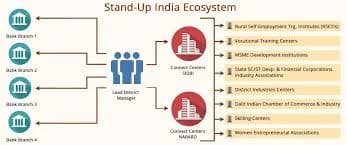
Handholding support is a unique mentoring feature built into the government portal to help first-time trainee borrowers. It connects you with specialized agencies like SIDBI and NABARD to receive free guidance on project report preparation, financial accounting tips, and technical skill training.
6. Can I use the Stand Up India loan to buy transport vehicles for my business?
Yes, you can use the loan to purchase commercial transport vehicles, delivery vans, or specialized tractors, provided they are integral assets required to run your greenfield service or agri-allied business, such as a logistics firm or a dairy processing unit.
You can check this detailed roadmap on the Stand Up India scheme parameters to understand the 51% ownership criteria and digital application updates for new businesses.