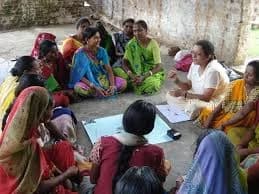
In rural communities, women often hold the key to driving local economic growth. However, starting a small village business, like a tailoring unit, an organic farm, or a handicraft shop, requires initial setup capital.
Traditional banking systems can be hard to navigate for low-income households. Without a steady formal salary or property to offer as security, individual rural women often find it difficult to get bank approval.
To solve this problem, community-based financial systems provide specialized microfinance loans for rural women self help groups. This group credit model bypasses rigid banking hurdles, allowing women to lift their families out of poverty together.
1. What are microfinance loans for rural women self help groups?
Microfinance loans for rural women self help groups are group-based credit options provided by commercial, rural, and cooperative banks. They allow a pooled collective of 10 to 20 local women to borrow funds seamlessly for small-scale business ventures without pledging personal property.
2. What is the collateral-free limit for SHG loans under government rules?
Under active central banking guidelines and the national livelihood mission, microfinance loans for rural women self help groups are completely collateral-free up to twenty lakh rupees. Banks are prohibited from asking for physical security or third-party guarantees to clear these group advances.
3. How does the government make these microfinance loans affordable?
The central government provides a dedicated interest subvention scheme for women groups. For loan amounts up to three lakh rupees, the base interest rate is capped at an affordable 7 percent per year, which drops even lower if the group pays its installments on time.
The Core Concept of a Self Help Group (SHG)
A Self Help Group is a small voluntary association consisting of 10 to 20 women from similar socio-economic backgrounds in a village. They come together to save small amounts of money regularly, like ten or fifty rupees a week.
The pooled savings are kept in a local bank account and are used to give tiny, low-interest internal loans to members who face household emergencies. This internal discipline teaches the members basic bookkeeping and financial management.
Once the collective demonstrates strong saving habits and social unity, formal financial institutions step in. Banks connect with the group through the standard SHG-Bank Linkage Programme to provide larger commercial credit lines.
The Magic of the Panchasutra System
Lenders do not check the individual credit bureau scores of every single woman in a village group. Instead, banks evaluate the group's collective discipline using a simple five-point rule known as the Panchasutra.
To qualify for microfinance loans for rural women self help groups, the association must practice these five core habits for at least six consecutive months:
Regular Meetings: Holding consistent weekly or monthly group discussions.
Regular Savings: Making mandatory cash contributions from every single member.
Regular Internal Lending: Giving out small internal loans to members in need.
Regular Recovery: Ensuring timely return of internal loans to the group box.
Regular Bookkeeping: Maintaining up-to-date account ledgers and meeting registers.
Key Benefits of Group-Based Micro-Lending
Utilizing a group loan model instead of individual commercial credit offers deep structural advantages for aspiring rural entrepreneurs.
No Individual Collateral Required
The biggest barrier to formal credit is the lack of property deeds. In an SHG setup, the bank relies on peer support and group trust. The internal bond of the women acts as the ultimate safety net for the lender.
Scaled Funding in Multiple Doses
Banks do not overwhelm a fresh group with massive debt. They disburse funds in gradual doses. The first dose typically starts around one lakh fifty thousand rupees, and the limit expands dynamically up to twenty lakh rupees as the group establishes a flawless repayment history.
How the Interest Subvention Scheme Saves Money
To keep microfinance loans for rural women self help groups highly affordable, the government runs a nationwide interest subvention program through the DAY-NRLM scheme.
For all women groups availing of credit up to three lakh rupees, the interest rate is adjusted down to a flat 7 percent per annum. This prevents rural families from falling prey to local moneylenders who charge extreme fees.
Furthermore, in several selected rural districts, the government adds a prompt repayment incentive of 3 percent. If your group deposits its monthly installments on time, the effective interest rate drops to an incredible 4 percent per year.
Step-by-Step Guide to the Online Apply Process
Applying for community microfinance has become heavily digitized, allowing village coordinators to submit project papers via online portals.
Step 1: Complete the Internal Grading Process
After six months of active operations, the group undergoes an official grading exercise conducted by local bank officials or rural federation teams to verify their ledger books.
Step 2: Upload Details to the Central Livelihood Portal
The community cadre scans the group's basic identity cards and registers, then uploads the information directly to the official NRLM SHG-Bank Linkage Portal.
Step 3: Bank Review of the Common Application Form
Participating banks access the digital files directly from their core banking solutions. The branch manager reviews the group's micro-credit plan to assess how the women plan to split and invest the funds.
Step 4: Rapid Disbursal to the Group Account
Once satisfied with the digital grading reports, the bank approves the loan within fifteen days. The approved capital is credited as a lump-sum term loan or an active cash credit limit straight into the group's joint bank account.
Common Business Ventures Funded by Women Collectives
The capital received through microfinance loans for rural women self help groups can be distributed among individual members or invested into a collective village industry.
Many groups use the money to purchase high-yield milch cows, set up small poultry farms, or buy premium seeds and organic fertilizers for collective vegetable cultivation.
Other groups venture into non-farm micro-enterprises, such as manufacturing handmade soaps, weaving traditional fabrics, running small village grocery shops, or packaging local spices for nearby town markets.
Conclusion
Embracing microfinance loans for rural women self help groups is one of the most powerful ways to drive grassroots financial inclusion across rural regions. It shifts the focus from individual limitations to collective community strength.
By maintaining solid accounting discipline and utilizing subsidized bank schemes, rural women can establish sustainable livelihoods without facing debt traps. Stay disciplined with your daily ledger entries, coordinate closely with your local village federations, and use group financing wisely to build self-reliant villages and a highly prosperous future.
Frequently Asked Questions (FAQs)
1. Can men form a Self Help Group to apply for these low-interest microfinance loans?
While men can form Self Help Groups under general banking guidelines, the specific highly subsidized interest benefits, like the 7 percent rate and collateral-free extensions up to twenty lakh rupees, are strictly reserved for all-women groups under the national livelihood mission rules.
2. Who is legally responsible for paying back the bank loan if one member defaults?
The entire group carries joint and several liability for the loan. If one individual member fails to return her share of the money, the remaining members of the group must work together to cover her monthly installment to protect the collective credit score of the SHG.
3. Do banks charge extra processing fees or handling costs on these rural micro loans?
Under active regulatory guidelines, public and cooperative sector banks do not charge any processing fees, documentation levies, or physical inspection charges for women self help group loans up to an amount of six lakh rupees, making the initial onboarding completely free.
4. What is a Revolving Fund, and how does it differ from a bank loan?
A Revolving Fund is a one-time cash grant of ten thousand to fifteen thousand rupees given directly by the government to fresh groups that are three months old. It is a permanent grant to boost the group's internal wallet balance and does not have to be returned to the bank.
5. Can an old, inactive self help group apply for this financing?
Yes, an old or defunct group can absolutely apply for bank financing, provided they go through a formal revival process. The members must resume regular meetings, update their books, and remain continuously active for at least three months to qualify for standard bank grading.
6. Can an SHG hold active cash credit limits and a term loan at the same bank branch simultaneously?
Yes, a disciplined group can utilize both financial products at the same time. They can maintain a Cash Credit Limit account to manage daily flexible working capital for their shops, alongside a structured Term Loan to fund long-term assets like machinery or cattle sheds.