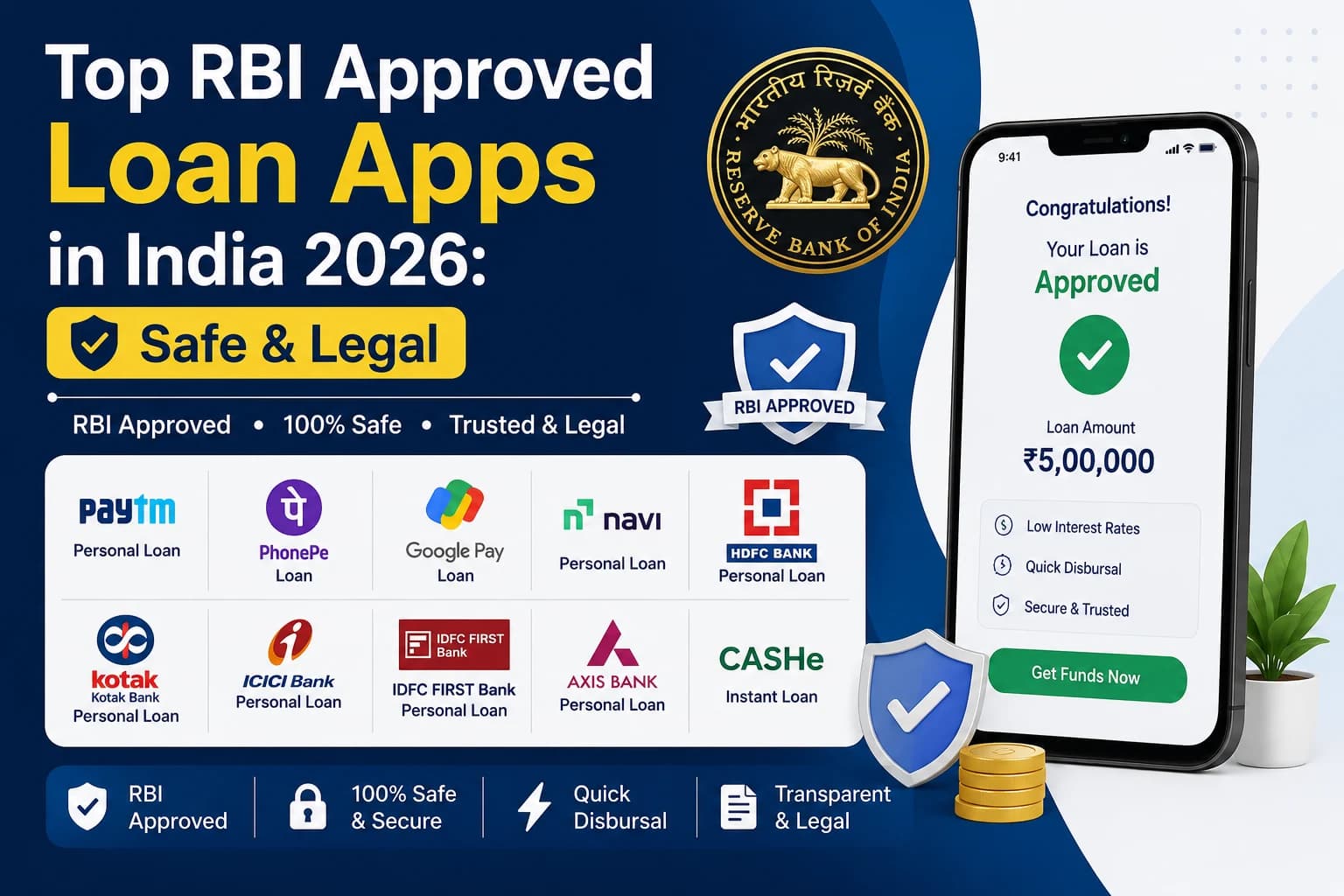
What is an RBI approved loan app? An RBI approved loan app is a digital platform that partners with a Regulated Entity (RE), such as a Bank or a Non-Banking Financial Company (NBFC) registered with the Reserve Bank of India. These apps must follow strict fair practice codes, transparent interest rates, and legal recovery methods as mandated by RBI digital lending guidelines.
How can I check if a loan app is RBI approved? To verify an app, check its website or "About" section for the name of its partner NBFC or Bank. Cross-reference this name with the official list of registered NBFCs on the RBI website. Legitimate apps always disclose their lending partners and provide a Sanction Letter before dispersing funds.
Is it safe to take a loan from a mobile app? It is safe only if the app is an RBI approved loan app. Regulated apps protect your data, charge reasonable interest, and do not use harassment for recovery. Avoid apps that ask for upfront fees or access to your entire contact list, as these are signs of illegal "7-day" loan scams.
RBI Approved Loan App: How to Borrow Money Safely in India
Introduction
In today’s digital world, getting money is as easy as clicking a button. While this is convenient, it has also opened the door for many fake lenders.
Choosing an RBI approved loan app is the only way to ensure your financial safety. These apps operate under the strict eye of the Reserve Bank of India, protecting you from fraud.
In this guide, we will explain how these apps work, how to spot a scam, and the best ways to manage your digital credit responsibly.
What Does "RBI Approved" Actually Mean?
The Reserve Bank of India (RBI) does not directly "approve" every single app on the Play Store. Instead, it regulates the companies that provide the money.
An RBI approved loan app is simply a front-end platform for a licensed Bank or an NBFC. The app is the "shop window," but the money comes from a regulated vault.
If an app is not linked to a licensed NBFC or Bank, it is illegal to offer loans in India. Always look for this partnership before sharing your Aadhaar or PAN details.
Why You Should Only Use a Regulated Loan App
Using a regulated platform isn't just about following rules; it's about your personal and financial security.
1. Fair Interest Rates
Apps regulated by the RBI cannot charge arbitrary or "hidden" interest. They must follow a transparent pricing model and show you the Annual Percentage Rate (APR).
2. Data Privacy
An RBI approved loan app is restricted from accessing your private photos, videos, or contact lists. They only collect data necessary for credit underwriting and KYC.
3. Ethical Recovery Practices
Illegal apps often use threats or harassment. Regulated lenders must follow a "Fair Practice Code," meaning they cannot call you at odd hours or contact your friends.
How to Identify a Genuine RBI Approved Loan App
Scammers are getting better at looking professional. Use this checklist to verify any lending platform you download.
Check the Official Website
Every legitimate RBI approved loan app will have a professional website. It must clearly list the names of the NBFCs or Banks they are partnered with.
Look for the Sanction Letter
Before the money hits your account, a legal app will provide a Sanction Letter on the letterhead of the lending NBFC. If an app skips this, stay away.
No Upfront Fees
A major red flag is any app asking for "processing fees" or "security deposits" before the loan is approved. Genuine lenders deduct fees from the loan amount itself.
The RBI Digital Lending Guidelines
To protect borrowers, the RBI introduced specific rules in recent years. Understanding these will help you stay safe.
Direct Transfer: The loan money must go directly from the Bank/NBFC account to the borrower's account without passing through third-party pools.
Cooling-off Period: Borrowers should be given a specific time to exit the loan without penalty if they change their minds.
Grievance Officer: Every RBI approved loan app must have a dedicated person to handle customer complaints.
Common Signs of a Fake or Illegal Loan App
Knowing what to avoid is just as important as knowing what to look for. Beware of these "Red Flags":
Short Tenure: Illegal apps often offer 7-day or 15-day loans. RBI-regulated personal loans usually have a minimum tenure of 60 to 90 days.
Permissions: If an app asks for access to your "Gallery" or "Contacts," it is likely a scam intending to blackmail you later.
Vague Names: Many fake apps use names that sound similar to famous banks but have slight misspellings.
Steps to Take Before Applying for a Loan
Before you hit the "Apply" button on an RBI approved loan app, do your homework to avoid debt traps.
Compare Interest Rates
Different apps cater to different risk levels. Some might charge 15% per year, while others might go up to 36%. Choose the one that fits your budget.
Read the Fine Print
Check for "Pre-payment charges." Some lenders charge you extra if you try to pay off your loan early. A good RBI approved loan app will be transparent about this.
Calculate Your EMI
Only borrow what you can afford to pay back. Use an EMI calculator to see if the monthly payment fits into your salary without causing stress.
The Importance of Your Credit Score
When you use an RBI approved loan app, your repayment behavior is reported to credit bureaus like CIBIL.
Timely Payments: Paying on time will increase your credit score, making it easier to get bigger loans (like home loans) in the future.
Defaults: If you fail to pay, your score will drop, and you may be barred from getting any formal credit for years.
How to Report Illegal Loan Apps
If you accidentally use a predatory app or face harassment, do not panic. There are legal ways to fight back.
Sachet Portal: You can lodge a complaint on the RBI’s "Sachet" website, which is specifically for reporting illegal financial activities.
Cyber Cell: File a complaint with your local Cyber Police or through the National Cyber Crime Reporting Portal.
Consumer Forum: For service-related issues with a regulated app, you can approach the Consumer Court.
Conclusion
Finding an RBI approved loan app is the foundation of a safe borrowing experience. While the convenience of instant cash is tempting, always prioritize security over speed. By checking for NBFC partnerships, reading reviews, and understanding RBI guidelines, you can protect your data and your dignity.
Remember, a loan is a tool to help you, not a trap to hurt you. Borrow responsibly and always verify before you trust.
Frequently Asked Questions (FAQs)
1. Can a loan app be safe if it's not on the RBI list?
No. In India, any entity providing loans must be a registered Bank or NBFC. If an app isn't partnered with one of these regulated bodies, it is operating illegally and poses a high risk to your data and finances.
2. Why do some apps ask for my contacts?
Illegal apps ask for contacts to harass your friends and family if you delay payment. A genuine RBI approved loan app is prohibited by the RBI from accessing your contact list or media gallery.
3. What is the maximum interest rate an RBI approved app can charge?
While the RBI doesn't set a hard "cap" on interest rates, they must be "reasonable" and not "usurious." Most legal apps charge between 12% and 36% per annum. Anything significantly higher or weekly interest is a sign of a scam.
4. What should I do if I can't pay back my loan on time?
Contact the customer support of the RBI approved loan app immediately. Legal lenders often have options for restructuring or small extensions. Never take a second loan from a "7-day app" to pay off the first one, as this leads to a debt trap.
5. How do I know which NBFC is linked to the app?
Open the app's description in the Google Play Store or visit their official website. Look for a section called "Our Lending Partners." It will list names like "Krazybee Services," "Fullerton," or "DMI Finance." You can verify these names on the RBI's official list of NBFCs.
6. Will using an RBI approved app improve my CIBIL score?
Yes. Since these apps are linked to regulated NBFCs, they report your payment history to credit bureaus. Consistent, on-time payments will help build a strong credit history, whereas defaults will damage it.