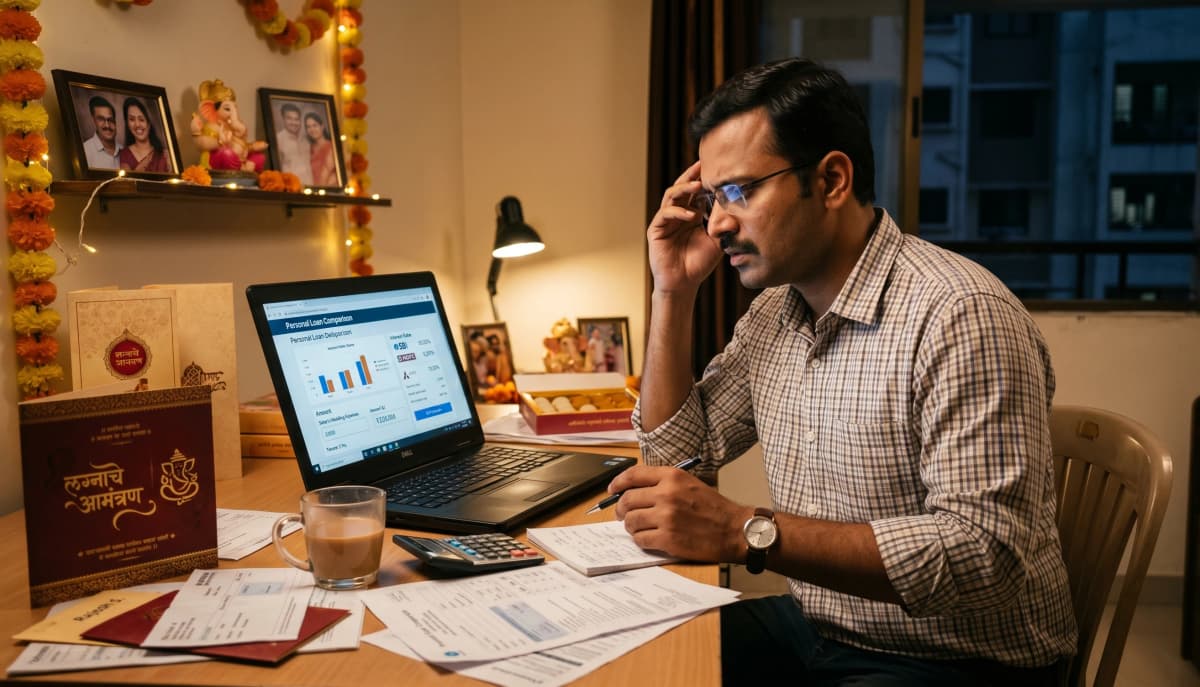
Rajesh, 35, a salaried engineer from Pune, needed ₹5 lakh for his sister’s wedding expenses. He explored various options, but finding the best personal loan in India felt overwhelming. Many borrowers face similar dilemmas, unsure where to begin their search. Understanding the nuances of personal financing is crucial for making informed decisions. This guide will help you navigate the complex world of credit, ensuring you find a reliable and affordable solution for your financial needs.
Understanding Personal Loans in India
A personal borrowing is an unsecured credit facility, meaning you don't need to pledge any collateral like property or gold. Lenders offer these funds for various personal needs—home renovation, medical emergencies, travel, or even debt consolidation. This flexibility makes them very popular.
India's personal borrowing market grew by over 20% year-on-year in 2023, according to recent RBI reports, highlighting its increasing demand. You repay the borrowed amount through fixed monthly instalments, known as EMIs (Equated Monthly Instalments), over a set tenure.
These EMIs simplify budgeting. They provide a predictable repayment schedule, helping you manage your finances without stress. Different institutions offer varied terms, so comparing them is always a smart move.
What Influences Your Personal funds Interest Rates?
Several factors determine the rate you'll pay on your personal financing. The lender assesses your creditworthiness very carefully. Your CIBIL score is perhaps the most significant factor; a score above 750 often secures lower rates. Practically speaking, a higher score indicates a responsible payoff history, making you a less risky applicant.
That distinction matters more than most people realise.
Your income stability also plays a vital role. Lenders prefer applicants with a steady job and a consistent income stream. They also consider your employer's reputation and your existing debt-to-income ratio. For instance, public sector lenders like SBI might offer different rates compared to private institutions such as HDFC Bank or ICICI creditor, depending on their internal policies and current market conditions.
What's the real cost of this financing? It’s not just the advertised rate; processing fees and other charges also add to the overall expense. Always ask for the Annual Percentage Rate (APR) to get a true picture.
Eligibility Criteria for Personal Financing
Before applying, ensure you meet the lender's specific requirements. While criteria vary slightly between institutions, some common points apply. Typically, you must be between 21 and 60 years old.
A minimum monthly income, usually ₹15,000 to ₹25,000, is often required. Your employment status also matters; salaried individuals generally find it easier to get approval than self-employed applicants, though options exist for both.
You will need to provide essential documents like identity proof (Aadhaar, PAN), address proof (utility bills), and income proof (salary slips, financial institution statements, ITR). Remember, eligibility can vary significantly between lenders.
This is where most applicants make mistakes.
Always check the specific terms of your chosen lender before applying. An applicant meeting all criteria for one lender might not qualify for another due to differing internal policies.
Comparing Personal financing Offers: A Smart Approach
Finding the most suitable credit option requires careful comparison. Don't just look at the lowest advertised rate. Consider the Annual Percentage Rate (APR), which includes all fees, giving you the true cost.
Processing fees, prepayment charges, and late payment penalties can significantly impact your overall cost. Many applicants find that a slightly higher rate rate with no prepayment penalty is better than a low rate with hefty exit fees.
Honestly, reading the fine print is non-negotiable. Compare EMI payment tenures offered by different institutions—longer tenures mean lower EMIs but higher total cost of borrowing paid. Shorter tenures mean higher EMIs but less overall cost.
Is there a smarter way to borrow? Absolutely, by comparing offers from multiple lenders like Axis lender, Kotak Mahindra NBFC, and Bajaj Finserv on platforms like Six Finance. This ensures you get the best deal tailored to your financial capacity.
The fine print always matters.
The Role of Your CIBIL Score in Getting Credit
Your CIBIL score is a three-digit number, ranging from 300 to 900, reflecting your creditworthiness. A higher score—generally 750 and above—signals to lenders that you are a responsible applicant. This often translates into quicker approvals and more favourable rate rates.
A low CIBIL score can lead to rejection or higher cost of borrowing costs. Based on how Indian banks operate, they rely heavily on this score to assess risk. Regularly checking your CIBIL report for errors is a proven strategy.
Improving your score involves paying EMIs on time, keeping credit utilization low, and avoiding multiple financing applications simultaneously. The Reserve lender of India (RBI) mandates all financial institutions to report customer credit data to credit bureaus, making your score a critical element in securing any financing.
Navigating typical Personal borrowing Pitfalls
Borrowing money comes with responsibilities, and certain pitfalls can turn a useful financing into a burden. One usual mistake is not understanding the total cost. High finance charge rates, coupled with hidden charges, can make the borrowing much more expensive than anticipated. Always clarify all fees upfront.
That distinction matters more than most people realise.
What most people miss: not evaluating their monthly instalment capacity realistically. Over-borrowing can lead to financial strain, potentially causing missed EMIs and damaging your credit score. Another risk is rate-rate changes, especially with floating-rate loans, although most personal loans in India are fixed-rate.
Be aware of penalties for late payments or defaults. Always read the terms and conditions carefully before signing any agreement. Ensure you understand the implications of any clause, including foreclosure and part-payment rules.
How Six Finance Helps You Find the Right Credit
Six Finance is India's leading personal finance comparison platform, designed to simplify your search for the best credit. We partner with top Indian lenders, including SBI, HDFC, ICICI, and others, to bring you a wide range of options.
Our platform allows you to compare cost of borrowing rates, processing fees, eligibility criteria, and other terms side-by-side. This transparency empowers you to make a proven choice without visiting multiple lender branches.
Most credit seekers overlook this completely.
We provide unbiased information and tools to enable you assess your EMI, grasp your eligibility, and apply seamlessly. Our goal is to ensure you find a reliable financing solution that fits your budget and financial goals. We believe in helping you borrow smarter, not harder.
Key Takeaways
- A CIBIL score of 750 or higher significantly improves your chances for better personal borrowing finance charge rates.
- India's personal funds market saw over 20% year-on-year growth in 2023, as per RBI data.
- Always compare the Annual Percentage Rate (APR), not just the headline cost of borrowing rate, to know the true cost of credit.
- Most Indian banks charge a processing fee ranging from 0.5% to 2.5% of the financing amount.
- Eligibility criteria, including age, income, and employment type, vary among lenders but are crucial for approval.
Disclaimer: This content is for educational purposes only and does not constitute personalized financial advice. financing eligibility, finance charge rates, and terms are subject to the lender's discretion and market conditions. Always consult a certified financial advisor before making major financial decisions.
Compare and apply for the best personal funds rates on Six Finance.
Frequently Asked Questions
Can I get a personal credit with a low CIBIL score?
It's challenging to secure a personal credit with a low CIBIL score (below 650-700), but not impossible. Some lenders might offer credit at higher finance charge rates or require a co-applicant. Consider improving your score first or exploring secured credit options.
What documents are typically needed for a personal borrowing application?
Generally, you'll need identity proof (PAN, Aadhaar), address proof (utility bills, passport), and income proof (salary slips for salaried, financial institution statements and ITR for self-employed). Lenders may request additional documents based on their internal policies.
How quickly can I get a personal financing disbursed in India?
Many lenders now offer quick disbursal, sometimes within 24 to 72 hours, especially for existing customers or those with excellent credit scores. The speed depends on your documentation, lender processing times, and verification procedures.
Timing, in finance, is everything.
Are there any hidden charges in personal loans?
While most charges are disclosed, some applicants might overlook them. Always check for processing fees, prepayment or foreclosure charges, late payment penalties, and stamp duty charges. These can significantly impact the overall cost of your financing.