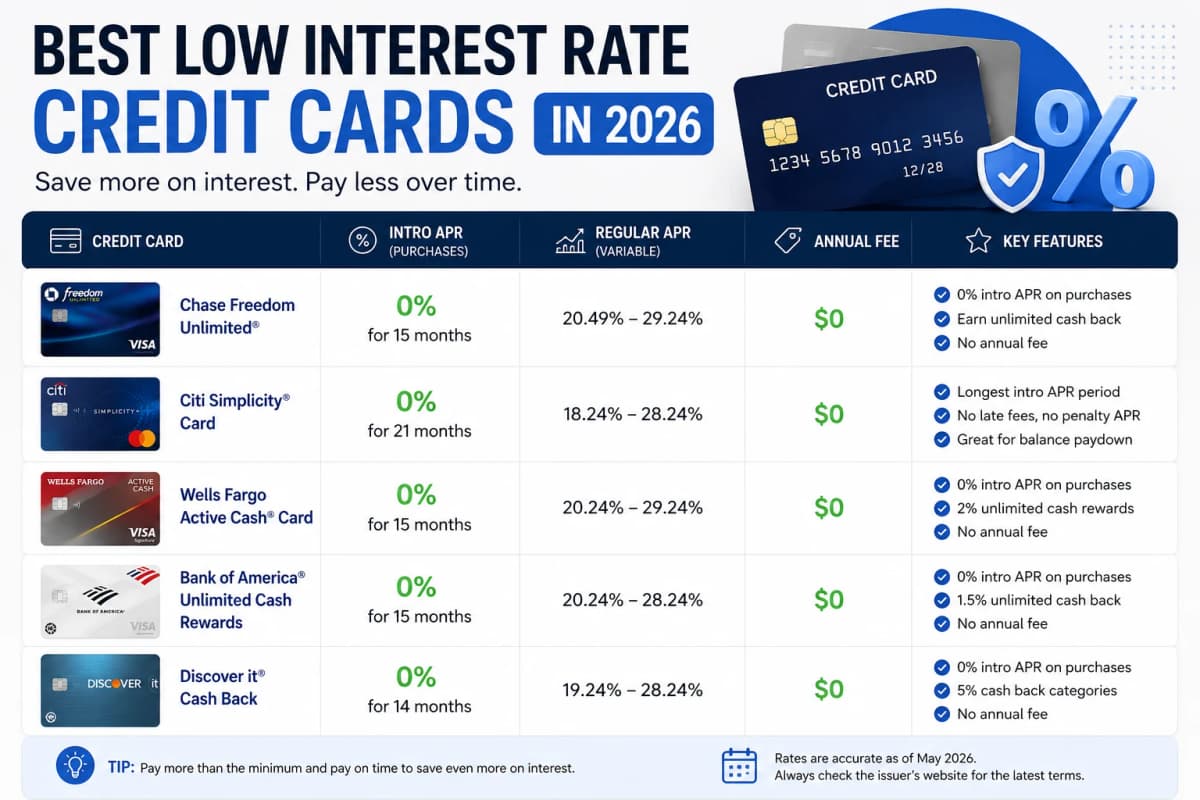
What Is a Low Interest Rate Credit Card?
A low-interest credit card is designed to offer a lower APR compared to traditional credit cards. This means you pay less interest on outstanding balances.
These cards are particularly useful for people who:
• Carry a balance occasionally
• Need to finance larger purchases
• Want to reduce existing credit card debt
• Prefer lower borrowing costs over rewards programs
A lower APR can lead to significant savings over time, especially for individuals who do not pay their balance in full every month.
Benefits of Low Interest Credit Cards in 2026
Choosing a low-rate credit card can provide several financial advantages. While rewards cards often attract attention, low-interest cards may offer greater value for borrowers.
Key benefits include:
• Lower monthly interest charges
• Reduced cost of carrying balances
• Better debt management opportunities
• Potential balance transfer promotions
• Improved financial flexibility during emergencies
• Easier repayment of large purchases
Many lenders in 2026 are also offering introductory APR promotions, which can help cardholders save even more during the first few months.
Features to Compare Before Applying
Not all low-interest credit cards are the same. It is important to compare several factors before making a decision.
Consider the following features:
Annual Percentage Rate (APR)
The APR determines how much interest you pay on unpaid balances.
• Ongoing purchase APR
• Balance transfer APR
• Cash advance APR
• Introductory APR period
Annual Fees
Some low-interest cards charge annual fees, while others do not.
• No annual fee cards reduce overall costs
• Premium cards may offer additional benefits
Balance Transfer Options
Many low-rate cards include balance transfer offers.
• Introductory 0% APR periods
• Balance transfer fees
• Transfer eligibility requirements
Additional Benefits
Even low-interest cards may include useful perks.
• Fraud protection
• Mobile banking tools
• Credit score monitoring
• Contactless payments
• Purchase protection features
Who Should Consider a Low Interest Credit Card?
Low-interest credit cards are not ideal for everyone. They are best suited for individuals who may occasionally carry a balance.
These cards are often beneficial for:
• Students building credit responsibly
• Families managing household expenses
• Individuals consolidating existing debt
• Professionals financing major purchases
• Cardholders seeking lower borrowing costs
People who pay their balances in full every month may benefit more from rewards-focused cards instead.
Tips for Getting the Best Credit Card Interest Rate
Your credit profile plays a major role in determining the interest rate you receive. Taking steps to improve your financial health can help you qualify for better offers.
Helpful tips include:
• Maintain a strong credit score
• Pay bills on time consistently
• Keep credit utilization low
• Review your credit report regularly
• Avoid unnecessary credit applications
• Compare multiple card offers before applying
Lenders generally reserve the lowest APRs for applicants with excellent credit histories.
Common Mistakes to Avoid
While low-interest cards can be helpful, some mistakes can reduce their value.
Avoid these common errors:
• Missing monthly payments
• Exceeding credit limits
• Ignoring balance transfer fees
• Using cash advances frequently
• Applying for too many cards at once
• Relying on credit cards for long-term debt solutions
Responsible usage remains essential, regardless of how low the interest rate may be.
Frequently Asked Questions (FAQs)
1. What is considered a low credit card interest rate in 2026?
Generally, a credit card with an APR significantly below the industry average is considered a low-interest card. Exact rates vary by lender and applicant credit profile.
2. Are low-interest credit cards better than rewards cards?
It depends on your spending habits. If you carry balances, a low-interest card may save more money than a rewards card.
3. Can I get a low APR credit card with average credit?
Some lenders offer competitive rates to applicants with fair or good credit, though the best rates are usually available to those with excellent credit.
4. Do low-interest credit cards have annual fees?
Some do, while many offer no annual fee options. Always compare total costs before applying.
5. Can I transfer debt to a low-interest credit card?
Yes. Many cards offer balance transfer promotions that can help reduce interest costs and simplify repayment.
Conclusion
Finding the best low interest rate credit card in 2026 requires careful comparison of APRs, fees, balance transfer options, and additional benefits. A low-interest card can help reduce borrowing costs and improve financial flexibility when used responsibly. Before applying, review your credit profile, compare multiple offers, and choose a card that aligns with your financial goals.
Author: Doctar Team
Disclaimer:
This article is for informational and educational purposes only and should not be considered financial, legal, or investment advice. Credit card terms, interest rates, and eligibility requirements may vary by lender and can change over time. For personalized financial guidance, consult a qualified financial advisor. For more information connect with Doctor on Doctar.