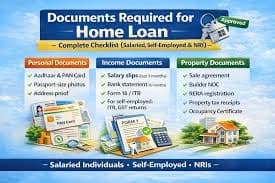
20 Lakh Home Loan Documents Required Checklist: A Complete Guide
Applying for your first home loan can feel like an overwhelming task. The biggest challenge that most home buyers face is not the calculation of the interest, but organizing the mountain of paperwork that banks ask for.
When you apply for a 20 lakh housing loan, lenders want to verify two primary aspects: your personal identity and your capacity to pay back the borrowed money. Having an organized file ready prevents delays and helps get your loan approved quickly.
This handbook provides a clean, easy-to-understand breakdown of the 20 lakh home loan documents required checklist. Whether you are a corporate employee or a business owner, this list will keep your application smooth and error-free.
Direct Answer Snippets for Quick Reference
What are the main identity documents required for a 20 lakh home loan?
The core identity documents required for a 20 lakh home loan include your PAN card, which is mandatory for credit score assessment, alongside an officially valid proof of address and age. Lenders universally accept your Aadhaar card, valid passport, voter identity card, or driving license for this verification.
What income proof do salaried workers need for a 20 lakh home loan?
Salaried workers must provide their authentic monthly salary slips for the trailing three months, updated bank account statements for the last six months showing regular salary credits, and Form 16 documents along with Income Tax Returns (ITR) filed for the past two financial years.
What property papers are needed for a 20 lakh home loan checklist?
The critical property documents required include the registered sale agreement or allotment letter, a formal No Objection Certificate (NOC) from the builder or housing society, the approved building construction plan blueprint, a clear 12-to-30-year non-encumbrance certificate, and recent property tax payment receipts.
The Core Blueprint of a 20 Lakh Home Loan Documents Required Checklist
When banks process a home loan application, they look at documents through three distinct lenses. They need to know who you are, how much you earn, and what property you are trying to buy.
Missing even a single page from the required pile can cause the bank's legal or risk teams to halt your application. This can be deeply frustrating if you have already selected your dream home.
Let us explore the standard document checklist divided into simple, clear categories that apply to almost all leading banks and financial institutions in India.
1. Primary KYC Identity and Address Proofs (For All Borrowers)
Know Your Customer (KYC) documents form the absolute baseline of your loan application folder. These papers prove to the government and the lender that you are a genuine resident citizen.
Ensure that the name spelled on all your identification cards matches perfectly. Even a minor typo or an old address mismatch can raise a flag during initial bank scrutiny.
Standard Accepted KYC Documents
Document Purpose | Primary Options | Secondary Options (If Primary is Missing) |
Identity Proof | PAN Card (Mandatory), Aadhaar Card | Valid Passport, Voter ID Card |
Current Address Proof | Aadhaar Card, Passport | Recent Electricity, Water, or Gas Utility Bills |
Age & Birth Proof | PAN Card, Class 10 Marksheet | Birth Certificate, Driving License |
Pro Tip: If your current residential address is different from the permanent address listed on your Aadhaar card, you can submit a registered rent agreement or a letter from your current employer as temporary proof.
2. Income and Financial Stability Documents
Your income documents tell the bank exactly how much money you bring home every month. Lenders use these financial trackers to check if you can comfortably pay your monthly EMI without running into financial distress.
The exact financial records you need to submit depend directly on your source of livelihood.
Checklist for Salaried Individuals
Corporate, institutional, and government employees have a highly structured income path, which makes their verification quick and easy.
Salary Slips: Original, stamped slips for the last three months displaying gross earnings and basic deductions.
Bank Statements: Updated statements of your active salary savings account covering the past six months.
Tax Compliance Records: Form 16 documents and digital Income Tax Return receipts for the last two financial years.
Employment Certificate: A formal appointment letter or a work confirmation certificate proving your job tenure.
Checklist for Self-Employed Individuals and Business Owners
Lenders require an extensive history of business health from entrepreneurs, doctors, traders, and freelancers to establish earnings stability.
Income Tax Returns: Detailed personal and business ITR filings spanning the past three consecutive financial years.
Audited Financials: Certified Profit & Loss (P&L) statements and balance sheets prepared and stamped by a Chartered Accountant (CA).
Business Bank Statements: Active current account statements of the business enterprise tracking the past twelve months of operations.
Business Proof: Valid GST registration certificates, shop establishment licenses, or professional practice degrees for experts.
3. Mandatory Property Verification Documents
Even if your income is exceptional, the bank will not disburse a single rupee until their legal panel gives a green light to the underlying property. The property acts as security (collateral) for your 20 lakh loan.
If you are buying an apartment from an approved developer project, the documentation is usually pre-verified, which makes the process much faster. For independent plots or resale homes, you must gather these documents directly from the current owner.
Core Property Documents Checklist
Sale Agreement: The signed and stamped initial agreement to sell or the official builder allotment letter.
Title Deed: The original title chain documents proving legal ownership of the current seller without any gaps.
Non-Encumbrance Certificate (EC): A vital document covering the last 12 to 30 years, proving the property is free from prior legal disputes or unpaid mortgages.
Approved Plan Map: A clear copy of the building layout blueprint authorized by the local municipal corporation or town planning board.
No Objection Certificate (NOC): An official clearance letter issued directly by the builder or the registered cooperative housing society.
Occupancy Certificate (OC): For ready-to-move-in flats, this document proves that the building is safe and fully fit for human habitation.
Common Mistakes to Avoid During the Documentation Process
Many home loan rejections or delays occur not because of low income, but due to simple administrative mistakes. Being careful during the preparation stage can save you a significant amount of time.
Submitting Missing Bank Pages: When downloading bank account statements, ensure you include all pages. Lenders will reject a statement folder if pages are missing from the sequence.
Using Expired Proofs: Double-check that your driving license or passport has not expired. Lenders only accept valid, current government documents.
Mismatched Signatures: Ensure that your signature on the home loan application matches the official signature on your PAN card.
Conclusion
Compiling your 20 lakh home loan documents required checklist systematically is the most important step toward owning your home. When your paperwork is transparent, complete, and well-organized, lenders can easily verify your profile and offer you competitive interest rates.
Take the time to create a dedicated digital and physical file for all your identity certificates, income proofs, and property deeds well in advance. With an orderly document file in hand, you can walk into any bank with confidence and secure your housing loan approval smoothly.
Frequently Asked Questions (FAQs)
1. Is a PAN card absolutely mandatory for a 20 lakh home loan in India?
Yes, a PAN card is completely mandatory for a home loan application in India. Lenders require your PAN details to fetch your official credit report from bureaus like CIBIL and to report your financial transaction activity to tax authorities.
2. Can I submit internet-downloaded bank statements for loan approval?
Yes, banks accept digital e-statements downloaded from your official net banking account. However, ensure that the statements clearly display your full name, account number, bank logo, and contain the complete transaction history without any missing pages.
3. What should I do if my property papers are written in a regional language?
If your local property deeds or tax receipts are written in a regional language, the bank's legal team might ask you to get them translated. You will need to provide a certified English or Hindi translation prepared by a legally authorized translator.
4. Do co-applicants need to submit the same list of documents?
Yes, any co-applicant who joins your 20 lakh home loan structure must submit their complete set of KYC papers and signatures. If their income is being added to boost your total loan eligibility, they must provide their full income proofs as well.
5. What is a non-encumbrance certificate, and where can I get it?
A non-encumbrance certificate proves that the property is completely free from prior legal claims, debts, or disputes. You can obtain this document from the local Sub-Registrar's office under whose jurisdiction the property is officially registered.
6. Can I get a home loan if I do not have a Form 16 document?
If you are a salaried employee whose workplace does not issue Form 16, you can still apply for a loan. Banks will evaluate your eligibility using your regular monthly salary slips, your detailed personal income tax return (ITR) filings, and your official salary bank statements.