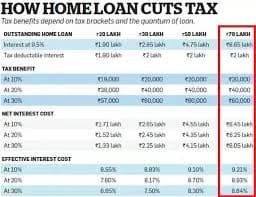
20 Lakh Home Loan Tax Benefit Calculation: A Beginner's Guide
Buying a house using a home loan is a smart move for two major reasons. First, it helps you own a permanent property without emptying your entire bank account at once. Second, the Indian government provides excellent tax incentives to lower your annual income tax liability.
If you plan to borrow a home loan of 20 lakhs, you can save thousands of rupees every year by claiming deductions on your repayments. However, many first-time buyers do not know how the math works or which tax sections apply to them.
This comprehensive guide simplifies the 20 lakh home loan tax benefit calculation process. We will look closely at the relevant legal sections, provide clear calculation examples, and help you maximize your annual tax savings.
Direct Answer Snippets for Quick Reference
How much tax can I save on a 20 lakh home loan?
On a 20 lakh home loan under the old tax regime, you can claim deductions up to 2 lakhs for interest paid under Section 24b and up to 1.5 lakhs for principal repaid under Section 80C. Your actual cash savings depend entirely on your individual income tax slab.
Can I claim tax benefits on a 20 lakh loan under the new tax regime?
If you choose the default new tax regime, you cannot claim tax deductions for principal repayment or interest paid on a self-occupied house. The popular home loan tax benefits under Section 80C and Section 24b are strictly limited to taxpayers who stay in the old tax regime.
How do I calculate the interest and principal parts for tax deduction?
You do not have to guess the numbers yourself. At the end of every financial year, your lending bank will provide a home loan interest certificate. This statement outlines the exact breakdown of the total principal and interest you paid during that specific year.
The Core Framework of Home Loan Tax Incentives
When you pay your monthly Equated Monthly Installment (EMI) to the bank, your money is split into two boxes. One part goes toward clearing the original principal amount you borrowed, while the other part pays off the interest charged by the bank.
The Income Tax Act treats these two components as completely separate categories. To claim your full deductions, you must understand the two primary pillars of housing tax relief.
These two critical pillars are:
Section 24b (Interest Component): This allows you to deduct the interest portion of your EMI from your taxable income. For a self-occupied property, this deduction is capped at a maximum of 2,00,000 per financial year.
Section 80C (Principal Component): This allows you to claim deductions on the principal amount repaid during the year, capped at a maximum of 1,50,000. This limit also includes registration fees and stamp duty costs paid during the purchase year.
Step-by-Step 20 Lakh Home Loan Tax Benefit Calculation
To see how much money you can shield from tax, let us build a realistic scenario. Imagine you take a 20 lakh home loan at an interest rate of 8.5% per annum for a tenure of 20 years.
Your regular monthly EMI for this loan will be approximately 17,356. Over the course of the first full financial year, your total annual payment to the bank will be roughly 2,08,272.
Let us break down how this annual payment splits into principal and interest components, and how it impacts your final taxes under the old regime.
Annual Breakdown and Deductions for a 20 Lakh Loan (Year 1)
Loan Repayment Component | Actual Amount Paid in Year 1 (INR) | Maximum Legal Deduction Allowed (INR) | Active Tax Section |
Interest Portion | Around 1,68,000 | 1,68,000 (Fully covered under 2L cap) | Section 24b |
Principal Portion | Around 40,272 | 40,272 (Fits inside the 1.5L cap) | Section 80C |
Total Deductible Amount | 2,08,272 | 2,08,272 | Combined Savings |
Because your total interest of 1,68,000 stays safely below the official 2 lakh legal ceiling, you can deduct the entire amount from your taxable income. Similarly, your principal repayment fits comfortably within the Section 80C limit.
Real Cash Savings Based on Your Income Tax Slab
Deducting 2,08,272 from your taxable income does not mean you get that exact amount back in cash from the government. Instead, it means you do not have to pay tax on that portion of your earnings.
The actual cash that stays inside your wallet depends on your personal income tax bracket. Higher-income individuals see the biggest immediate reductions in their tax bills.
Let us look at how the 20 lakh home loan tax benefit calculation translates into real cash savings across different tax brackets.
Cash Savings Chart for First-Year Repayments
Individual Tax Slab Rate | Total Taxable Income Reduction (INR) | Actual Annual Cash Saved (INR) |
10% Tax Bracket | 2,08,272 | 20,827 |
20% Tax Bracket | 2,08,272 | 41,654 |
30% Tax Bracket | 2,08,272 | 62,481 |
If you fall into the highest 30% tax bracket, a 20 lakh loan effectively slashes your annual tax bill by over 62,000 in the very first year. This tax saving acts as an indirect discount on your home loan interest rate.
Critical Rules and Time Limits to Keep in Mind
While housing tax exemptions are highly profitable, the Income Tax Department enforces a few strict conditions to prevent misuse of these benefits.
The 5-Year Construction Deadline
To claim the full 2 lakh interest deduction under Section 24b, the construction or purchase of your house must be fully completed within 5 years from the end of the financial year in which the loan was taken. If the construction takes longer, your maximum annual interest deduction drops sharply to just 30,000.
The 5-Year Property Lock-in Period
If you claim principal tax deductions under Section 80C, you must hold onto the property for at least 5 years from the date you get physical possession. If you sell the house before the 5-year lock-in period ends, all your previously claimed Section 80C tax benefits will be cancelled and added back to your taxable income in the year of the sale.
Double Your Deductions with a Joint Home Loan
If you want to maximize your family's tax relief, consider applying for a joint home loan with a working family member, such as your spouse, parent, or sibling.
To unlock double benefits, both applicants must be registered co-owners of the property and active co-borrowers on the loan agreement.
Under a joint structure, both individuals can claim independent tax deductions based on their share in the loan repayment.
Joint Interest Max (Section 24b): Both owners can claim up to 2 lakhs each, bringing the total household interest deduction up to 4 lakhs.
Joint Principal Max (Section 80C): Both owners can claim up to 1.5 lakhs each, expanding the total household principal deduction to 3 lakhs.
Conclusion
Mastering the 20 lakh home loan tax benefit calculation is an excellent financial tool to lower the true net cost of your home. By taking full advantage of Section 24b and Section 80C under the old tax regime, you can convert a regular monthly debt obligation into a highly efficient tax shield.
Remember to collect your provisional interest certificate from your bank at the start of every financial year so you can submit accurate declarations to your company's payroll team. With clear tax planning, you can comfortably build a valuable long-term asset while keeping your annual tax liabilities at an absolute minimum.
Frequently Asked Questions (FAQs)
1. Can I claim tax benefits on my 20 lakh loan while the house is still under construction?
You cannot claim tax benefits on a home loan while the property is actively under construction. However, the interest you pay during this phase is not completely lost. You can accumulate the total pre-construction interest and claim it in 5 equal annual installments once construction is fully completed, subject to the overall 2 lakh yearly cap.
2. Can I claim both House Rent Allowance (HRA) and home loan tax benefits together?
Yes, you can legally claim both HRA and home loan tax deductions at the same time. This option is available if you live in a rented house in one city due to your job, while your own home is located in another city or is rented out to tenants.
3. What happens if the actual interest paid on my 20 lakh loan is less than 2 lakhs?
If your actual interest payout for the year is less than the 2 lakh legal ceiling (which is common for a modest 20 lakh loan size), you can only claim the exact amount listed on your bank certificate. You cannot claim the full 2 lakh limit if your actual interest cost was lower.
4. Are municipal property taxes eligible for deductions under these home loan sections?
No, local municipal property taxes cannot be claimed under Section 80C or Section 24b. However, if your property is rented out, you can deduct the actual municipal taxes paid from your total gross annual rental income before calculating your final taxable house property income.
5. Does the bank charge a fee to issue the home loan interest certificate?
No, licensed commercial banks and housing finance companies provide provisional and final home loan interest certificates completely free of charge. You can easily download this document at any time through your official online net banking portal or mobile application.
6. Can I claim a tax deduction for the processing fees paid on my 20 lakh loan?
Any processing fees, legal valuation charges, or administrative upfront costs collected by the bank cannot be claimed as a tax deduction under Section 80C or Section 24b. These charges are treated as personal structural expenses related to securing the credit facility.