The financial sector uses smart technology partnerships to make loans cheaper and more accessible for everyday borrowers. In India, co-lending allows large traditional banks to team up with agile private Non-Banking Financial Companies (NBFCs) to fund a single loan together.
However, blending two different financial institutions requires high-speed coordination. To prevent delays, companies build a modern automated credit appraisal models for co lending digital infrastructure setup framework to check a borrower's risk profile instantly.
This student-friendly guide will explain how these smart digital software programs function, how they connect separate banking servers through lines of code, and why they make loan approvals highly secure.
What are automated credit appraisal models for co-lending digital infrastructure setup?
They are secure, cloud-based software networks that evaluate a borrower's creditworthiness automatically for joint loans. By connecting a bank’s server to an NBFC’s system through custom digital gates (APIs), the platform runs background checks and calculates a single risk score within a few minutes.
How does automated credit underwriting operate inside a joint lending setup?
When a customer submits their information, the digital system checks multiple data channels simultaneously. It pulls credit bureau scores, reads verified bank statements, and calculates the exact risk-sharing split—such as 80% for the bank and 20% for the NBFC—completely automatically.
Why do banks require an automated credit setup for joint lending?
Banks rely on this infrastructure because manual underwriting cannot scale across high-volume small business or retail loans. The automated engine enforces the strict credit rules of both lending partners simultaneously, ensuring error-free regulatory compliance before any money gets released.
Why Joint Lending Needs Advanced Automation
In a standard co-lending model, the traditional commercial bank provides the majority of the loan capital because its public deposits are highly affordable. Meanwhile, the local NBFC finds the customer, manages the doorstep KYC identity scans, and handles monthly cash collection tasks.
If human loan officers at both companies had to pass paper files back and forth to double-check every applicant's bank history, the approval journey would take several weeks. This delay would defeat the purpose of fast digital loans.
By launching automated credit appraisal models for co lending digital infrastructure setup platforms, both systems evaluate the exact same digital application file at the same millisecond. This removes administrative friction completely.
The Application Programming Interface (API) Layer
APIs act as secure, digital messengers moving between systems. They fetch verified data points from central networks like credit bureaus, tax filing portals, and identity verification registries instantly.
The Dual-Rule Underwriting Engine
Every financial firm operates under its own internal risk parameters. The automated appraisal software codes the rules of both partners into a unified algorithm, filtering out bad credit profiles instantly.
The Escrow Settlement Module
Once the credit appraisal model flashes an approval signal, this tracking component automatically splits the loan balance into its pre-agreed parts to deposit the cash safely without fund mixing.
How Alternative Data Powers the Appraisal Engine
Traditional credit checks only focus on your past credit card repayment bills. This old habit penalizes young students, gig workers, and micro-entrepreneurs who do not possess long financial histories.
Modern automated credit appraisal platforms overcome this barrier by reading alternative digital behavior logs. This process gives a fair chance to first-time credit applicants.
Cash Flow Modeling: The software tracks the weekly transaction entries in your business current account to see if your store makes stable revenue.
Utility Payment Trackers: Looking at how regularly you pay your commercial electricity bills and internet plans serves as a major consistency signal.
Tax Filing Logs: The engine pulls digital business tax data directly from government portals to double-check your real monthly sales volumes.
Step-by-Step Implementation of Co-Lending Infrastructure
Setting up an automated credit appraisal models for co lending digital infrastructure setup system requires structural preparation from both enterprise software engineering teams.
Step 1: Aligning the Master Credit Rules
The risk teams of the bank and the NBFC sit down to write out a shared credit policy, defining the target credit scores, maximum age limits, and salary cutoffs.
Step 2: Custom API Integration
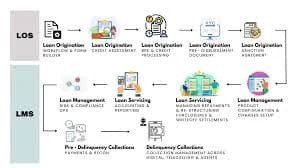
Software developers write code links to integrate the bank’s old Core Banking Solution (CBS) with the NBFC’s flexible Loan Origination System (LOS).
Step 3: Configuring the Automated Evaluation Software
The unified risk rules are fed into a cloud-native rules engine. This allows the system to run risk filters without requiring human intervention on standard files.
Step 4: Running Secure Sandbox Simulations
Lenders test the setup using thousands of historical mock profiles. This process ensures the algorithm flags risky candidates correctly and never skips important verification checkpoints.
Step 5: Launching Live Production
The platform goes live, allowing everyday customers to apply via mobile apps, get appraised by the joint engine, and receive instant cash deposits within a single day.
Conclusion: Driving Financial Inclusion via Software
Deploying automated credit appraisal models for co lending digital infrastructure setup systems represents a massive step forward for modern financial engineering. It merges the balance sheet size of large public banks with the superior technical agility of local fintech platforms.
By removing manual processing delays, protecting consumer data through secure pipelines, and checking risk accurately via automated rules, this digital infrastructure keeps credit flowing smoothly to the people who need it most.
Frequently Asked Questions
Can automated credit appraisal models make biased decisions?
If the historical data used to build the model contains human patterns of exclusion, the algorithm can copy those errors. Lenders prevent this by continuously auditing their automated systems to ensure fairness.
What is the minimum processing time for an automated co-lending check?
If your internet is stable and your digital documents are completely accurate, the automated infrastructure can process your identity, run credit checks, and grant a joint approval within 60 to 180 seconds.
Does this digital infrastructure comply with data privacy laws?
Yes. Legitimate co-lending software platforms use high-level data encryption protocols. They require explicit digital consent before fetching any personal records from external networks.
What happens if the bank and the NBFC systems disagree on a loan score?
The automated rule engine has clear priority rules written into its code. If a profile passes the NBFC rules but fails the bank’s stricter credit rules, the system will automatically reject or redirect the file.
Can an automated appraisal model evaluate unsecured business loans?
Yes, absolutely. The automated engine uses advanced alternative data scoring models to read business tax transactions, making it an excellent platform to check unsecured micro-loans.
What should a fintech company check before setting up co-lending software?
Developers must check system compatibility and ensure the platform can track real-time loan balances, split payments correctly, and generate combined interest calculations without calculation errors.