Switching to clean, renewable energy is a brilliant way to cut down your household expenses. With electricity tariffs rising regularly across India, installing a private solar network on your roof has become a smart financial investment.
However, the initial cost of purchasing high-grade solar modules, grid-tied inverters, and heavy mounting structures can be a stretch for a standard household budget. Many families want to go green but hesitate due to the upfront setup expenses.
To make clean energy accessible to everyone, the government and major banks now offer dedicated financial assistance. Securing a specialized loan for setting up solar rooftop power panels in India allows you to switch to solar energy today and pay for it comfortably over time.
3 Direct Answer Snippets for Quick Understanding
1. What is a rooftop solar loan in India?
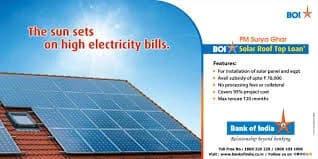
A loan for setting up solar rooftop power panels in India is a specialized green credit product offered by public and private banks. It helps homeowners fund the procurement and installation of solar systems, often providing up to 90 percent of the total project setup cost.
2. How does the government help lower your solar loan burden?
The government helps lower your financing burden through schemes like the PM Surya Ghar Muft Bijli Yojana. It provides a direct cash subsidy of up to 78,000 rupees for residential setups. When this subsidy hits your account, it can be used to instantly reduce your main loan principal.
3. Can you get a solar panel loan without providing collateral?
Yes, under current national guidelines, Indian public sector banks provide completely collateral-free loans for residential rooftop solar systems up to 3 kilowatts. You do not need to pledge your house or land to secure these low-interest green loans.
The Power of the PM Surya Ghar Muft Bijli Yojana
The landscape of green energy financing in India changed completely with the launch of the PM Surya Ghar Muft Bijli Yojana. This flagship government initiative aims to power one crore households across the country.
Under this scheme, the government does not just encourage you to adopt clean energy; they actively pay for a major chunk of it. For standard residential setups, the central government provides a direct financial subsidy.
The subsidy is structured clearly: you get 30,000 rupees per kilowatt for the first 2 kilowatts, and an additional 18,000 rupees for the third kilowatt. This creates a maximum subsidy cap of 78,000 rupees for any system that is 3 kilowatts or larger.
Why Top Banks Offer Highly Subsidized Interest Rates
Traditional personal loans often carry steep interest rates that make borrowing expensive. However, because green energy adoption is a national priority, banks offer highly subsidized rates for solar panel installation.
Major lenders like the State Bank of India, Bank of Baroda, Punjab National Bank, and Canara Bank have launched dedicated solar credit schemes. These loans feature attractive interest rates, often starting between 5.75 percent and 7 percent per year.
Furthermore, these financial institutions use the reducing balance method to calculate interest. This means as your loan balance shrinks every month, your monthly interest outgo drops consistently, maximizing your personal savings.
How a Solar Loan Literally Pays for Itself
The most beautiful aspect of a loan for setting up solar rooftop power panels in India is its self-repaying nature. It is an asset that actively generates wealth from day one.
When you install a grid-connected solar setup, it generates free electricity. If your system produces up to 300 units of electricity monthly, your regular utility bill can drop close to zero rupees.
The money you save on your monthly electricity bill can be diverted directly to pay your bank loan EMI. In many cases, your monthly power bill savings will actually be higher than your loan payment, leaving you with extra cash in hand.
Basic Eligibility Rules for Indian Solar Loans
To ensure a smooth approval process through the banking network, applicants must meet a few baseline guidelines.
Property Ownership: You must be an Indian citizen who owns a residential property with clear, legal rights to a concrete roof. Tenants or residents of temporary structures do not qualify.
Shade-Free Roof Space: Your roof must have adequate, unshaded space exposed to the sun. A standard 3-kilowatt system typically requires around 240 to 300 square feet of clear space.
Valid Power Connection: You must possess an active, grid-connected electricity account with your local electricity distribution company, known as a DISCOM.
Essential Documents to Keep Ready for a Digital Application
Indian banks have digitized the entire green credit approval process, meaning you can upload your credentials online for rapid clearance.
You will need standard identification papers like your Aadhaar card and PAN card. Make sure your Aadhaar is actively linked to your mobile number and your primary bank account to receive direct subsidy transfers.
The most vital document is your latest electricity bill, which proves your consumer status and shows your average monthly power usage. You will also need property ownership papers and an official quotation from an approved solar vendor.
Step-by-Step Guide to the Online Apply Process
Securing a loan for setting up solar rooftop power panels in India involves a unified digital process. Follow these clear steps to complete your setup.
Step 1: Register on the National Solar Portal
Visit the official national portal at pmsuryaghar.gov.in. Register by selecting your state, choosing your local DISCOM company, and entering your consumer account number found on your power bill.
Step 2: Apply for Technical Feasibility Approval
Log into your new account and submit the online application for rooftop solar installation. Your local DISCOM will review the digital file and grant a feasibility approval online, confirming your roof can safely connect to the grid.
Step 3: Apply for the Solar Loan Online
Once feasibility is approved, head to the loan section of the portal or use the JanSamarth platform. Select a participating public bank, fill out the financial form, and upload your income proofs or bank statements to get your loan sanctioned.
Step 4: Choose an Approved Vendor for Installation
Ensure you select a vendor registered with the Ministry of New and Renewable Energy. The vendor will set up the solar modules and clear the net-metering tests with your utility company.
Step 5: Receive Your Direct Subsidy Cash
After successful installation and grid commissioning, the DISCOM will issue a certificate on the portal. Submit your bank account details online, and the central government subsidy will be transferred directly to your account via bank transfer within 30 to 45 days.
Smart Strategies to Maximize Your Green Investment
Managing your solar financing smartly can help you clear your debt rapidly and enjoy decades of completely free electricity.
Use the Subsidy to Prepay: When the government credits your 78,000 rupee subsidy into your bank account, deposit it straight into your solar loan. This slashes your remaining principal balance instantly and drops your future EMIs.
Opt for Maximum Loan Tenure: Most banks offer flexible repayment periods up to 10 years. Choosing a longer tenure keeps your monthly EMI very small, ensuring it never exceeds your monthly electricity bill savings.
Ensure ALMM and DCR Compliance: Make sure your chosen vendor uses solar panels listed on the Approved List of Models and Manufacturers and follows Domestic Content Requirements. If your panels are not compliant, you will lose your government subsidy eligibility completely.
Conclusion
Securing a loan for setting up solar rooftop power panels in India is an exceptional financial move that benefits both your household wallet and the environment. It removes the stress of paying heavy upfront costs, allowing the sun to fund your modern household infrastructure.
By combining low-interest bank loans with generous central subsidies, you can transition to a self-sustaining home effortlessly. Take the initiative to map your roof space, register on the national portal, compare diverse public bank offers, and step confidently into a bright future of clean energy and zero electricity worries.
Frequently Asked Questions (FAQs)
1. Can I apply for a solar rooftop loan if I live in a rented apartment?
No, you cannot apply for a standard residential solar rooftop loan if you live in a rented apartment, because lenders require you to be the legal owner of the property and the roof. However, apartment owners can apply collectively through their Registered Residents Welfare Association to fund common area lights.
2. What happens to my solar system if I sell my house before the loan is fully repaid?
If you decide to sell your residential property before clearing the debt, you must inform your lending bank immediately. You will generally have to clear the full outstanding loan balance using your property sale proceeds, or transfer the remaining debt liability to the new home buyer with the bank's permission.
3. Do banks charge any processing fees or prepayment penalties on solar loans?
Under the official guidelines of the PM Surya Ghar scheme, most major public sector banks have completely waived processing fees for residential solar installations up to 3 kilowatts. Additionally, these green loans typically carry zero prepayment or foreclosure charges, allowing you to close the debt early for free.
4. How does net metering work with a grid-connected solar loan system?
A bidirectional net meter tracks the electricity your panels export to the grid when your house is not using it, and the power you import at night. At the end of the monthly billing cycle, your local DISCOM subtracts the exported units from your imported units, charging you only for the net balance used.
5. What is the typical lifetime of the solar panels funded by the bank loan?
High-quality solar panels funded through approved bank schemes have an operational lifespan of 25 to 30 years. Lenders structure their repayment tenures for a maximum of 5 to 10 years, meaning once your loan ends, you will enjoy another 15 to 20 years of completely free electricity generation.
6. Can I get a solar loan to set up an off-grid system with battery storage?
Dedicated low-interest bank loans under the PM Surya Ghar scheme are strictly meant for grid-connected solar systems that operate via net metering without batteries. If you specifically want an off-grid system with expensive battery storage, you will have to apply for a standard consumer durable loan or a personal loan.