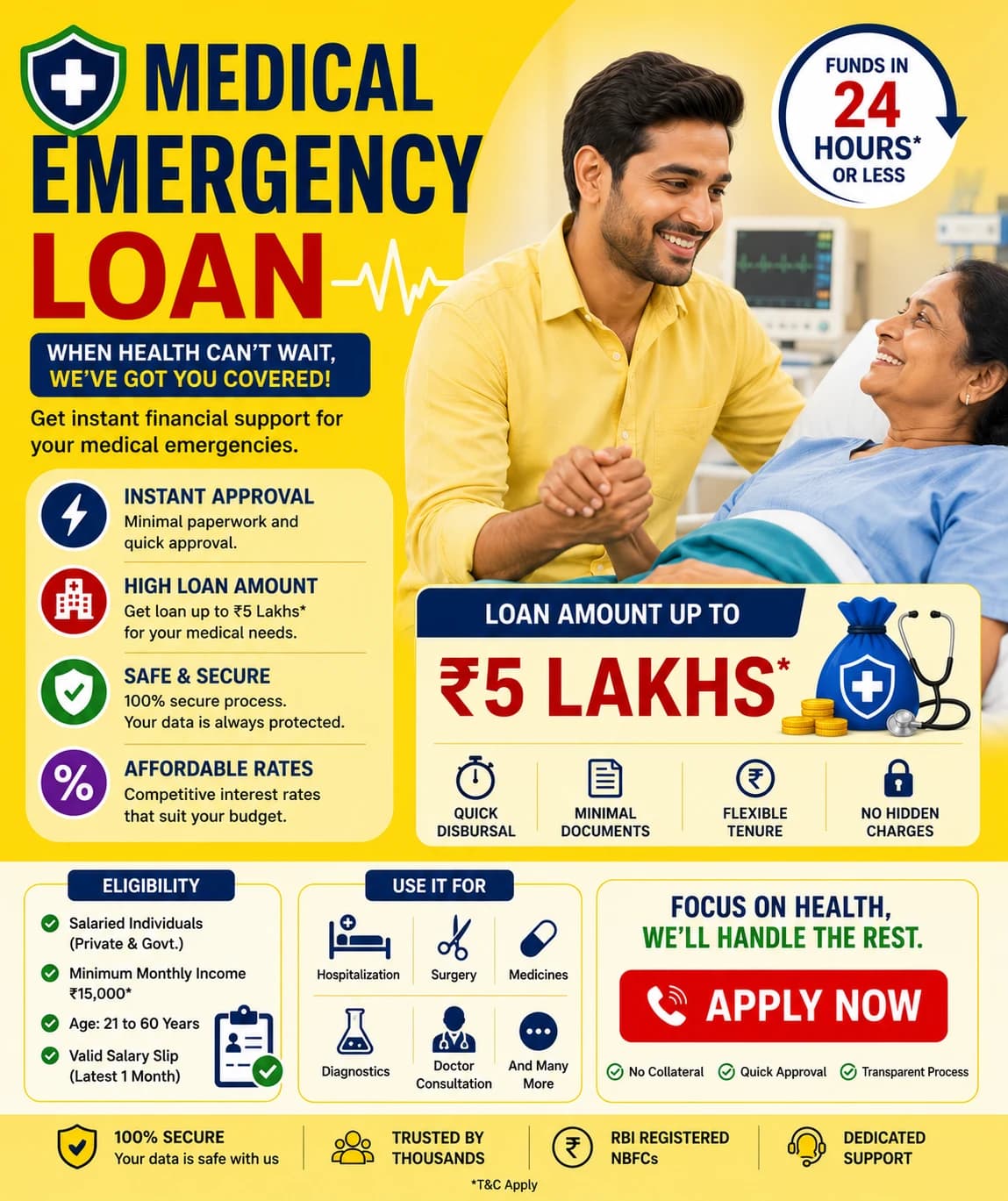
What is a medical emergency loan?
A medical emergency loan is an unsecured personal loan used to cover urgent healthcare costs like surgeries, hospital stays, or treatments. Lenders prioritize these loans, offering fast approval and quick disbursal of funds directly to your account, ensuring you can manage unexpected medical expenses without delay.
How fast can I get an urgent medical loan?
Most banks and online lenders process an urgent medical loan within 24 to 48 hours. Some digital platforms even offer instant approval within a few minutes if you have a strong credit score and pre-approved offers, making them ideal for critical situations.
Can I get a medical loan with a low credit score?
Yes, you can get emergency medical funds with a lower credit score, but it may come with higher interest rates. Some lenders look at your steady income rather than just your credit history, or you can apply with a co-signer to improve your chances.
Why Choose a Medical Emergency Loan?
When facing a health crisis, you might wonder whether to use savings, credit cards, or a dedicated loan. Here is why a specialized loan is often the safest choice.
Swift Disbursal of Funds
Medical crises require immediate action. Traditional loans can take weeks to process, but lenders understand the urgency behind a medical emergency loan, often clearing the amount within a single day.
No Collateral Needed
Most urgent medical loan options are unsecured. This means you do not need to pledge your home, car, or other assets as security to get the money you need.
Flexible Repayment Terms
Unlike credit cards that demand high payments the next month, these loans let you spread the cost. You can choose a repayment tenure that fits your monthly budget comfortably.
What Does an Urgent Medical Loan Cover?
A medical emergency loan is highly versatile. Lenders rarely place restrictions on how you use the funds, as long as they go toward healthcare.
Hospitalization and Surgery Costs
From room charges to ICU fees and major surgical procedures, the loan covers the bulk of hospital bills that arrive during an emergency.
Diagnostic Tests and Medications
Pre-treatment bills can pile up quickly. You can use the funds for MRI scans, blood tests, expensive prescriptions, and post-surgery medical equipment.
Treatments Not Covered by Insurance
Not all medical procedures are covered by standard health insurance. A medical emergency loan can bridge the gap for plastic surgery, dental emergencies, or experimental therapies.
Eligibility Criteria for Emergency Medical Funds
Meeting the basic requirements ensures your loan application gets approved without any hiccups. While rules vary by lender, the core criteria remain similar.
Age and Employment Status
Borrowers usually need to be between 21 and 60 years old. You must have a steady source of income, whether you are a salaried employee or a self-employed professional.
Minimum Income Requirements
Lenders want to know you can pay the money back. They look for a minimum monthly income, which varies depending on whether you live in a major city or a smaller town.
Credit Score Range
A credit score of 750 or higher gets you the best interest rates. However, many lenders offer specialized medical emergency loan options for those with average credit scores.
Essential Documents Needed for Fast Approval
Keeping your paperwork ready is the best way to speed up the approval process for an urgent medical loan. Here is what you will generally need to provide.
Identity and Address Proof
You will need to submit official government-issued identification. This includes documents like your passport, driver's license, or national identity card.
Income Verification Documents
Salaried individuals must show recent salary slips and bank statements from the past three to six months. Self-employed individuals need to provide tax returns and business financial proofs.
Medical Estimates or Hospital Estimates
While not always mandatory, showing a cost estimate from the hospital can help validate the urgency of your medical emergency loan and speed up the verification process.
How to Apply for a Medical Emergency Loan Online
Applying online is the fastest way to get emergency medical funds when time is running out. Follow these simple steps for a smooth application.
Step 1: Check Your Credit Score
Look at your credit score online before applying. Knowing your score helps you choose the right lender and avoids multiple rejections that can hurt your credit.
Step 2: Compare Lenders Online
Do not take the first offer you see. Compare interest rates, processing fees, and repayment terms across three or four different financial institutions to find the best deal.
Step 3: Fill Out the Application Form
Visit the lender's website or app and fill out the form accurately. Enter the exact amount you need for your healthcare financing and upload the scanned documents.
Step 4: Verification and Disbursal
The lender will verify your details. Once approved, the funds from your medical emergency loan will be sent straight to your bank account, ready for use.
Smart Tips to Manage Your Healthcare Financing
Borrowing money during a crisis can feel stressful. Following a few smart financial habits can help you manage the debt easily without hurting your future financial health.
Borrow Only What You Need
It can be tempting to take a larger loan amount just in case. However, only borrow the exact amount needed for the treatment to keep your monthly payments manageable.
Read the Fine Print
Check for hidden charges like processing fees, documentation costs, or prepayment penalties. Knowing these costs upfront prevents unpleasant surprises later.
Plan Your Repayment Budget
Before signing the loan agreement, use an online calculator to see your monthly payments. Ensure the payment amount fits comfortably into your regular monthly budget.
Conclusion
A medical emergency loan serves as a vital financial safety net when unexpected health issues threaten your peace of mind. By providing rapid access to funds without requiring collateral, it ensures your loved ones get the best care without delay.
While a medical crisis is stressful, being informed about your healthcare financing options empowers you to make quick, smart decisions. Always borrow responsibly, choose the right repayment tenure, and focus on what truly matters: a speedy recovery.
Frequently Asked Questions (FAQs)
1. Is a medical emergency loan better than using a credit card?
Yes, a medical emergency loan is generally better because it offers significantly lower interest rates than credit cards. Credit cards often charge high interest on cash withdrawals and carried balances, whereas personal loans offer fixed, lower rates and structured monthly payments over a longer period.
2. Can I apply for an urgent medical loan if I already have health insurance?
Absolutely. You can apply for a loan even if you have health insurance. The loan can be used to pay for expenses your insurance policy does not cover, such as co-payments, deductibles, non-medical hospital charges, or treatments that exceed your policy limit.
3. What happens if I cannot repay my medical loan on time?
If you miss your payments, it will negatively impact your credit score, making it harder to borrow money in the future. Lenders will also charge late fees and penalty interest. If you face financial hardship, it is best to contact your lender immediately to discuss restructuring your loan.
4. Can a family member apply for emergency medical funds on my behalf?
Yes, a family member with a stable income and a good credit score can apply for the loan in their name to fund your treatment. This is often a great solution if the patient is too unwell to handle the paperwork or does not meet the income criteria.
5. Do lenders pay the loan amount to me or directly to the hospital?
It depends on the lender. Many personal loan providers deposit the funds directly into your personal bank account so you can pay the hospital yourself. However, some specialized healthcare financing companies pay the hospital directly based on the medical bills provided.
6. Are there any tax benefits on a medical emergency loan?
In general, standard personal loans taken for medical purposes do not offer tax deductions on the principal or interest amount. It is always wise to check with a local tax professional, as laws vary depending on your specific region and the type of medical treatment.