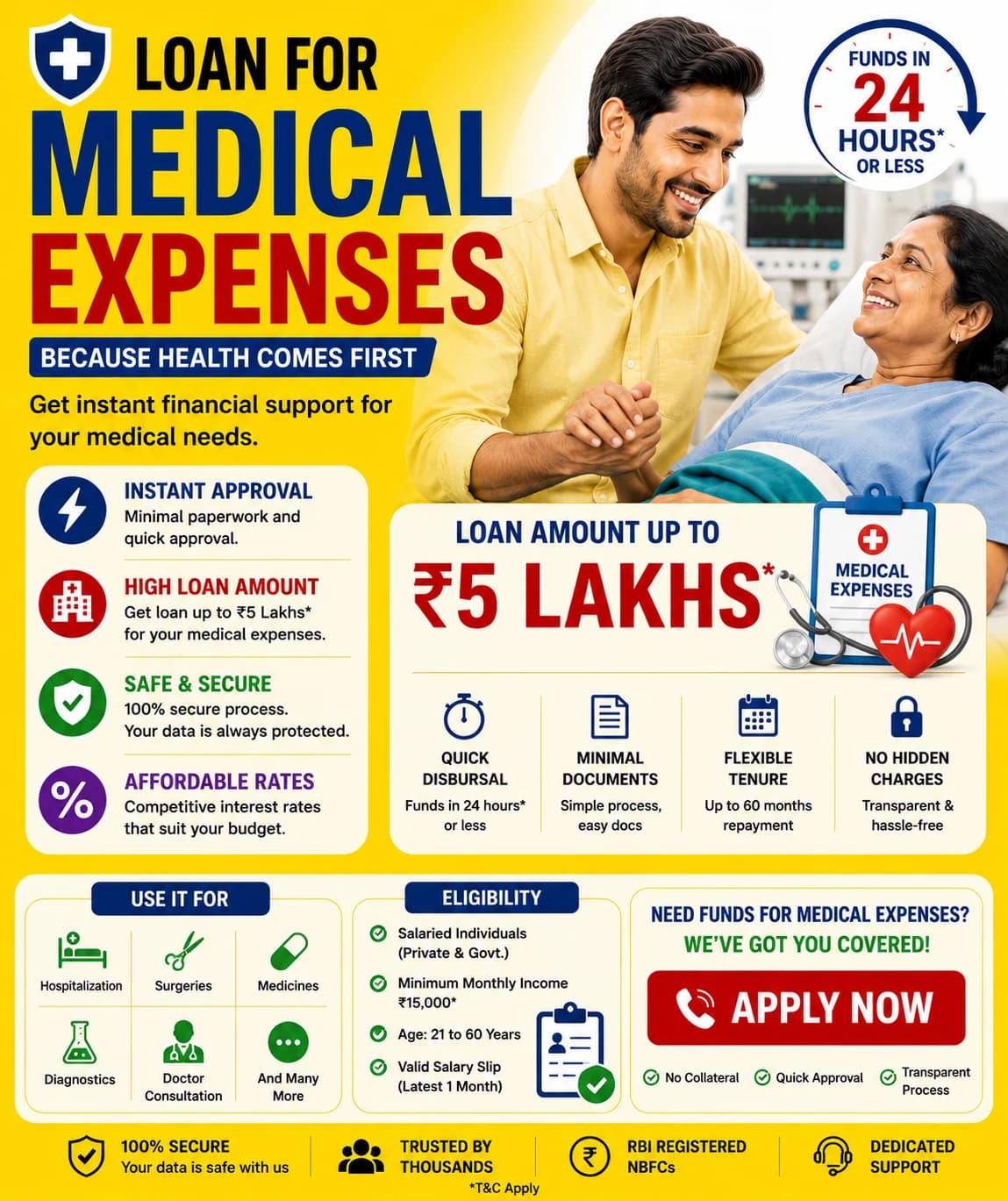
What is a loan for medical expenses?
A loan for medical expenses is a personal loan used specifically to pay for healthcare costs. These include surgeries, dental work, fertility treatments, or emergency room visits. Borrowers receive a lump sum of cash upfront and pay it back in fixed monthly installments over a set period.
Can I get a medical loan with bad credit?
Yes, you can get a medical loan with bad credit, though it may be more challenging. Some online lenders specialize in bad credit personal loans. However, these options usually come with higher interest rates. Adding a co-signer with good credit can help you secure better terms.
Are there alternatives to medical loans?
Yes, there are several alternatives to taking out a loan for medical expenses. You can ask your hospital for an interest-free payment plan or apply for medical credit cards like CareCredit. Additionally, medical bill advocates can help negotiate your final balance down before you pay.
What is a Loan for Medical Expenses?
A loan for medical expenses is an unsecured personal loan that you use to pay for healthcare-related bills. Since it is unsecured, you do not need to put up collateral, like your home or car, to qualify.
When you are approved for a medical loan, the lender gives you a lump sum of money. You can use this cash to pay your doctor, hospital, or pharmacy immediately. Afterward, you repay the lender in fixed monthly payments over a period of one to seven years.
These loans can cover almost any healthcare cost. This includes dental procedures, cosmetic surgeries, emergency room visits, deductibles, and prescription medications.
Types of Medical Financing Options
1. Unsecured Personal Loans
An unsecured personal loan is the most common way to fund healthcare needs. You apply through a bank, credit union, or online lender. Your interest rate depends heavily on your credit score and income.
2. Specialized Medical Loans
Some lenders work directly with doctors and hospitals to offer specialized medical loans. These are tailored specifically for healthcare procedures. Sometimes, doctors will market these financing options directly to you in their offices.
3. Medical Credit Cards
Medical credit cards are different from regular credit cards. They are designed solely for healthcare costs. Many offer an introductory period of 0% interest, which can save you money if you pay off the balance quickly.
Pros and Cons of Using a Loan for Medical Expenses
The Advantages
Quick Access to Cash: Many online lenders approve and fund loans within 24 to 48 hours.
Fixed Payments: Your monthly payment remains the same, making it easy to budget.
No Collateral Needed: You do not risk losing your personal property if you struggle to pay.
The Disadvantages
Interest Costs: If you have average or poor credit, the interest rates can be quite high.
Added Debt: Taking on a loan adds a new monthly obligation to your financial plate.
Fees: Some lenders charge origination fees, which reduces the total cash you receive.
How to Qualify for a Medical Loan
Check Your Credit Score
Lenders look at your credit score first to determine your risk level. A higher score helps you get a lower interest rate, while a lower score means higher borrowing costs.
Prove Your Income
You must show lenders that you earn enough money to make your monthly payments. Prepare recent pay stubs, W-2 forms, or tax returns before you apply.
Lower Your Debt-to-Income Ratio
Lenders compare your monthly debt payments to your gross monthly income. A lower ratio shows that you have enough room in your budget to handle a new loan for medical expenses.
Step-by-Step Guide to Applying for Medical Financing
Step 1: Request an Itemized Bill
Before borrowing money, ask your hospital for a detailed, itemized bill. Check it closely for errors, as mistaken charges are very common on medical paperwork.
Step 2: Pre-Qualify with Multiple Lenders
Many online lenders let you pre-qualify without hurting your credit score. This allows you to compare interest rates and loan terms from different companies easily.
Step 3: Choose the Best Loan Terms
Look closely at the Annual Percentage Rate (APR), repayment timeline, and monthly payment amount. Choose the option that fits comfortably within your monthly budget.
Step 4: Submit a Formal Application
Once you pick a lender, complete the full application. You will need to provide identification and financial documents. If approved, the funds will be sent directly to your bank account.
Smart Alternatives to Taking Out a Loan
Hospital Payment Plans
Many hospitals offer internal payment plans directly to patients. The best part is that these plans often feature 0% interest. Always ask the hospital billing department for this option before looking at outside loans.
Medical Bill Negotiation
You can negotiate the total amount you owe. Ask the billing department if they offer discounts for paying a lump sum, or if they can lower the prices to match average local rates.
Financial Assistance Programs
Non-profit hospitals are required by law to offer charity care programs. If your income falls below a certain level, you may qualify to have your medical bills reduced or completely forgiven.
How to Choose the Right Financing Method
To choose the best path, start by calculating exactly how much money you need to borrow. Do not borrow more than the actual cost of your medical treatment.
Next, look honestly at your monthly budget. If you can afford to pay off the debt within a few months, a 0% interest medical credit card might be your best choice.
If you need multiple years to pay off the balance, a personal loan with a fixed interest rate is safer. It protects you from sudden interest rate hikes later on.
Conclusion
Facing large healthcare bills can be overwhelming, but a loan for medical expenses provides a structured way to handle the financial burden. By understanding your options, checking your credit, and comparing lenders, you can find an affordable path forward. Always explore hospital payment plans and negotiation options first before committing to a formal loan.
Frequently Asked Questions (FAQs)
Will taking out a medical loan hurt my credit score?
When you check your rates during the pre-qualification phase, your credit score will not be affected. However, when you submit a formal application, the lender will perform a hard credit inquiry, which can cause a temporary drop of a few points in your score.
Can I use a personal loan to pay for elective plastic surgery?
Yes, you can use a personal loan for elective procedures, including cosmetic surgeries, dental implants, and fertility treatments. Lenders generally do not restrict how you use the funds from an unsecured personal loan once it is deposited.
What happens if I cannot repay my medical loan?
If you miss payments on your loan, the lender can charge late fees and report the delinquency to the credit bureaus, which hurts your credit score. Eventually, the loan could be sent to a collections agency or result in legal action.
Is it better to use a regular credit card or a medical loan?
A medical loan is usually better for large balances because it offers lower interest rates and fixed monthly payments. Regular credit cards often have very high variable interest rates that can cause your debt to grow quickly if not paid off immediately.
What is the average interest rate for a medical loan?
Interest rates vary widely based on your credit score and financial history. Borrowers with excellent credit may see rates around 6%, while borrowers with poor credit could face rates up to 36%.
Can I pay off my medical loan early?
Most reputable lenders do not charge prepayment penalties, meaning you can pay off your loan early to save on interest costs. Always check the loan terms and conditions with your lender to confirm that there are no early repayment fees.