Building a scalable technology enterprise in today's competitive digital economy requires a continuous stream of capital. While raising standard equity from venture capitalists (VCs) is highly popular, it forces corporate founders to surrender valuable ownership stakes and board seats early in their growth journey.
To retain absolute corporate control, smart entrepreneurs look toward alternative debt instruments. Exploring the differences between mezzanine funding vs structural venture debt loan options for tech startups india platforms allows management teams to unlock vital runway capital precisely when they need to scale.
This introductory guide simplifies the complex financial architecture behind these two non-dilutive credit instruments, outlines how risk is calculated by modern funds, and helps you pick the right financing tool for your enterprise.
What is the core difference between mezzanine funding and structural venture debt?
Structural venture debt is an early-to-mid-stage loan extended to startups that already possess institutional VC backing. Mezzanine funding is a hybrid senior-growth instrument reserved for late-stage, cash-flow-positive tech enterprises. Mezzanine debt sits lower on the repayment hierarchy and carries deep options to convert the loan into company shares if unpaid.
How do repayment models differ between these tech startup debt options?
Venture debt options utilize a structured, predictable schedule where the startup pays monthly interest and principal chunks over one to three years. Mezzanine options offer ultimate runway flexibility, featuring deferred "bullet" principal repayments at maturity alongside customized Payment-in-Kind (PIK) models that roll interest into the principal balance.
Which financing route causes less equity dilution for startup founders?
Structural venture debt causes significantly less equity dilution, typically requiring small warrant coverages of just one to three percent of the total loan value. Mezzanine financing demands a much larger equity upside—often through heavier convertibility clauses—to compensate lenders for providing unsecured capital to unlisted firms.
Understanding the Position in the Corporate Capital Stack
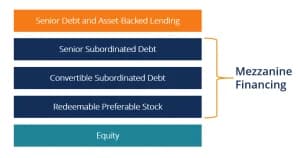
To understand alternative corporate finance, students must analyze where different funding structures sit inside the legal liquidation hierarchy. The position determines who gets paid first if a technology business closes down.
Venture debt stands as a senior secured obligation, meaning the lender holds a primary legal charge over the startup's current assets, intellectual property, or trade receivables.
[Top Priority: Senior Secured Venture Debt] ➔ [Middle: Subordinated Hybrid Mezzanine Funding] ➔ [Bottom: Common Founders Equity Shares]
Mezzanine financing explicitly functions as junior subordinated debt. It sits comfortably in the middle tier, ranking below traditional bank lines but maintaining a legal payment priority over common equity shareholders.
Deep Dive: Structural Venture Debt Frameworks
Venture lending has emerged as a mainstream component of the Indian startup funding ecosystem, with specialized funds deploying over one billion dollars annually into rising series-stage brands.
Lenders do not demand physical real estate mortgages. Instead, they underwrite your application by evaluating the financial strength of your primary equity sponsors and your remaining cash runway.
Target Stage Fitment: Ideal for Series A through Series C technology firms that require extra capital between major valuation rounds to hit key growth milestones.
The Warrant Multiplier: Lenders request a minor equity kicker via warrants. This allows the debt fund to purchase a tiny fraction of shares at today's price during a future buyout.
Asset-Light Clearances: The credit limit is designed to fund immediate operational expenses, software server packages, bulk marketing drives, or working capital needs.
Deep Dive: Hybrid Mezzanine Capital Layouts
Mezzanine instruments are highly customized funding tools utilized by mature tech enterprises that are preparing for public stock market listings (IPOs) or executing cross-border acquisitions.
Because the lender takes on massive unsecured risk without holding primary asset mortgages, the financial contract contains advanced hybrid equity clauses.
Cash Flow Requirements: Unlike early-stage venture lines, mezzanine investors require your tech firm to display steady, highly predictable revenues or positive operating profits.
Flexible PIK Interest Structuring: To save your daily operational cash, parts of the interest can be structured as Payment-in-Kind. This means the interest is added to the loan balance rather than paid in cash every month.
High Financial Cost Structure: Due to its junior placement and structural flexibility, the base interest rates are significantly higher than traditional commercial bank credit lines.
Side-by-Side Comparison Matrix for Tech Founders
Financial Attribute | Structural Venture Debt Options | Hybrid Mezzanine Funding Options |
Typical Startup Stage | Early Growth (Series A / B / C) | Late Growth / Pre-IPO / Mature |
Collateral Security | Senior Charge on Total Assets | Unsecured / Subordinated Junior Cash |
Average Loan Tenure | 12 to 36 Months | 48 to 72 Months |
Equity Dilution Level | Minimal (1% to 3% Warrant Cover) | Moderate to High (Convertible Clauses) |
Repayment Style | Monthly Amortization (EMIs) | Bullet Repayment / Interest Rolling |
Core Underwriting Focus | Recent Equity Round & VC Pedigree | Recurring Cash Flows & EBITDA Margins |
Step-by-Step Selection Guide for Startup Boards
Choosing between mezzanine funding vs structural venture debt loan options for tech startups india paths requires a careful review of your current cap table and future exit timelines.
Step 1: Audit Your Current Cash Runway
Calculate your exact monthly cash burn rate. If you recently closed an equity round and need twelve months of extra runway, venture debt is the optimal match.
Step 2: Review Your Revenue Stability
If your technology firm operates a stable SaaS model with highly predictable recurring subscriptions, you can safely explore long-term mezzanine debt.
Step 3: Connect with Specialized Indian Debt Funds
Avoid standard retail banks. Approach dedicated private credit platforms like Alteria Capital, Trifecta Capital, Stride Ventures, or BlackSoil to pitch your corporate growth numbers.
Step 4: Negotiate the Warrant and Conversion Clauses
Review the legal loan agreements carefully with your corporate lawyers. Ensure the equity conversion triggers are clearly defined to protect the founding team from unexpected dilution.
Step 5: Execute and Monitor Your Leverage Ratios
Once the funds land in your corporate current account, update your financial sheets monthly. Ensure your operational revenue comfortably covers your debt commitments to keep your business running smoothly.
Conclusion: Build a Balanced, Resilient Capital Stack
Navigating the landscape of mezzanine funding vs structural venture debt loan options for tech startups india frameworks proves that modern founders no longer need to rely solely on dilutive venture capital to scale. Both instruments provide highly sophisticated pathways to fund business momentum without sacrificing ownership control.
By aligning your borrowing strategy with your current revenue maturity, keeping your debt-to-equity ratios balanced, and partnering with transparent private credit institutions, you can confidently drive your technology startup toward a highly successful, profitable exit.
Frequently Asked Questions
Can a pre-revenue seed-stage tech startup apply for structural venture debt?
Generally, no. Venture debt funds require a startup to have secured at least one formal round of institutional venture capital funding. Lenders need to see a backed equity runway to ensure the business can manage its debt safely.
What happens to a mezzanine loan if the tech startup goes bankrupt?
Because mezzanine debt holds a junior position, if the company goes bankrupt, the mezzanine lenders will only receive payment after the senior secured lenders (like commercial banks and venture debt funds) clear their claims in full.
Do Indian venture debt funds charge prepayment penalties for early closure?
Most flexible venture debt platforms allow high-growth startups to clear their outstanding loan balances early without heavy penalties, especially if the company closes a massive unexpected equity round ahead of schedule.
Is the Udyam MSME certificate helpful when applying for venture credit?
Holding a valid Udyam Registration Certificate is highly recommended. Because tech startups fall safely under the government's updated service-sector definitions, this digital card unlocks faster clearances and priority processing options.
What is a negative covenant inside a startup debt agreement?
A negative covenant is a strict legal rule written into your loan contract that stops the startup from taking specific actions—such as raising secondary loans, selling intellectual property, or paying shareholder dividends—without the lender's prior consent.
Can an Indian startup use mezzanine funds to finance an overseas acquisition?
Yes, absolutely. Late-stage technology brands frequently utilize the large capital blocks provided by mezzanine structures to finance strategic international acquisitions, allowing them to buy overseas competitors rapidly without diluting core equity.