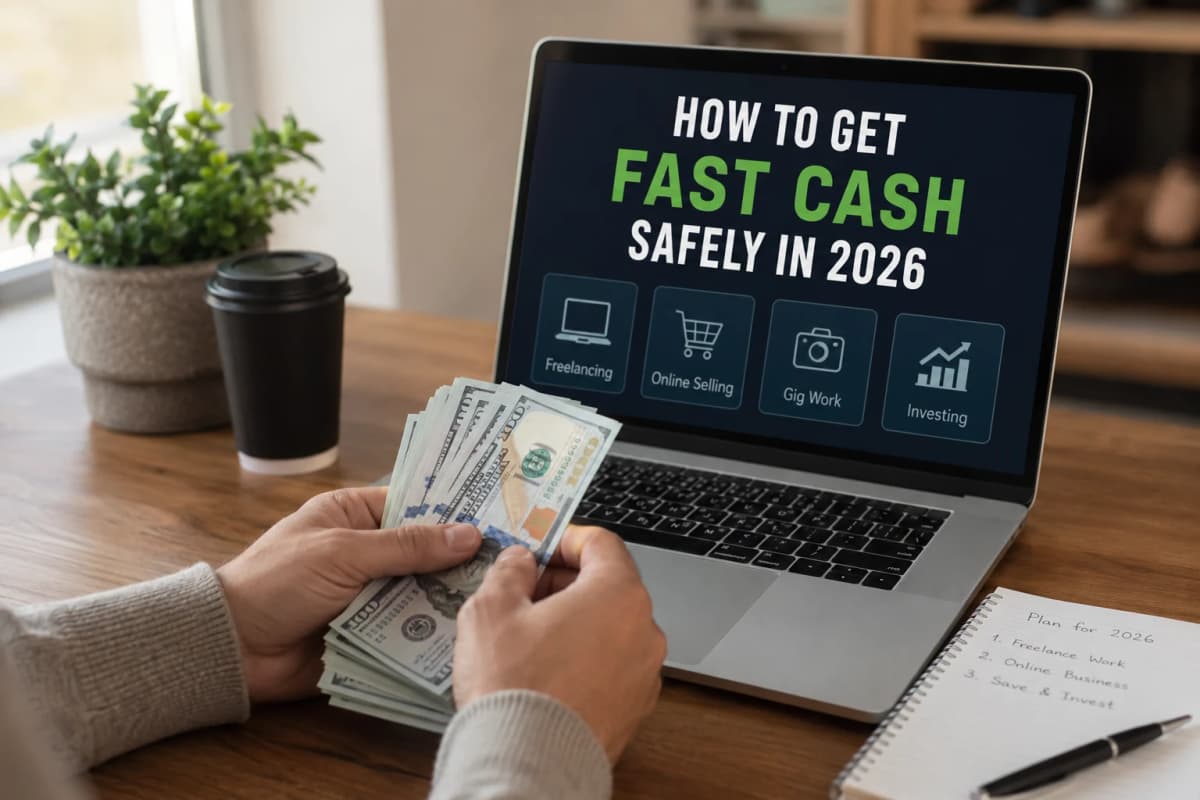
What is a quick loan and how does it work?
A quick loan is a type of short-term credit designed for rapid approval and funding. Unlike traditional bank loans that take weeks, these are usually processed online within minutes. Lenders use automated systems to check your credit and income, often depositing funds into your account on the same day.
How can I get a quick loan with bad credit?
To get a quick loan with bad credit, look for lenders that prioritize "ability to pay" over credit scores. Some lenders use alternative data, like your monthly income or employment history. However, be prepared for higher interest rates, as the lender takes on more risk by approving your application.
Are quick loans safe for first-time borrowers?
Yes, a quick loan is safe if you use a licensed, reputable lender. Always check for a physical address, transparent terms, and state registration. Avoid lenders that demand upfront fees or "guarantee" approval without a check. Responsible borrowing means only taking what you can afford to repay on time.
Understanding the Basics of a Quick Loan
A quick loan is essentially any personal loan that prioritizes a fast application process. In the past, you had to visit a bank branch and wait days for a manager's signature. Today, technology allows lenders to verify your identity and financial health almost instantly.
Most of these loans are "unsecured." This means you do not have to put up collateral, like your house or car, to get the money. Because the lender has less security, the interest rates might be higher than a standard mortgage or auto loan.
Common Types of Fast Funding
Not every quick loan is created equal. Understanding the different categories will help you choose the one that fits your budget best:
Online Personal Loans: These are the most common and usually offer the best rates. They are great for people with fair to excellent credit.
Payday Loans: These are very short-term and usually due on your next payday. Caution is advised here, as interest rates can be extremely high.
Cash Advance Apps: These apps allow you to "borrow" a small portion of your upcoming paycheck with little to no interest, though they may ask for a "tip."
Credit Card Cash Advances: If you have a credit card, you can get a quick loan from an ATM, but the interest starts accruing immediately.
Why Speed Matters in Emergency Borrowing
When you are facing an emergency, time is your biggest enemy. A quick loan removes the friction of traditional borrowing. Most modern lenders offer mobile apps where you can upload a photo of your ID and link your bank account in seconds.
The speed is made possible by "fintech" (financial technology). Algorithms can scan thousands of data points to determine if you are a reliable borrower. This means you can apply for a quick loan at 2:00 PM and potentially have the cash by 5:00 PM.
The Trade-off: Speed vs. Cost
It is important to be honest: speed costs money. When a lender provides a quick loan, they are skipping the deep manual review that banks perform. To cover the risk of people not paying back, they charge higher Interest rates (APR).
Always compare the Total Cost of Borrowing. This includes the principal amount, the interest, and any "origination fees." A quick loan that looks cheap might have hidden fees that make it expensive in the long run.
How to Qualify for a Quick Loan
To increase your chances of approval, you should have your documents ready. Even though it is a quick loan, lenders still have to follow "Know Your Customer" (KYC) laws to prevent fraud.
Basic Requirements
Most lenders will ask for the following:
Proof of Identity: A valid driver’s license, passport, or state ID.
Proof of Income: Recent pay stubs or bank statements showing regular deposits.
Active Bank Account: This is where the quick loan funds will be sent.
Age and Residency: You must be at least 18 years old and a legal resident of the country.
The Role of Credit Scores
Your credit score is a number that tells lenders how well you handle debt. For a quick loan, a higher score usually means a lower interest rate. If your score is low, don’t panic. Many "subprime" lenders specialize in helping people with less-than-perfect credit, though the terms will be stricter.
Step-by-Step: Applying for Your Quick Loan
Follow these steps to ensure a smooth experience:
Step 1: Check Your Credit
Before applying, look at your credit report. If there are errors, fixing them could help you get a better rate on your quick loan. Many websites offer free credit checks that won't hurt your score.
Step 2: Compare Lenders
Never take the first offer you see. Use comparison tools to look at the APR of different quick loan providers. Look for lenders that offer "pre-qualification," which lets you see your potential rate without a hard credit pull.
Step 3: Read the Fine Print
Before hitting "Submit," read the loan agreement. Look for "prepayment penalties." A good quick loan should allow you to pay the money back early without charging you an extra fee for doing so.
Step 4: Receive Your Funds
Once approved, you will sign a digital contract. The lender will then initiate a transfer. Most quick loan providers use ACH transfers or real-time payments to get the money to you as fast as possible.
Risks to Watch Out For
While a quick loan can be a lifesaver, it can also lead to a debt cycle if not managed correctly. It is vital to be a smart consumer.
High Interest Rates
Some fast-cash products, like payday loans, can have APRs as high as 400%. If you cannot pay the quick loan back on time, the interest can quickly become larger than the original amount you borrowed.
Predatory Lenders
Not every website offering a quick loan is legitimate. Be wary of lenders who:
Contact you via social media or unsolicited emails.
Ask for money upfront (legitimate lenders take fees out of the loan).
Pressure you to "act now" without letting you read the contract.
Alternatives to a Quick Loan
If you are worried about the cost of a quick loan, consider these other options first:
Payment Plans: If you owe money for a medical bill or utility, ask the company for a payment plan. They often provide 0% interest options.
Local Charities: Many community organizations provide small grants for people facing a temporary crisis.
Borrowing from Family: While it can be awkward, borrowing from a friend can save you a lot in interest. Just be sure to put the agreement in writing to protect the relationship.
Credit Union Loans: If you belong to a credit union, they often offer "Payday Alternative Loans" (PALs) which are much cheaper than a standard quick loan.
Tips for Repaying Your Quick Loan
Managing your debt is just as important as getting the money. Here is how to handle your quick loan responsibly:
Set Up Autopay: Most lenders offer a small discount if you set up automatic payments. It also ensures you never miss a due date.
Pay More Than the Minimum: If you have extra cash, put it toward your quick loan principal. This reduces the total interest you pay.
Adjust Your Budget: For the duration of the loan, try to cut back on "wants" (like eating out) to ensure the quick loan is cleared quickly.
Conclusion: Is a Quick Loan Right for You?
A quick loan is a powerful financial tool when used correctly. It provides a bridge during difficult times and offers a level of convenience that traditional banking simply cannot match. However, the responsibility lies with the borrower to ensure they can meet the repayment terms.
By doing your research, comparing rates, and reading the fine print, you can secure a quick loan that solves your problem without creating a new one. Always remember: borrow only what you need, and have a clear plan for how to pay it back.
Frequently Asked Questions (FAQs)
1. How fast is a "quick loan" really?
Most online lenders can approve your application within minutes. Once approved, the funds are typically sent to your bank account via direct deposit. Depending on your bank's processing times, you could see the money in your account in as little as a few hours or by the next business day.
2. Can I get a quick loan if I am unemployed?
Yes, it is possible, but you must show a source of regular income. This could include Social Security benefits, disability payments, alimony, or freelance income. Lenders just want to ensure you have a way to repay the quick loan on time.
3. Will applying for a quick loan hurt my credit score?
Initially, most lenders do a "soft pull" to show you rates, which does not affect your score. However, once you officially apply for the quick loan, they will perform a "hard pull," which might cause a temporary dip of a few points in your credit score.
4. What happens if I can't pay back my quick loan on time?
If you miss a payment, the lender will likely charge a late fee and your interest will continue to grow. It is best to contact the lender before you miss the payment. Many quick loan providers are willing to work out a temporary hardship plan.
5. What is the average interest rate for a quick loan?
Interest rates vary widely based on your credit score and the type of loan. For a personal quick loan with good credit, rates might be 6% to 15%. For those with poor credit or payday options, the rate can exceed 35% or even significantly higher in some regions.
6. Are there any hidden fees with a quick loan?
Always look for "origination fees" or "processing fees." These are often deducted from the loan amount before you receive it. For example, if you take a $1,000 quick loan with a 5% fee, you will only receive $950 in your bank account, but you will still owe the full $1,000.