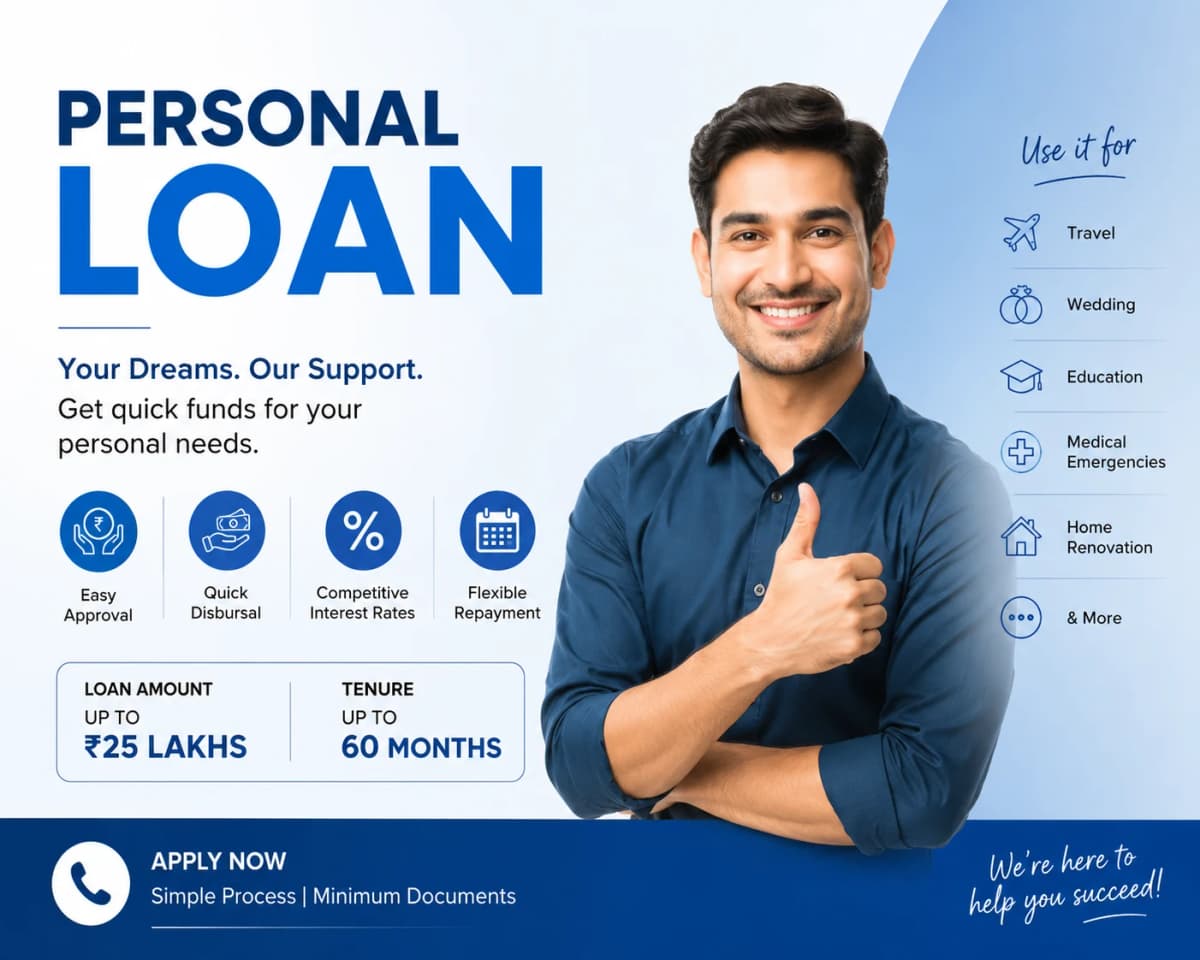
What Is a Personal Loan Without Collateral?
A personal loan without collateral is money borrowed from a bank, credit union, or online lender that does not require security. Since you are not putting up an asset, the lender cannot automatically seize your property if you fail to pay.
Instead, the lender trusts your promise to repay the borrowed amount, plus interest, over a set period. Because of this lack of security, these loans are considered "unsecured." They are a popular choice for people who do not own property or do not wish to risk their assets.
How Lenders Evaluate Your Application
Since there is no collateral to protect the lender, they look closely at your "creditworthiness." This is a measure of how likely you are to pay back the money on time based on your past behavior.
Your Credit Score
Your credit score is the most important factor. A higher score tells the lender that you have managed debt responsibly in the past. If your score is low, lenders may see you as a higher risk and charge a higher interest rate or deny the loan entirely.
Income and Employment History
Lenders want proof that you can afford the monthly payments. They will verify your income through pay stubs, tax returns, or bank statements. Steady, long-term employment is preferred because it shows financial stability.
Debt-to-Income Ratio
This ratio compares how much debt you already owe to your total monthly income. Lenders use this to ensure that adding a new loan payment will not overwhelm your budget. They prefer borrowers who have a manageable amount of existing debt.
Advantages and Risks to Consider
Before applying for a personal loan without collateral, you should weigh the benefits against the potential downsides. Making an informed decision is vital for your long-term financial health.
The Advantages
No Risk to Assets: You do not risk losing your home or car if you face financial hardship.
Fast Approval: Many lenders offer quick online processes, sometimes providing funds within a few days.
Flexibility: You can often use the money for any purpose, such as medical bills, home repairs, or consolidating high-interest debt.
The Risks
Higher Interest Rates: Because the loan is unsecured, lenders charge higher interest rates to compensate for the added risk.
Strict Eligibility: If you have a poor credit history, it can be very difficult to qualify for a loan at a reasonable rate.
Impact on Credit: Missing payments will significantly damage your credit score, making it harder to borrow money in the future.
Steps to Apply for an Unsecured Loan
Applying for a personal loan without collateral requires preparation. Follow these steps to improve your chances of getting approved with favorable terms.
Check Your Credit Report: Obtain a copy of your credit report to check for errors. Dispute any inaccurate information before you apply.
Determine Your Needs: Calculate exactly how much you need. Borrowing more than necessary increases your interest costs and monthly burden.
Compare Lenders: Look at multiple options, including local banks, credit unions, and reputable online lenders. Compare interest rates, fees, and repayment terms.
Gather Documentation: Have your identification, proof of income, and bank statements ready. Being organized makes the application process much smoother.
Submit Your Application: Carefully fill out the application form. Ensure all information is accurate, as discrepancies can lead to an automatic rejection.
Managing Your Debt Responsibly
Taking out a personal loan without collateral is a serious financial commitment. Once you receive the funds, you must have a plan for repayment. Treat this loan as a tool to improve your situation, not as extra spending money.
Set up an automatic payment schedule with your bank. This ensures you never miss a due date, which helps you avoid late fees and protects your credit score. If you ever feel overwhelmed, contact your lender immediately to discuss potential hardship programs.
Direct Answer Snippets
What is the main requirement for an unsecured loan? The primary requirement is a strong credit score and a stable income. Since there is no collateral to secure the loan, the lender relies on your credit history to assess risk. A high score proves you are reliable, while stable income proves you can afford the monthly payments.
Does a personal loan without collateral hurt my credit? It only hurts your credit if you miss payments or default on the loan. If you make all your payments on time, an unsecured loan can actually improve your credit score by demonstrating that you can manage debt effectively and build a positive payment history over time.
Can I get a loan if I have bad credit? It is difficult to get a personal loan without collateral with bad credit. Some specialized lenders offer loans for poor credit, but these usually come with very high interest rates and fees. It is often better to improve your credit score before applying to secure more affordable terms.
Frequently Asked Questions (FAQs)
1. What happens if I cannot repay my personal loan?
If you fail to repay, your credit score will drop significantly, making it difficult to rent an apartment or get future credit. Eventually, the lender may send your account to a collection agency, and in some cases, they may take legal action to recover the money.
2. Is a personal loan without collateral better than a credit card?
It depends on your goal. Personal loans often have lower interest rates than credit cards and a fixed repayment timeline, which helps you pay off debt faster. Credit cards are better for small, recurring expenses that you can pay off in full every month.
3. How long does the application process take?
Many online lenders provide an initial decision within minutes or hours. Once approved, the funds are typically deposited into your bank account within one to five business days. Traditional banks may take longer to process your documentation.
4. Are there hidden fees I should watch out for?
Yes, some lenders charge "origination fees," which are deducted from the loan amount you receive. There may also be prepayment penalties if you try to pay off the loan early. Always read the loan agreement thoroughly to identify these costs before signing.
5. Can I use this loan to pay off other debts?
Absolutely. Using a personal loan without collateral to consolidate debt is a common strategy. If you can get a loan with a lower interest rate than your current debts, you can save money on interest and simplify your finances by having only one monthly payment.
Conclusion
Securing a personal loan without collateral is a straightforward process if you are prepared and financially responsible. By understanding your credit standing, shopping for the best rates, and maintaining a strict repayment plan, you can use these loans to achieve your financial goals without risking your personal assets. Always remember that transparency and discipline are your best tools when navigating the world of personal finance.