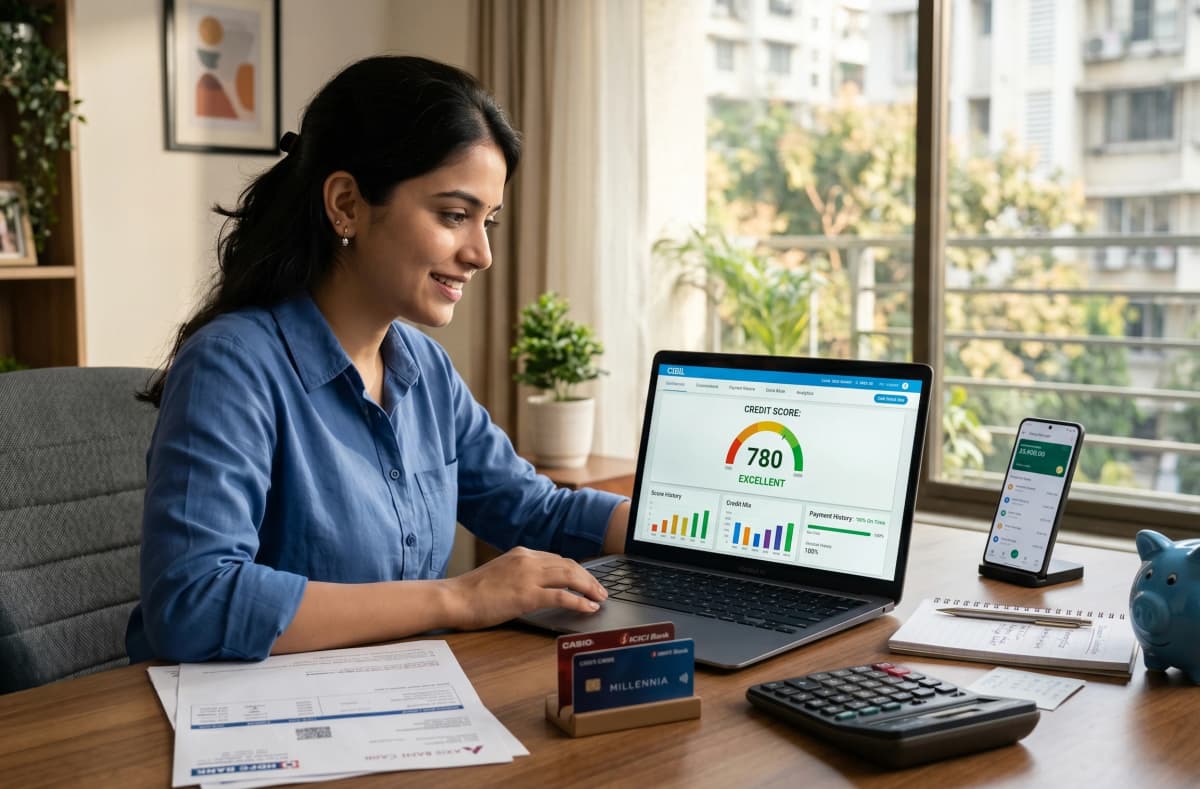
Rajesh, a 35-year-old salaried engineer from Pune, urgently needed ₹5 lakh for a medical emergency in his family. He applied for a personal loan at a leading private bank, confident in his stable income, only to face a disheartening rejection. The reason? A CIBIL score of 620. This situation is incredibly common across India, where a three-digit number you might rarely think about holds immense power over your financial future. This comprehensive CIBIL Score Guide is designed to demystify that number, showing you exactly how it impacts your access to financing and how you can take control of it. Understanding your credit health is the first, most crucial step towards achieving your financial goals, whether it’s for a planned wedding expense or an unexpected monsoon home repair.
What is a CIBIL Score and How is it Calculated?
In simple terms, your CIBIL score is a numerical summary of your credit history, ranging from 300 to 900. Maintained by TransUnion CIBIL, one of India's four licensed credit information companies, this score serves as a primary indicator of your creditworthiness to lenders like HDFC financial institution or SBI. A higher score suggests responsible credit behaviour, making you a low-risk applicant.
In contrast, a lower score signals potential risk, making institutions hesitant to offer you financing. The calculation itself is based on data provided by banks and NBFCs about your credit accounts.
The algorithm used by TransUnion CIBIL considers several factors, each with a different weight. While the exact formula is proprietary, the breakdown is generally understood as follows:
- Payment History (35% Weightage): This is the most significant factor. Lenders want to see a consistent, on-time record of paying your EMIs and credit card bills. Even a single missed or delayed instalment can negatively impact your score.
- Credit Utilisation Ratio (30% Weightage): This measures how much of your available credit limit you are using. A high ratio (over 30%) suggests you might be over-leveraged and struggling with repayments, which is a red flag for lenders.
- Credit Mix and Duration (25% Weightage): Having a healthy mix of secured credit (like a home or auto borrowing) and unsecured credit (like personal loans or credit cards) is viewed positively. Additionally, a longer credit history with a proven track record of responsible repayment helps build a stronger score.
- New Credit Enquiries (10% Weightage): When you apply for a new borrowing or credit card, the lender makes a 'hard enquiry' on your report. Too many hard enquiries in a short period can lower your score, as it may indicate you are in financial distress and desperately seeking credit.
Understanding Your CIBIL Score Range: Good vs. Bad
Your CIBIL score falls into different brackets, and lenders have specific policies for each. Based on how Indian banks operate, applicants with scores above 750 are typically considered prime customers, gaining access to a wider range of products and more favourable terms.
Honestly, anything below 650 can make securing unsecured financing quite challenging. So what does that mean for your finances?
Let's break down the typical ranges:
- 750 - 900 (Excellent): You are a highly desirable customer. Lenders will proactively offer you pre-approved loans and credit cards, often with lower rates and higher limits. Your negotiation power is at its peak.
- 700 - 749 (Good): Approval for most types of financing is likely. You will receive competitive interest rates, though perhaps not the absolute lowest on the market. This is a solid score to have.
- 650 - 699 (Fair): You are on the borderline. While some lenders may approve your application, they might do so with a higher cost of credit or demand a co-applicant or guarantor. Many major institutions might be hesitant.
- Below 650 (Poor): Securing new credit from mainstream banks is very difficult. You may have to turn to NBFCs that charge significantly higher cost of borrowing rates to compensate for the perceived risk.
But why do rate rates vary so much? It's all about risk assessment. An applicant with an 820 score might get a personal funds at 11% p.a., while someone with a 680 score might be offered the same financing at 18% p.a. Over a 5-year, ₹5 lakh funds, that difference amounts to nearly ₹1 lakh in extra cost of borrowing payments — a substantial sum.
How to Check Your CIBIL Score and Report for Free
Gone are the days when checking your credit score was a complicated, paid process. Thanks to a Reserve creditor of India (RBI) mandate, every individual is entitled to one free full credit report (including score) from each of the four credit bureaus once a year. In real-world terms, this means you can monitor your credit health without any cost.
That distinction matters more than most people realise.
Here's a simple way to get your official report:
- Visit the official TransUnion CIBIL website.
- Look for the option to get your free annual CIBIL score.
- Fill out the online form with your personal details (Name, DOB, PAN, Aadhaar number, etc.).
- Answer a few identity verification questions related to your existing credit accounts.
- Once verified, you can view and download your detailed CIBIL report and score.
It's crucial to use only the official bureau website or trusted financial platforms like Six Finance to check your score. Be wary of unauthorized websites that might misuse your sensitive personal data. Regularly reviewing your report helps you stay informed and quickly spot any inaccuracies or fraudulent activity.
widespread Mistakes That Can Damage Your CIBIL Score
A usual situation we see is people inadvertently damaging their credit score due to a lack of awareness. Avoiding these simple pitfalls is the first step towards building a robust credit profile. A single misstep can take months, or even years, to recover from.
Missing or Delaying EMI Payments
This is the cardinal sin of credit management. A payment that is late by even a few days gets reported to the credit bureaus. Consistent delays or, worse, a default (non-payment for over 90 days) will severely damage your score, and the negative entry can remain on your report for up to seven years. It signals unreliability to future lenders.
Maintaining a High Credit Utilisation Ratio (CUR)
Maxing out your credit cards is a major red flag. For instance, if you have a credit card with a ₹1 lakh limit and your outstanding balance is consistently around ₹90,000, your CUR is 90%.
Lenders see this as a sign of being credit-hungry or facing financial stress. A proven practice is to keep your overall CUR below 30% — so on a ₹1 lakh limit, you should aim to keep your balance below ₹30,000.
Most borrowers overlook this completely.
Applying for Multiple Loans in a Short Period
When you're shopping for a funds for a big purchase (like during the festival season), it's tempting to apply at multiple institutions to see who offers the best rate. However, each application triggers a hard enquiry.
Several hard enquiries within a few weeks can make you appear desperate for financing. Instead of carpet-bombing applications, research eligibility criteria first and apply only to lenders where you have a high chance of approval.
Co-signing a financing and Forgetting About It
In India, it is frequent to co-sign a borrowing for a family member or friend. While it is a noble act, remember that you are legally just as responsible for the payoff as the primary applicant.
If they miss an EMI, it will directly impact your CIBIL score as well. Before co-signing, ensure you trust the primary borrower's financial discipline completely.
A Proven Strategy to Improve Your CIBIL Score Above 750
Improving a low CIBIL score is not an overnight process; it requires discipline and patience. In practice, it can take anywhere from 6 to 18 months of consistent positive behaviour to see a considerable improvement. Here is a reliable, step-by-step strategy to rebuild your credit health.
Step 1: Clear All Your Dues and Automate Payments
Your immediate priority should be to clear any and all overdue payments. After that, set up automatic ECS mandates or standing instructions for all your EMIs and credit card bills. This simple action eliminates the risk of forgetting a due date, ensuring your most important credit score factor — payment history — remains pristine.
The fine print always matters.
Step 2: Pay Down Your Credit Card Balances
Focus on aggressively paying down the balances on your credit cards to bring your Credit Utilisation Ratio below the 30% threshold. If you have multiple cards, consider the 'debt avalanche' (paying off the highest-cost of borrowing card first) or 'debt snowball' (paying off the smallest balance first) method to build momentum.
This action can provide one of the quickest boosts to your score.
Step 3: Regularly Review Your Credit Report for Errors
Mistakes can happen. A financing you've already paid off might still show as active, or there could be an account you don't recognize. Download your credit report every few months and scrutinize it for inaccuracies.
If you find an error, immediately file a dispute with CIBIL through their online dispute resolution portal. Correcting these errors can lead to an instant score improvement.
Step 4: Build a Balanced Credit Mix Over Time
While you shouldn't take on unnecessary debt, consciously building a mix of credit types over the long term can be beneficial. Successfully managing both a credit card (unsecured) and a small consumer durable credit (secured), for example, demonstrates to lenders that you can handle different types of financial responsibilities.
Avoid closing very old credit card accounts, as they contribute positively to the average age of your credit history.
Disclaimer: The information provided in this guide is for educational purposes only and should not be considered as personalized financial advice. cost of borrowing rates, lender policies, and regulations are subject to change.
Key Takeaways
- Your CIBIL score is a 3-digit number from 300-900 that summarizes your credit history for lenders.
- Payment History (35%) and Credit Utilisation (30%) are the two most crucial factors in its calculation.
- A score above 750 is considered excellent and gives you access to better financing terms and lower cost of borrowing rates.
- As per RBI guidelines, you are entitled to one free credit report annually from each of India's four credit bureaus.
- Improving your score requires consistent on-time payments, keeping credit utilisation below 30%, and regularly checking your report for errors.
Compare and apply for the best personal financing rates on Six Finance.
Always consult a certified financial advisor before making major financial decisions.
Frequently Asked Questions
How long does it take to strengthen a CIBIL score?
There is no fixed timeline, but with disciplined financial behaviour, you can typically see a noticeable improvement in your CIBIL score within 6 to 12 months. Consistent, on-time payments and lowering credit utilisation are the fastest ways to see positive changes.
This is where most applicants make mistakes.
Does checking my own CIBIL score lower it?
No, checking your own score is considered a 'soft enquiry' and has zero impact on your credit score. Only when a lender checks your score as part of a borrowing application (a 'hard enquiry') can it have a small, temporary negative effect.
What does a CIBIL score of 'NA' or 'NH' mean?
A score of 'NA' (Not Applicable) or 'NH' (No History) means you do not have a credit history. This usually applies to individuals who have never taken a borrowing or used a credit card. While it's not a negative score, some lenders may be cautious as they have no data to assess your creditworthiness.