5 Lakh Home Loan Tax Benefit Section 80C: The Ultimate Tax Saving Guide
Buying a house is a major financial milestone for any individual or student learning about real-world economics. While a housing loan helps you manage the big purchase cost smoothly, it also offers amazing ways to save money on your annual income taxes.
The Indian Income Tax Act provides special relief to taxpayers who are currently paying off their home loans. Understanding how the 5 lakh home loan tax benefit section 80C works can help you reduce your taxable income and keep more cash in your pocket.
Direct Answer Snippets for Quick Reference
Can I claim a tax deduction on a 5 lakh home loan under Section 80C?
Yes, you can claim a tax deduction on a 5 lakh home loan under Section 80C, but only for the principal repayment part of your Equated Monthly Installment (EMI). This specific deduction is exclusively available if you choose to file your taxes under the Old Tax Regime.
What is the maximum deduction limit under Section 80C?
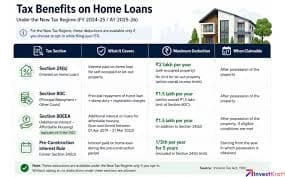
The absolute maximum deduction limit allowed under Section 80C is 1.5 lakh per financial year. This total limit is shared across all eligible investments and expenses, including your home loan principal, Public Provident Fund (PPF), and life insurance premiums.
Does the new tax regime allow Section 80C home loan benefits?
No, the new tax regime does not allow any tax deductions under Section 80C for home loan repayments. If you want to claim the 5 lakh home loan tax benefit section 80C, you must actively opt for the Old Tax Regime when filing your tax returns.
Breaking Down Your Home Loan EMI: Principal vs Interest
To understand how tax benefits work, you must first understand what goes inside your monthly loan payment. Every single EMI you pay to the bank is divided into two distinct parts.
The first part is the interest component, which is the fee the bank charges you for borrowing their money. The second part is the principal component, which is the actual loan amount you are paying back to reduce your total debt.
Section 80C deals strictly with the principal component of your housing loan. The interest component is handled separately under a completely different tax rule known as Section 24b.
How the 5 Lakh Home Loan Tax Benefit Section 80C Works
When you take a 5 lakh housing loan, your annual principal repayment will be a fraction of that total amount. Whatever principal amount you pay back during the financial year can be deducted directly from your gross taxable income under Section 80C.
For example, if your total income for the year is 7 lakh and you paid 1 lakh towards your home loan principal, Section 80C allows you to subtract that 1 lakh. Your net taxable income drops down to 6 lakh, which lowers your final tax bill.
However, you must remember that Section 80C has a strict upper boundary line. Even if you repay a higher amount, you cannot claim a deduction greater than the standard 1.5 lakh limit.
Crucial Conditions to Claim Section 80C Tax Benefits
The income tax department enforces strict guidelines for claiming these deductions. Failing to meet these basic criteria can result in your tax benefits being cancelled or reversed.
1. The Five-Year Lock-in Rule
You must not sell the residential house property within five years from the date you received physical possession of it. If you sell the property before this five-year window closes, all the tax deductions you claimed in previous years will be canceled.
The tax department will add that deducted amount back into your income in the year of the sale. You will then have to pay regular income tax on that combined amount.
2. Complete Construction Requirement
The tax benefits under Section 80C can only be claimed after the construction of the house is fully complete. You will also need to receive a valid completion or possession certificate from the local municipal authority.
If you are paying EMIs for an under-construction property, you cannot claim the principal deduction for those years. Those payments do not qualify for immediate tax relief.
3. Registration and Stamp Duty Charges
A great bonus tip for new homeowners is that stamp duty and registration fees also qualify for Section 80C benefits. You can claim these expenses in the exact financial year you paid them, even if you paid them before the construction finished.
Old Tax Regime vs New Tax Regime for Homeowners
Choosing the right tax path is the most critical decision for a home loan borrower. The Indian tax system offers two pathways with completely opposite rules regarding deductions.
The Old Tax Regime features higher basic tax percentages but allows you to utilize all traditional tax-saving deductions. This is the only place where the 5 lakh home loan tax benefit section 80C is alive and valid.
The New Tax Regime offers lower, simplified tax rates but completely removes almost all major exemptions. If you select the new regime, your Section 80C benefits become zero, meaning you cannot deduct your home loan principal from your taxable income.
Document Checklist to Claim Your Tax Deduction
To claim your tax benefits without any errors during your annual tax filing, you must secure the correct certificates from your lending institution.
Home Loan Interest Certificate: Ask your bank for an annual provisional tax certificate. This document clearly separates the exact principal and interest amounts you paid during that financial year.
Property Possession Certificate: Keep a copy of the official allotment letter or possession hand-over document to prove the construction timeline.
Stamp Duty Receipts: Retain the original payment receipts issued by the sub-registrar office during the land or house registration process.
Conclusion: Plan Your Tax Savings Wisely
The 5 lakh home loan tax benefit section 80C is a highly effective financial tool that rewards you for investing in a residential home. It helps reduce your overall taxable income under the Old Tax Regime while you build a permanent physical asset for your family.
Always check your annual loan statement to see how much principal you are actually repaying each year. Compare both tax regimes carefully before filing your returns, keep your property documents secure, and enjoy the financial relief of smart tax planning.
Frequently Asked Questions (FAQs)
One: Can joint owners claim the 5 lakh home loan tax benefit section 80C separately?
Yes, if the home loan is taken jointly by a husband and wife who are both co-owners of the property, they can both claim deductions. Each person can claim up to the maximum 1.5 lakh limit for the principal amount they individually paid from their income.
Two: Does Section 80C cover the principal repayment of a plot purchase loan?
No, Section 80C deductions do not apply to a loan taken solely for purchasing a vacant plot of land. The tax benefit is strictly linked to residential house property, meaning you can only claim it once you start constructing a house on that plot.
Three: What happens to my Section 80C benefit if I make a major principal part-payment?
If you make a large part-payment to reduce your 5 lakh loan balance, that entire payment counts as principal repayment. You can claim it under Section 80C for that specific financial year, but the maximum deduction will still be capped at the 1.5 lakh threshold.
Four: Can I claim Section 80C benefits for a home loan taken from a private relative?
No, you cannot claim Section 80C principal deductions for loans borrowed from private friends, family members, or relatives. To qualify for this specific tax benefit, the housing loan must be secured from a registered bank, housing finance company, or cooperative society.
Five: Is the tuition fee for my children included in the same Section 80C limit?
Yes, school and college tuition fees for up to two children qualify under Section 80C. However, it shares the exact same combined basket limit of 1.5 lakh along with your home loan principal, PPF, and other tax-saving investments.
Six: Can I claim tax benefits if the house is locked or vacant?
Yes, even if the house is locked or vacant, it is legally considered a self-occupied property under income tax guidelines. You can continue to claim your principal repayment deductions under Section 80C normally, provided you fulfill the standard five-year possession rule