Buying a home is a major milestone for any married couple. It is a big financial commitment that usually requires a long-term home loan.
Did you know that taking this loan together can heavily reduce your tax burden? The joint home loan tax benefits for husband and wife max limit allows both partners to claim deductions, effectively doubling the household tax savings.
In this guide, we will break down how the tax rules work for couples, the maximum limits you can claim, and the conditions you must meet to get these benefits under the old tax regime.
Direct Answer Snippets for Quick Understanding
What is the max limit for joint home loan tax benefits?
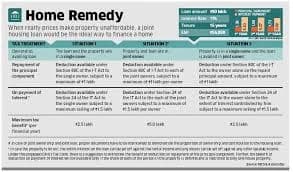
The joint home loan tax benefits for husband and wife max limit is up to 7 lakh per financial year. Each partner can claim up to 1.5 lakh for principal repayment and up to 2 lakh for interest paid. Combined, this allows a married couple to double their total deductions from 3.5 lakh to 7 lakh.
Do both husband and wife get separate tax limits?
Yes, both the husband and wife are treated as separate taxpayers by the Income Tax department. As long as both are co-owners of the property and co-borrowers of the loan, they can each claim the maximum individual limits of 1.5 lakh and 2 lakh on their respective tax returns.
What are the main sections used for joint home loan deductions?
Couples can claim deductions under two main sections of the Income Tax Act. Section 80C handles the principal repayment component up to 1.5 lakh per person. Section 24(b) handles the interest payment component up to 2 lakh per person for a self-occupied property.
How Joint Home Loan Tax Benefits Work for Couples
When you take a home loan alone, your tax deductions are strictly capped. No matter how high your loan EMI is, you cannot cross the standard individual legal limits.
However, when a husband and wife apply together as co-applicants, the tax dynamics change completely. The law looks at both individuals separately, allowing both to apply the deduction limits to their own taxable income.
This setup is highly beneficial when the annual interest and principal amounts are too high for a single person to claim fully. By splitting the amounts, nothing goes to waste.
Breaking Down the Max Limits for Husband and Wife
To fully utilize the joint home loan tax benefits for husband and wife max limit, you need to understand how the limits are split between interest and principal.
Principal Repayment Under Section 80C
Section 80C allows a deduction on the principal component of your home loan EMI. It also includes one-time expenses like stamp duty and property registration charges.
For a single borrower, this cap is 1.5 lakh. For a married couple operating as co-owners, the maximum limit doubles to 3 lakh total (1.5 lakh each), provided they are both paying the loan.
Interest Repayment Under Section 24(b)
The interest component usually forms a massive chunk of your EMIs during the initial years of the loan. Under Section 24(b), an individual can deduct up to 2 lakh for interest paid on a self-occupied house.
When a husband and wife jointly repay the loan, they can claim up to 2 lakh each. This brings the combined household interest deduction limit to a massive 4 lakh per year.
Crucial Conditions to Claim Joint Tax Benefits
You cannot claim these deductions simply by adding your spouse's name to the bank loan documents. The tax department enforces strict rules to prevent misuse.
Co-Ownership is Mandatory
To claim any tax benefits, your spouse must be a registered co-owner of the property. If your husband or wife is just a co-borrower on the bank loan but their name is not on the property deed, they cannot claim tax benefits.
Co-Borrower on the Loan
Similarly, being an owner is not enough. Your spouse must also be an official co-borrower in the bank's home loan agreement. Both names must be present on the loan account.
Actual Contribution to EMIs
Both partners must actively contribute to the repayment of the loan. The tax deductions are always calculated in proportion to the actual share of the loan that each person repays from their respective bank accounts.
How to Calculate the Split Between Spouses
The division of tax benefits is not a random choice. It must strictly match the ownership ratio or the EMI sharing ratio agreed upon at the start.
If a husband and wife own the property in a 50:50 ratio, the total interest and principal paid during the year must be divided equally between them. Each will then claim their 50 percent share on their individual tax returns.
If the total annual interest is 5 lakh, a 50:50 split means 2.5 lakh each. However, since the individual cap is 2 lakh, both can claim exactly 2 lakh, maximizing their household savings.
Additional Financial Perks for Married Couples
Apart from the joint home loan tax benefits for husband and wife max limit, couples enjoy other financial advantages when buying a home together.
Higher Loan Eligibility
When a bank evaluates a home loan application, it looks at the applicant's monthly income. By pooling the incomes of both husband and wife, the total repayment capacity increases, allowing the bank to sanction a much higher loan amount.
Discounted Interest Rates for Women
Many leading banks offer a slight discount on home loan interest rates if the primary applicant or co-owner is a woman. Even a small drop in the percentage rate can save you thousands over a 20-year or 30-year tenure.
Lower Stamp Duty Charges
Several state governments in India offer a concession on stamp duty charges if the property is registered in a woman's name or held jointly by a married couple. This helps reduce your upfront purchasing costs significantly.
Conclusion
Maximizing the joint home loan tax benefits for husband and wife max limit is one of the smartest financial moves a married couple can make. By ensuring that both partners are registered co-owners and co-borrowers, you can legally double your tax deductions up to 7 lakh annually. This structure not only eases the burden of high EMIs but also boosts your overall loan eligibility. Always keep clear records of your EMI contributions and consult your tax advisor during ITR filing to ensure a smooth, error-free claiming process.
Genuine Frequently Asked Questions (FAQs)
1. Can a wife claim tax benefits if she is a co-borrower but not an owner of the house?
No, a wife cannot claim any tax benefits if she is only a co-borrower. To legally eligible for deductions under Section 80C and Section 24(b), an individual must be both a co-borrower on the loan and a registered co-owner of the property.
2. What happens if one spouse is not working or has zero income?
If one spouse has no income, they cannot utilize the tax benefits because they have no taxable income to deduct it from. In such cases, it is financially wiser for the working spouse to be the primary owner and pay 100 percent of the EMIs to claim the full individual deduction limit.
3. Can we claim joint home loan tax benefits under the New Tax Regime?
No, the home loan tax deductions under Section 80C and Section 24(b) for self-occupied properties are only available under the Old Tax Regime. If you choose to file your taxes using the New Tax Regime, you give up these housing loan deductions.
4. Can we choose any random ratio to split the tax deductions every year?
No, you cannot change the split ratio randomly each year to suit your tax needs. The deduction must be split strictly based on the ownership share mentioned in the property registration deed or the actual proportion of EMIs paid by each spouse.
5. Is the tax benefit available while the house is still under construction?
No, you cannot claim principal or interest deductions while the property is under construction. The tax benefits can only be claimed starting from the financial year in which the construction is fully completed and you take physical possession of the house.
6. Can we claim tax benefits on stamp duty and registration fees jointly?
Yes, stamp duty and registration fees can be claimed as a deduction under Section 80C in the year they are paid. A husband and wife can claim these expenses jointly based on their ownership share, but it must fit within their individual 1.5 lakh Section 80C caps.