Purchasing a premium property or a luxury apartment is a major financial milestone. When dealing with high-value real estate, most buyers rely heavily on housing finance to manage the transaction smoothly.
However, borrowing large sums of money involves strict regulatory frameworks. The Reserve Bank of India (RBI) sets precise boundaries on how much money a financial institution can lend you. This boundary is determined by the ltv ratio for home loan above 75 lakhs rbi guidelines, which acts as a safety shield for the banking ecosystem.
In this guide, we will simplify the concept of the Loan-to-Value (LTV) ratio, look at the exact percentages allowed for luxury housing, and explain how these metrics dictate your upfront pocket expenses.
Direct Answer Snippets for Quick Understanding
What is the RBI mandated LTV ratio for home loans above 75 lakhs?
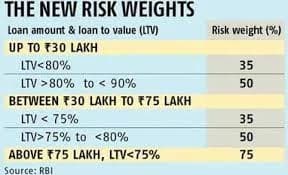
According to the official ltv ratio for home loan above 75 lakhs rbi guidelines, the maximum permissible Loan-to-Value ratio is strictly capped at 75 percent. This means that for any premium residential property purchase where the loan amount crosses the 75 lakh baseline, the bank can finance a maximum of 75 percent of the property's appraised value.
How does the 75% LTV cap affect a buyer's down payment?
Because the RBI restricts the bank's lending capacity to 75 percent for high-value loans, the buyer must arrange the remaining balance independently. This means you must provide a minimum of 25 percent of the total property cost out of your own savings as an upfront down payment or margin contribution.
Are registration fees included in the 75% LTV calculation?
No, the RBI explicitly states that additional purchasing costs—such as state stamp duty, municipal registration fees, and legal documentation documentation charges—cannot be included in the core property value for calculating the 75 percent LTV limit. The borrower must pay these government expenses separately outside of the loan amount.
Decoding the Concept of LTV Ratio in Banking
Before looking at big-ticket numbers, let us break down what LTV actually means. LTV stands for Loan-to-Value ratio. In simple terms, it represents the percentage of a property's total market value that a lender is legally allowed to finance.
The basic mathematical formula used by risk managers to calculate this space is:
$$\text{LTV Ratio} = \left( \frac{\text{Loan Amount}}{\text{Property Value}} \right) \times 100$$
For example, if a house is valued at 1 crore and the bank agrees to lend you 75 lakhs, your computed LTV ratio sits at exactly 75 percent. The remaining portion represents your personal stake, ensuring that both you and the bank share the financial responsibility of the asset.
Why RBI Enforces Stricter Rules for High-Value Housing
The central bank categorizes housing loans into distinct slabs based on the total loan requirement. As the loan amount increases, the risk of asset depreciation or sudden market drops poses a greater threat to commercial lenders.
For affordable housing units costing up to 30 lakhs, the RBI permits a relaxed LTV cap of up to 90 percent. For mid-range houses between 30 lakhs and 75 lakhs, the limit drops to 80 percent.
When a transaction triggers the final bracket, the ltv ratio for home loan above 75 lakhs rbi guidelines enforces a firm 75 percent ceiling. This rule prevents systemic economic strain by reducing the bank's exposure to luxury real estate bubbles, making sure large-scale borrowers possess sufficient personal financial capability.
Real-World Impact on Your Down Payment Structure
When planning to buy an expensive villa or a spacious metropolitan apartment, understanding the 75 percent restriction changes how you manage your immediate liquid cash reserves.
Let us evaluate a practical example. Suppose you finalize a premium apartment with an official bank valuation of 1.2 crore.
Maximum Bank Funding (75%): The maximum amount any commercial bank can disburse under the law is 90 lakhs.
Minimum Personal Contribution (25%): You must bring 30 lakhs to the table as your official margin money.
Furthermore, remember that you need to account for extra statutory charges. Stamp duty and registration often add an extra 5 percent to 8 percent to the property cost depending on your state regulations. Since these cannot be bundled into the 75 percent loan structure, your actual upfront cash requirement will easily exceed the basic 25 percent down payment baseline.
How Banks Determine the True Value of the Property
A common misunderstanding among first-time buyers is assuming that the property value matches the amount written on the builder's price sheet. In reality, banks rely on independent assessment systems.
Lenders deploy professional, third-party civil engineers and legal evaluators to inspect the site physically. These experts analyze current market demand, local construction quality, regional infrastructure, and historical resale data to determine the "fair market value."
If you agree to buy a penthouse for 90 lakhs, but the bank's official evaluation report prices the property at only 80 lakhs, the 75 percent LTV ratio will be applied strictly to the lower figure. Consequently, the bank will advance only 60 lakhs, and you will have to cover the unexpected gap out of your personal pocket.
Tips for Buyers Navigating High-Value Home Loans
Managing a premium property purchase requires careful financial planning to avoid sudden funding rejections or cash shortages at the closing desk.
Build a Robust Savings Buffer
Never assume that saving exactly 25 percent of the builder's asking price is enough. Always keep an additional 10 percent cash cushion ready to manage independent external costs like stamp duty, Society maintenance deposits, brokerage charges, and interior design bills.
Optimize Your Credit Score
While the ltv ratio for home loan above 75 lakhs rbi guidelines sets the maximum legal limit at 75 percent, banks are not obligated to grant the full 75 percent to everyone. To qualify for the maximum allowable loan, you must display an impeccable credit history, preferably maintaining a CIBIL score above 750.
Use Co-Borrowing Options to Boost Income Clarity
High-value loans require massive monthly EMI repayments. If your individual income statements make the credit managers hesitant, consider adding an earning family member, like a spouse or parent, as a co-borrower. This combined income profile reassures the lender regarding your overall repayment capability.
Conclusion
Navigating the ltv ratio for home loan above 75 lakhs rbi guidelines is an essential step for anyone planning to step into the luxury real estate market in India. The mandatory 75 percent funding ceiling ensures a healthy economic framework but places a greater responsibility on your shoulders to manage a 25 percent margin payment alongside registration overheads. By organizing your personal savings early, tracking independent property valuations, and maintaining a high credit score, you can seamlessly meet RBI parameters and secure a stress-free loan approval for your luxury home.
Genuine Frequently Asked Questions (FAQs)
1. Can a bank legally offer an 85% LTV ratio for a loan amount of 80 lakhs?
No, commercial banks, housing finance companies, and non-banking financial institutions are strictly prohibited from crossing the RBI ceilings. For any housing loan exceeding 75 lakhs, the maximum legal limit is fixed at 75 percent, and crossing this boundary violates banking regulations.
2. Is it possible to include interior decoration costs inside the 75% LTV home loan?
No, core home loans do not cover interior decoration, modular kitchen setups, or furniture costs under the property valuation guidelines. If you require extra funding for home styling, you must apply for a separate home improvement loan or top-up facility after property possession.
3. What happens if the market value of the property drops after my loan is sanctioned?
If a major economic shift occurs before the final loan disbursal and the bank’s updated evaluation shows a drop in the property value, the lender will scale down the final loan amount to match the 75 percent LTV of the new, lower valuation.
4. Can I use a personal loan to fund the 25% down payment required by the RBI?
While technically possible, banks look closely at your total debt-to-income ratio. Taking a large personal loan to cover your down payment will drastically lower your overall monthly repayment capacity, which might cause the bank to reject or reduce your primary home loan request.
5. Does the 75% LTV rule apply to Non-Resident Indians (NRIs) as well?
Yes, the RBI guidelines regarding Loan-to-Value ratios are based strictly on the loan amount and property value slices. They apply universally to all individual applicants, including resident Indian citizens, non-resident Indians (NRIs), and Overseas Citizens of India (OCIs).
6. Can I get a lower interest rate if I choose an LTV ratio below 75%?
Yes, many leading Indian banks follow a risk-graded pricing system. If you contribute a larger down payment (e.g., 40 percent) and keep your actual LTV ratio well below the 75 percent maximum limit, lenders view you as a very low-risk borrower and may offer a preferred, lower interest rate.