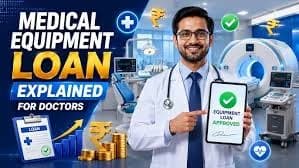
Launching a private medical practice or expanding an existing healthcare facility is a noble and highly rewarding journey. However, the initial capital required to build a modern medical workspace can feel incredibly overwhelming for any healthcare professional.
From leasing the perfect physical location to designing sterile patient examination rooms, the costs pile up very fast. Furthermore, buying advanced medical machinery demands a massive financial commitment that can drain your personal savings.
Securing a specialized doctor loan for setting up clinic or hospital equipment finance bridges this financial gap completely. This customized credit option allows medical professionals to build dream facilities while keeping their personal finances perfectly secure.
3 Direct Answer Snippets for Quick Understanding
1. What is a doctor loan for setting up a clinic?
A doctor loan for setting up clinic spaces is a specialized business loan designed exclusively for registered medical professionals. It provides the necessary capital to lease property, renovate clinical interiors, hire professional staff, and manage initial daily operational costs without depleting personal emergency funds.
2. How does hospital equipment finance benefit medical practices?
Hospital equipment finance allows doctors and medical centers to acquire expensive diagnostic, surgical, or laboratory tools by spreading the cost into monthly installments. The machinery itself usually serves as the underlying loan collateral, allowing you to upgrade your technology without pledging personal assets.
3. Who is eligible for specialized medical practice financing?
To qualify for specialized healthcare financing, applicants must hold a valid medical degree like MBBS, BDS, MD, or MS, and be fully registered with the appropriate medical council. Most lenders require a clean credit history and at least two to three years of active clinical experience.
Understanding Customized Loans for Healthcare Professionals
Standard commercial business loans often carry rigid terms and high interest rates because traditional lenders view startups as high-risk ventures. However, banks look at the healthcare industry through a completely different lens.
Medical professionals possess highly stable income potential and a consistent consumer demand base. Because of this unique stability, financial institutions design specialized loan products featuring lower interest rates and faster approval times.
A tailored doctor loan for setting up clinic spaces or upgrading tools respects your professional status. It cuts through standard bureaucratic red tape, allowing you to focus entirely on patient care rather than complex financial paperwork.
Core Pillars of Medical Practice Financing
When exploring financial assistance for your healthcare career, you will encounter two main structural categories designed to serve distinct operational needs.
1. Capital for Infrastructure and Clinic Setup
This type of funding focuses on the physical environment where you treat your patients. It covers long-term commercial lease deposits, architectural renovations, waiting room furniture, air filtration setups, and essential medical software.
2. Specialized Asset and Equipment Funding
This structural category is dedicated entirely to hospital equipment finance. It helps you procure high-tech tools like digital X-ray systems, advanced ultrasound scanners, laboratory analyzers, dental chairs, or specialized surgical tools directly from manufacturing vendors.
The Strategic Importance of Hospital Equipment Finance
Medical technology evolves at a lightning-fast pace, meaning a machine bought today might become obsolete within a decade. Buying these tools outright using cash reserves can severely cripple your operational liquidity.
By utilizing hospital equipment finance, you effectively let the advanced machinery pay for itself over time. The increased patient traffic and diagnostic revenue generated by the new tool easily cover the monthly loan installments.
Additionally, equipment financing often comes with flexible repayment structures. Lenders offer unique choices like step-up EMIs, where your monthly payments start small and grow larger as your client base steadily expands over the years.
Step-by-Step Guide to Applying for Healthcare Funding
Securing financial backing for your medical practice is highly efficient if you prepare your professional credentials in advance. Follow this simple path to navigate the approval process smoothly.
Step 1: Define Your Practical Requirements
Create a detailed checklist of your exact expenses. Separate your physical infrastructure costs from your specific medical hardware quotes so you can request the correct loan variants.
Step 2: Gather Your Professional and Personal KYC
Prepare your standard identification papers alongside your medical degree certificates and active council registration licenses. Lenders must verify your legal authority to practice medicine before reviewing your financials.
Step 3: Present Financial Statements or Projections
If you run an existing clinic, provide your past bank statements and tax returns. For a brand-new medical startup, present a clear business plan highlighting estimated footfalls and projected monthly revenues.
Step 4: Submit Manufacturer Invoices
For hospital equipment finance, obtain official price quotes directly from your medical equipment vendors. The bank will review these invoices and often disburse the loan capital straight to the supplier to accelerate delivery.
Unsecured vs Secured Options for Doctors
Medical practitioners have the luxury of choosing between secured and unsecured funding models based on the scale of their intended operations.
Unsecured Professional Loans
These loans require absolutely zero collateral or property pledges. They are ideal for quick clinic renovations or minor gear upgrades, usually offering faster processing times but slightly shorter repayment timelines.
Secured Asset Financing
For multi-room hospital setups or massive diagnostic purchases, a secured loan structure is required. The high-value equipment or the clinic real estate serves as the security, unlocking massive borrowing limits and extended repayment tenures.
The Hidden Long-Term Benefits of Specialized Doctor Financing
Beyond simply acquiring physical space and tools, utilizing a specialized medical loan structure offers deep financial advantages that help grow your practice over time.
Preservation of Working Capital: Keeping cash reserves intact ensures you can effortlessly handle daily emergency expenses, staff payroll, and pharmaceutical inventory shifts without stress.
Building a Strong Commercial Credit Profile: Successfully repaying a specialized doctor loan establishes a flawless credit track record, unlocking massive expansion capital when you decide to open secondary branches.
Tax Efficiency Opportunities: In many regions, the interest paid on commercial healthcare loans and the annual depreciation of financed medical gear can be listed as legitimate business expenses to lower your annual tax liabilities.
Conclusion
Investing in a doctor loan for setting up clinic environments or securing reliable hospital equipment finance is a highly strategic step toward career autonomy. It eliminates the financial barriers that prevent brilliant medical minds from providing elite community care.
By choosing specialized healthcare loan structures, you ensure your practice gains access to top-tier technology without placing your personal savings at risk. Take the time to compare diverse lender offers, match your loan tenure to the expected lifespan of your equipment, and build an advanced medical home that serves your patients perfectly for decades to come.
Frequently Asked Questions (FAQs)
1. Can a newly graduated doctor apply for a clinic setup loan immediately?
While newly graduated doctors holding valid licenses can apply, most financial institutions prefer applicants to possess at least two to three years of active clinical or hospital experience. If you are a fresh graduate, applying with a senior medical professional as a co-borrower can drastically improve your approval odds.
2. Is it possible to include maintenance and software costs inside hospital equipment finance?
Yes, many modern healthcare lenders allow you to bundle the costs of annual maintenance contracts, essential operational software, delivery fees, and staff training modules directly into the primary equipment finance package, ensuring you face zero unexpected out-of-pocket setup costs.
3. What happens if the medical machine I financed breaks down before the loan ends?
The physical maintenance of the machine remains your operational responsibility through your vendor warranties or service contracts. You must continue making your regular monthly loan repayments to the bank regardless of the mechanical status of the asset, as the loan agreement is strictly financial.
4. Do lenders require a specific credit score to approve professional doctor loans?
Yes, lenders place a heavy emphasis on your personal credit history when evaluating unsecured professional loans. Maintaining a strong credit score, ideally above 700, ensures you qualify for the lowest available interest rates and get your funding approved without unnecessary delay.
5. Can homoeopathic, dental, or ayurvedic practitioners apply for these specialized doctor loans?
Yes, modern specialized doctor loans are not restricted solely to allopathic physicians. Registered dentists, orthodontists, physiotherapists, homoeopaths, and alternative medicine practitioners with recognized council degrees are fully eligible to apply for clinic setup and equipment funding.
6. Can I use a single doctor loan to cover both property lease down payments and surgical tools?
Yes, you can opt for a comprehensive practice expansion loan that allows for flexible usage. Alternatively, you can run a standard business term loan alongside a specific equipment hypothecation loan simultaneously to optimize your interest rates across different asset classes.Launching a private medical practice or expanding an existing healthcare facility is a noble and highly rewarding journey. However, the initial capital required to build a modern medical workspace can feel incredibly overwhelming for any healthcare professional.
From leasing the perfect physical location to designing sterile patient examination rooms, the costs pile up very fast. Furthermore, buying advanced medical machinery demands a massive financial commitment that can drain your personal savings.
Securing a specialized doctor loan for setting up clinic or hospital equipment finance bridges this financial gap completely. This customized credit option allows medical professionals to build dream facilities while keeping their personal finances perfectly secure.
3 Direct Answer Snippets for Quick Understanding
1. What is a doctor loan for setting up a clinic?
A doctor loan for setting up clinic spaces is a specialized business loan designed exclusively for registered medical professionals. It provides the necessary capital to lease property, renovate clinical interiors, hire professional staff, and manage initial daily operational costs without depleting personal emergency funds.
2. How does hospital equipment finance benefit medical practices?
Hospital equipment finance allows doctors and medical centers to acquire expensive diagnostic, surgical, or laboratory tools by spreading the cost into monthly installments. The machinery itself usually serves as the underlying loan collateral, allowing you to upgrade your technology without pledging personal assets.
3. Who is eligible for specialized medical practice financing?
To qualify for specialized healthcare financing, applicants must hold a valid medical degree like MBBS, BDS, MD, or MS, and be fully registered with the appropriate medical council. Most lenders require a clean credit history and at least two to three years of active clinical experience.
Understanding Customized Loans for Healthcare Professionals
Standard commercial business loans often carry rigid terms and high interest rates because traditional lenders view startups as high-risk ventures. However, banks look at the healthcare industry through a completely different lens.
Medical professionals possess highly stable income potential and a consistent consumer demand base. Because of this unique stability, financial institutions design specialized loan products featuring lower interest rates and faster approval times.
A tailored doctor loan for setting up clinic spaces or upgrading tools respects your professional status. It cuts through standard bureaucratic red tape, allowing you to focus entirely on patient care rather than complex financial paperwork.
Core Pillars of Medical Practice Financing
When exploring financial assistance for your healthcare career, you will encounter two main structural categories designed to serve distinct operational needs.
1. Capital for Infrastructure and Clinic Setup
This type of funding focuses on the physical environment where you treat your patients. It covers long-term commercial lease deposits, architectural renovations, waiting room furniture, air filtration setups, and essential medical software.
2. Specialized Asset and Equipment Funding
This structural category is dedicated entirely to hospital equipment finance. It helps you procure high-tech tools like digital X-ray systems, advanced ultrasound scanners, laboratory analyzers, dental chairs, or specialized surgical tools directly from manufacturing vendors.
The Strategic Importance of Hospital Equipment Finance
Medical technology evolves at a lightning-fast pace, meaning a machine bought today might become obsolete within a decade. Buying these tools outright using cash reserves can severely cripple your operational liquidity.
By utilizing hospital equipment finance, you effectively let the advanced machinery pay for itself over time. The increased patient traffic and diagnostic revenue generated by the new tool easily cover the monthly loan installments.
Additionally, equipment financing often comes with flexible repayment structures. Lenders offer unique choices like step-up EMIs, where your monthly payments start small and grow larger as your client base steadily expands over the years.
Step-by-Step Guide to Applying for Healthcare Funding
Securing financial backing for your medical practice is highly efficient if you prepare your professional credentials in advance. Follow this simple path to navigate the approval process smoothly.
Step 1: Define Your Practical Requirements
Create a detailed checklist of your exact expenses. Separate your physical infrastructure costs from your specific medical hardware quotes so you can request the correct loan variants.
Step 2: Gather Your Professional and Personal KYC
Prepare your standard identification papers alongside your medical degree certificates and active council registration licenses. Lenders must verify your legal authority to practice medicine before reviewing your financials.
Step 3: Present Financial Statements or Projections
If you run an existing clinic, provide your past bank statements and tax returns. For a brand-new medical startup, present a clear business plan highlighting estimated footfalls and projected monthly revenues.
Step 4: Submit Manufacturer Invoices
For hospital equipment finance, obtain official price quotes directly from your medical equipment vendors. The bank will review these invoices and often disburse the loan capital straight to the supplier to accelerate delivery.
Unsecured vs Secured Options for Doctors
Medical practitioners have the luxury of choosing between secured and unsecured funding models based on the scale of their intended operations.
Unsecured Professional Loans
These loans require absolutely zero collateral or property pledges. They are ideal for quick clinic renovations or minor gear upgrades, usually offering faster processing times but slightly shorter repayment timelines.
Secured Asset Financing
For multi-room hospital setups or massive diagnostic purchases, a secured loan structure is required. The high-value equipment or the clinic real estate serves as the security, unlocking massive borrowing limits and extended repayment tenures.
The Hidden Long-Term Benefits of Specialized Doctor Financing
Beyond simply acquiring physical space and tools, utilizing a specialized medical loan structure offers deep financial advantages that help grow your practice over time.
Preservation of Working Capital: Keeping cash reserves intact ensures you can effortlessly handle daily emergency expenses, staff payroll, and pharmaceutical inventory shifts without stress.
Building a Strong Commercial Credit Profile: Successfully repaying a specialized doctor loan establishes a flawless credit track record, unlocking massive expansion capital when you decide to open secondary branches.
Tax Efficiency Opportunities: In many regions, the interest paid on commercial healthcare loans and the annual depreciation of financed medical gear can be listed as legitimate business expenses to lower your annual tax liabilities.
Conclusion
Investing in a doctor loan for setting up clinic environments or securing reliable hospital equipment finance is a highly strategic step toward career autonomy. It eliminates the financial barriers that prevent brilliant medical minds from providing elite community care.
By choosing specialized healthcare loan structures, you ensure your practice gains access to top-tier technology without placing your personal savings at risk. Take the time to compare diverse lender offers, match your loan tenure to the expected lifespan of your equipment, and build an advanced medical home that serves your patients perfectly for decades to come.
Frequently Asked Questions (FAQs)
1. Can a newly graduated doctor apply for a clinic setup loan immediately?
While newly graduated doctors holding valid licenses can apply, most financial institutions prefer applicants to possess at least two to three years of active clinical or hospital experience. If you are a fresh graduate, applying with a senior medical professional as a co-borrower can drastically improve your approval odds.
2. Is it possible to include maintenance and software costs inside hospital equipment finance?
Yes, many modern healthcare lenders allow you to bundle the costs of annual maintenance contracts, essential operational software, delivery fees, and staff training modules directly into the primary equipment finance package, ensuring you face zero unexpected out-of-pocket setup costs.
3. What happens if the medical machine I financed breaks down before the loan ends?
The physical maintenance of the machine remains your operational responsibility through your vendor warranties or service contracts. You must continue making your regular monthly loan repayments to the bank regardless of the mechanical status of the asset, as the loan agreement is strictly financial.
4. Do lenders require a specific credit score to approve professional doctor loans?
Yes, lenders place a heavy emphasis on your personal credit history when evaluating unsecured professional loans. Maintaining a strong credit score, ideally above 700, ensures you qualify for the lowest available interest rates and get your funding approved without unnecessary delay.
5. Can homoeopathic, dental, or ayurvedic practitioners apply for these specialized doctor loans?
Yes, modern specialized doctor loans are not restricted solely to allopathic physicians. Registered dentists, orthodontists, physiotherapists, homoeopaths, and alternative medicine practitioners with recognized council degrees are fully eligible to apply for clinic setup and equipment funding.
6. Can I use a single doctor loan to cover both property lease down payments and surgical tools?
Yes, you can opt for a comprehensive practice expansion loan that allows for flexible usage. Alternatively, you can run a standard business term loan alongside a specific equipment hypothecation loan simultaneously to optimize your interest rates across different asset classes.