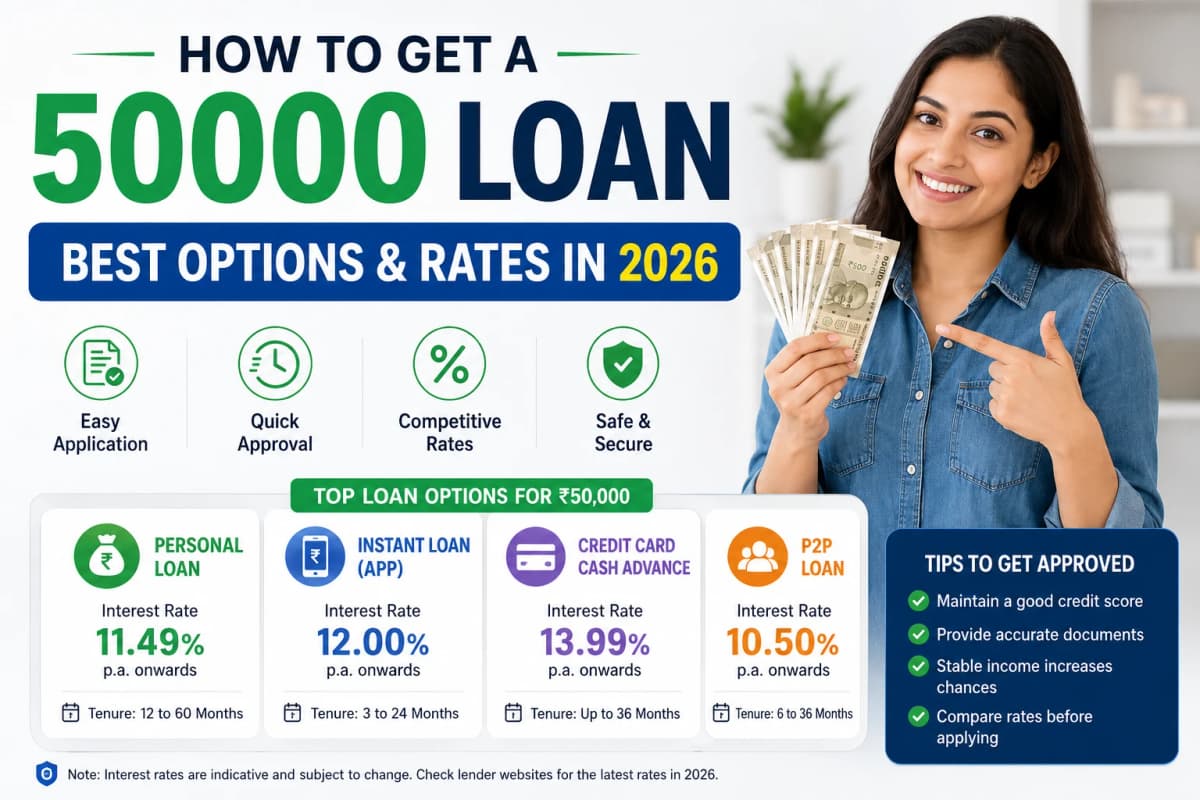
What is a 50000 loan and how does it work? A 50000 loan is typically an unsecured personal loan that provides a lump sum of cash upfront. You repay the $50,000 plus interest in fixed monthly installments over a set term, usually 3 to 7 years. Because it is unsecured, you do not need to provide collateral like a house or car.
How much does a $50,000 loan cost per month? The monthly payment on a 50000 loan depends on your interest rate and term length. At a 10% interest rate over 5 years, the payment is roughly $1,062. Lower credit scores result in higher rates, significantly increasing the total interest paid over the life of the loan.
What credit score is needed for a 50000 loan? To qualify for a 50000 loan with favorable terms, most lenders require a "good" to "excellent" credit score, typically 670 or higher. While some lenders work with "fair" credit (580-669), you will likely face much higher interest rates and stricter income verification requirements.
Understanding the Basics of a 50000 Loan
A 50000 loan falls into the category of "large-sized" personal loans. Unlike smaller "payday" loans, this amount requires a formal application process.
Most lenders view a $50,000 personal loan as a higher risk. This is why they look closely at your financial history before approving the funds.
These loans are generally multi-purpose. You can use the money for almost anything, from medical bills to starting a small business venture.
Common Uses for a $50,000 Personal Loan
1. Debt Consolidation
Many people use a 50000 loan to pay off high-interest credit cards. By moving multiple debts into one loan, you often get a lower interest rate.
2. Home Improvements
A 50000 loan is a popular choice for kitchen remodels or basement finishing. It adds value to your home without the need for a second mortgage.
3. Major Life Events
From large weddings to international adoptions, a $50,000 personal loan can cover significant expenses that savings might not fully reach.
Eligibility Requirements for a 50000 Loan
Lenders want to ensure you can pay the money back. They use specific criteria to judge your "creditworthiness" before signing off on the deal.
Credit Score Impact
Your credit score is the most important factor for a 50000 loan. It tells the lender how responsibly you have handled debt in the past.
Scores above 720 usually get the "prime" rates. If your score is below 640, you might need a co-signer to get approved for such a large amount.
Income and Employment
To handle a $50,000 personal loan, you need a steady income. Lenders will ask for pay stubs, tax returns, or bank statements to verify your earnings.
Debt-to-Income Ratio (DTI)
DTI compares how much you owe monthly to how much you earn. Most lenders prefer a DTI below 36% to approve a 50000 loan.
Where to Apply for a 50000 Loan
Traditional Banks
Big banks offer competitive rates for a 50000 loan if you are an existing customer. However, they usually have the strictest approval standards.
Credit Unions
Credit unions are member-owned. They often provide lower interest rates on a $50,000 personal loan compared to traditional national banks.
Online Lenders
Online platforms are known for speed. You can often get a 50000 loan approved within 24 to 48 hours, though rates can vary widely.
Interest Rates and Fees to Watch For
The "sticker price" of a 50000 loan isn't just the $50,000. You must account for the Annual Percentage Rate (APR) and other hidden costs.
Fixed vs. Variable Rates
Most $50,000 personal loans come with fixed rates. This means your monthly payment stays the same for the entire life of the loan.
Origination Fees
Some lenders charge a fee to "process" the 50000 loan. This can range from 1% to 8% of the total loan amount, taken out of the payout.
Prepayment Penalties
Always check if your lender charges a fee for paying off your 50000 loan early. Honest lenders usually allow early repayment without penalties.
Step-by-Step: How to Apply for a 50000 Loan
Check Your Credit: Get a free credit report to see where you stand before the lender looks.
Shop Around: Get quotes from at least three different lenders to compare APRs on a $50,000 personal loan.
Pre-Qualify: Many online lenders allow you to see your potential rate for a 50000 loan without a "hard" credit pull.
Submit Documents: Have your ID, proof of address, and income verification ready to go.
Review the Contract: Read the fine print of your 50000 loan carefully before signing.
Pros and Cons of a 50000 Loan
The Pros
Fixed Payments: Predictable monthly costs make budgeting easier.
Lower Interest: Usually cheaper than credit cards for large amounts.
No Collateral: Your house isn't at risk if it’s an unsecured 50000 loan.
The Cons
High Monthly Cost: A $50,000 personal loan requires a large monthly commitment.
Total Interest: Over 5 or 7 years, you will pay back much more than the original $50,000.
Credit Risk: Missing payments will severely damage your credit score.
Alternatives to a 50000 Loan
If a $50,000 personal loan feels too expensive, you might consider other paths.
A Home Equity Line of Credit (HELOC) might offer lower rates because it is secured by your home. However, it carries more risk for the homeowner.
Alternatively, you could try to save up for a portion of the cost and take a smaller loan to cover the remaining balance.
Conclusion
Getting a 50000 loan is a powerful tool for achieving your financial goals. Whether it’s for debt relief or home growth, clarity is your best friend.
Always compare lenders, check the fine print, and ensure the monthly payment fits comfortably within your budget. A $50,000 personal loan is a long-term commitment, so take your time to choose the right partner.
Frequently Asked Questions (FAQs)
1. Can I get a 50000 loan with a 600 credit score? It is difficult but possible. Most traditional banks will decline this, but some specialized online lenders work with "fair" credit. Expect very high interest rates and perhaps a requirement for a co-signer or collateral.
2. How long does it take to get the money from a 50000 loan? Online lenders can often fund a $50,000 personal loan within 1 to 3 business days. Traditional banks may take a week or longer due to more manual verification processes.
3. Will applying for a 50000 loan hurt my credit score? "Pre-qualifying" usually uses a soft pull, which does not hurt your score. However, once you officially apply, the lender does a "hard inquiry," which may temporarily drop your score by a few points.
4. Is the interest on a 50000 loan tax-deductible? Generally, no. Personal loan interest is not tax-deductible. The only exception is if the 50000 loan is used specifically for business expenses or certain qualified home improvements (and even then, rules are strict).
5. What happens if I can't pay back my 50000 loan? If you default on an unsecured $50,000 personal loan, your credit score will crash. The lender may send your account to collections or sue you to garnish your wages. Always contact your lender early if you face financial hardship.
6. Can I use a 50000 loan to start a business? Yes, many people use personal loans for business startup costs. However, be aware that you are personally liable for the debt even if the business fails.