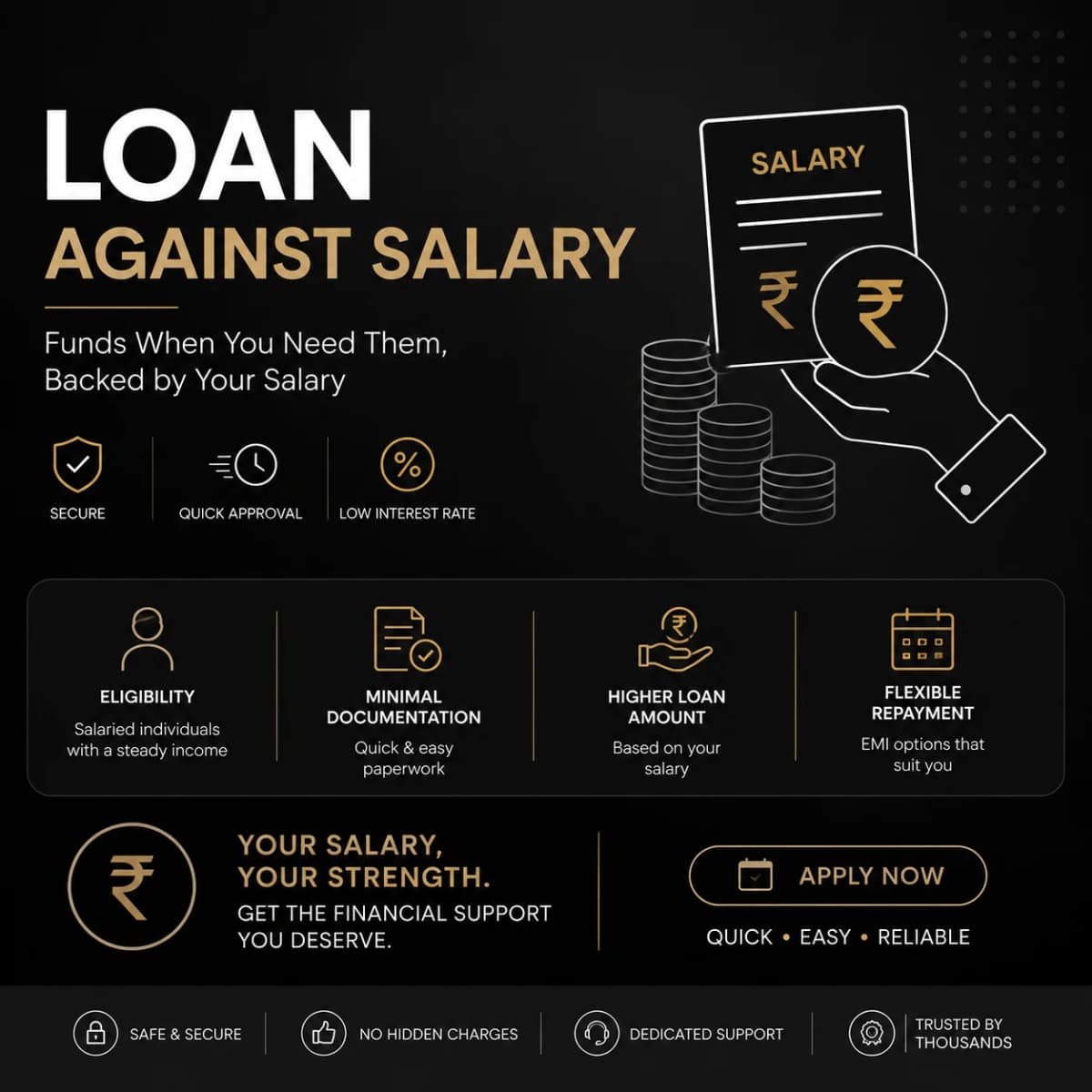
Direct Answer Snippet 1: What is a loan against salary? A loan against salary is a short-term personal credit facility designed for salaried professionals. It allows you to borrow a portion of your upcoming paycheck to cover urgent expenses. Unlike traditional long-term loans, these are typically repaid in full or via short-term installments once your next salary is credited to your bank account.
Direct Answer Snippet 2: How does a salary advance loan work? Lenders evaluate your monthly net income and employment stability to determine your borrowing limit. Once approved, the funds are disbursed directly to your salary account. The repayment is often automated through an E-Mandate or post-dated checks, ensuring the loan is settled as soon as your monthly earnings arrive.
Direct Answer Snippet 3: Who is eligible for an instant salary loan? To qualify, you generally need to be a full-time employee at a registered company with a steady monthly income. Most lenders require a minimum age of 21 and a decent credit score. Because the loan is backed by your recurring salary, the processing time is much faster than standard bank loans.
Introduction to Salary-Based Borrowing
Life often brings unexpected expenses that don't wait for payday. Whether it is a medical emergency or a sudden car repair, you might need cash fast.
A loan against salary acts as a financial bridge. It helps you access funds based on the work you have already performed but haven't been paid for yet.
In this guide, we will break down how these loans work. We want to help you make an honest, informed decision about your finances without the jargon.
What Exactly is a Loan Against Salary?
At its core, a loan against salary is a type of unsecured personal loan. It is specifically tailored for people who receive a fixed monthly paycheck.
Think of it as an "advance" on your own money. Instead of waiting until the end of the month, a lender gives you the cash now.
Because these loans are "unsecured," you do not need to pledge your house or car as collateral. Your monthly salary acts as the security for the lender.
Why People Choose an Instant Salary Loan
Traditional bank loans can take weeks to process. When you are in a rush, you need something faster and more flexible.
1. Speed of Disbursement
Most instant salary loan providers use digital platforms. This means you can get approved in minutes and receive funds within hours.
2. No End-Use Restrictions
You can use the money for anything. Whether it is paying school fees, wedding costs, or a utility bill, the choice is entirely yours.
3. Minimal Documentation
Since the lender only needs to verify your employment and income, the paperwork is very light compared to a home or business loan.
Key Features of a Salary Advance Loan
Before you apply, it is important to understand the specific characteristics of this financial product. It differs from a standard credit card or a long-term mortgage.
Short Repayment Tenure
These loans are meant to be temporary. Usually, you pay them back within 1 to 12 months, depending on the amount borrowed.
High-Frequency Borrowing
Once you pay off one loan against salary, many lenders allow you to borrow again immediately if another need arises.
Fixed Interest Rates
Most lenders offer a fixed rate of interest. This means your monthly installments will stay the same until the debt is fully paid off.
Eligibility Criteria for a Loan Against Salary
Lenders want to be sure you can pay them back. Here are the common requirements for a personal loan for salaried individuals:
Age: You must typically be between 21 and 60 years old.
Employment: You must be a confirmed employee at a private or public sector company.
Income: There is usually a minimum monthly salary requirement (e.g., 20,000 to 30,000 units of currency).
Credit Score: While some lenders accept "new to credit" users, a score above 650 generally helps get better rates.
Documents Required for the Application
To keep the process of an advance salary online application smooth, have these digital copies ready:
Identity Proof: A government-issued ID like a Passport or Driver’s License.
Address Proof: A recent utility bill or rental agreement.
Income Proof: Salary slips for the last three to six months.
Bank Statements: Statements from your primary salary account for the last six months.
How Interest Rates and Fees Work
Transparency is vital when borrowing money. A loan against salary might have different costs than a standard bank loan.
Interest Rates
Interest is often calculated monthly. Because these are short-term and unsecured, the rates might be slightly higher than a 5-year personal loan.
Processing Fees
Lenders usually charge a one-time fee to cover the cost of verifying your documents and setting up the loan.
Late Payment Penalties
If you miss a payment, the costs can add up quickly. Always ensure your salary account has enough balance on the due date.
Steps to Apply for a Loan Against Salary Online
The digital age has made borrowing very simple. Follow these steps to secure your funds:
Step 1: Research Lenders
Compare different fintech apps and banks. Look for those with the best reputation and lowest hidden costs.
Step 2: Check Your Limit
Use an online calculator to see how much loan against salary you are eligible for based on your monthly take-home pay.
Step 3: Fill the Application
Enter your personal details, employment history, and the amount you wish to borrow on the lender’s website or app.
Step 4: Upload Documents
Scan and upload your salary slips and bank statements. Ensure the images are clear so the automated systems can read them.
Step 5: Verification and Approval
The lender will verify your details. If everything matches, you will receive a digital loan agreement to sign.
Step 6: Money in Your Account
Once signed, the funds are usually transferred to your registered salary account almost instantly.
Pros and Cons of Salary Loans
Every financial product has two sides. It is important to look at both before committing your future income.
The Benefits
Accessibility: Even those with a limited credit history can often get approved.
Convenience: The entire process is paperless and can be done from a smartphone.
Credit Building: Paying back your loan against salary on time can actually improve your credit score.
The Risks
Cost: If you don't pay on time, interest and penalties can become expensive.
Debt Cycle: Some people fall into a habit of borrowing every month, which can hurt long-term savings.
Reduced Take-Home Pay: Remember that your next paycheck will be smaller because the loan repayment is deducted.
Smart Tips for Borrowing Against Your Salary
To stay financially healthy, follow these honest tips when taking an instant salary loan.
Only Borrow What You Need Just because you are eligible for a large amount doesn't mean you should take it. Only borrow the exact amount needed for your emergency.
Read the Fine Print Check for "hidden" charges like convenience fees or "insurance" costs that you might not actually need.
Plan Your Budget Since your next salary will be lower after the repayment, plan your groceries and rent payments in advance.
Conclusion
A loan against salary is a powerful tool for managing short-term cash flow gaps. It provides a safety net for salaried workers when unexpected bills arrive.
However, it should be used responsibly. Always treat it as a temporary solution rather than a permanent way to fund your lifestyle.
By understanding the terms, choosing a reputable lender, and borrowing only what is necessary, you can navigate financial hurdles with confidence and ease.
Frequently Asked Questions (FAQs)
1. Will taking a loan against salary affect my credit score?
Yes, it can. If you pay back the loan on time, it will likely help improve your credit score. However, missing a payment will result in a negative report to credit bureaus, making it harder to get loans in the future.
2. Can I get a salary loan if I just started my job?
Most lenders require you to have been employed at your current company for at least 3 to 6 months. This gives them confidence that your income is stable and will continue during the loan period.
3. How much can I borrow against my salary?
Typically, you can borrow anywhere from 50% to 200% of your monthly net salary. The exact amount depends on your current debts, your monthly expenses, and the specific policies of the lender.
4. Are there any hidden charges in an instant salary loan?
Honest lenders will disclose all fees upfront. Common fees include a processing fee and GST. Always check if there are "pre-payment" charges if you decide to pay the loan back earlier than planned.
5. What happens if I lose my job while I have a loan?
You are still legally responsible for the debt. It is best to contact your lender immediately to discuss a restructured payment plan. Ignoring the debt will lead to legal action and a ruined credit profile.
6. Can I apply for a loan against salary if I already have a home loan?
Yes, as long as your total monthly debt payments (including the new loan) do not exceed a certain percentage of your income (usually 50-60%). Lenders will check your "Debt-to-