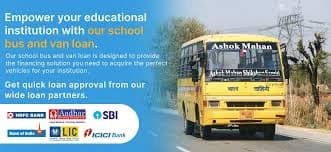
Providing safe and reliable transit for school students is a highly sustainable business across developing urban areas. As smaller towns grow into busy economic hubs, the demand for dedicated student transport services increases rapidly.
However, purchasing a brand-new commercial bus requires a massive upfront investment that can heavily strain a small firm's working cash flow. To maintain profitability, many regional fleet owners opt for pre-owned vehicles. Finding the right used bus loan finance options for school transport operators tier 2 cities makes this expansion easy.
This comprehensive guide will break down how transport entrepreneurs in growing cities can secure low-cost financing for second-hand buses, satisfy safety rules, and manage operational capital seamlessly.
What are the used bus loan finance options for school transport operators tier 2 cities?
These are specialized asset-backed commercial vehicle loans offered by public banks and regional small finance banks. They allow transport operators in emerging cities to purchase pre-owned school buses with flexible repayment tenures, minimal paperwork, and customized EMI options tailored to the academic calendar.
How do lenders evaluate an 8 or 10-year-old used school bus loan?
Lenders evaluate the loan value based on a physical engineering inspection of the bus. They review the vehicle's remaining operating lifespan, its active RTO fitness certificate, engine structural performance, and mandatory student safety features before clearing the final loan amount.
Can a first-time operator in a Tier 2 city get a used school bus loan?
Yes, first-time transport operators can access custom pre-owned funding options. While traditional large banks might request existing fleet history, regional Non-Banking Financial Companies (NBFCs) and small finance institutions approve loans based on a valid school transport contract and basic property assets.
Why Tier 2 School Transport Operators Prefer Pre-Owned Buses
Operating a transport fleet in Tier 2 cities comes with unique cost structures. Route distances are typically shorter than in mega metro regions, but monthly fee collection structures remain highly price-sensitive.
Purchasing a brand-new passenger bus results in steep price depreciation within the first three years of use. By selecting a high-quality second-hand bus, an operator avoids this major value drop while serving the exact same number of students.
Securing a used bus loan finance options for school transport operators tier 2 cities allows business owners to distribute their capital efficiently. It keeps monthly EMIs low, leaving plenty of cash to handle daily fuel, driver salaries, and emergency maintenance.
Valid School Tie-Up or Route Contracts
Lenders need to see steady income proof. Providing a copy of your active transport contract with a local private school or a verified student parent roster gives banks immense confidence.
Minimum Banking Track Record
You must present six months of active transactions from your primary business or personal savings bank account. Clean transaction logs prove that you possess the financial discipline to manage recurring loan liabilities.
Local Residential Verification
Holding a permanent address or a commercial workshop yard in the target Tier 2 city acts as a strong stability signal for regional vehicle finance institutions.
Mandatory Safety and RTO Paperwork for School Buses
Passenger transit loans carry high legal responsibility. Lenders will completely reject your application if the second-hand vehicle fails to meet the strict safety standards mandated by transport laws.
Before applying for a loan, you must verify that the vehicle seller holds a clear legal title and that the asset complies with all local educational transport guidelines.
RTO Fitness Certification: A fully updated, non-expired fitness sheet proving the vehicle is mechanically safe for school children.
Speed Governor Installation Receipt: Legal proof that an approved speed limit device is physically active on the bus engine.
Yellow Exterior Paint Compliance: The bus must be legally registered as a school transport asset, featuring standard yellow color markings and emergency exit exits.
Third-Party Passenger Insurance: A valid commercial vehicle insurance policy covering all occupants inside the cabin.
Step-by-Step Online and Offline Application Method
Acquiring a used bus loan finance options for school transport operators tier 2 cities plan can be completed seamlessly if you follow a structured execution path.
Step 1: Select a Certified Commercial Vehicle
Identify a well-maintained used bus from a registered dealer or an individual seller. Ensure the vehicle’s total age will not cross 12 to 13 years by the time your loan term ends.
Step 2: Approach Regional Small Finance Specialists
Visit local branches of specialized institutions like Equitas Small Finance Bank, Chola Finance, HDB Financial Services, or private commercial banking hubs.
Step 3: Upload Financial and Asset Details
Provide your basic identity proofs (Aadhaar and PAN), bank statements, and the registration book (RC copy) of the pre-owned bus for primary review.
Step 4: Asset Valuation and Inspection
The finance firm will dispatch an independent vehicle evaluator to check the bus chassis, tire conditions, and passenger seating health to determine its current open-market value.
Step 5: Sanction and Direct Pay-Out
The bank issues an official approval letter, funding up to 80% to 90% of the evaluated vehicle value. After registering a financial lien mark at the regional RTO, the funds are released straight to the seller.
Conclusion: Scale Your Transport Fleet Responsibly
Leveraging used bus loan finance options for school transport operators tier 2 cities is an intelligent, low-risk strategy to build a profitable logistics network. It bridges the gap between limited initial savings and the growing public demand for secure student travel.
As long as you pick mechanically sound buses, maintain your credit track record honestly, and match your monthly EMIs with your school collection calendars, this financing path provides a smooth journey toward expanding your regional transport enterprise.
Frequently Asked Questions
What is the maximum loan tenure available for a pre-owned school bus?
Lenders typically offer a flexible repayment tenure ranging from 12 months to 60 months. The exact loan timeline depends heavily on the current age and technical fitness condition of the passenger bus.
Are interest rates higher for used commercial buses in Tier 2 cities?
Interest rates for pre-owned commercial vehicle loans generally range between 11% and 18% per year. While slightly higher than new bus loans, the overall loan amount is much lower, making your net monthly EMI burden highly manageable.
Can I get a holiday or moratorium on EMIs during summer school vacations?
Yes. Many specialized regional transport financiers offer customized repayment structures. You can negotiate lower EMI payments or brief repayment holidays during May and June when schools remain closed for summer break.
What is the maximum age limit for a used bus to qualify for a loan?
Most financial institutions prefer that the bus age does not cross 10 years at the time of application, and it must not exceed 13 to 15 years by the date of final loan closure.
Can I include the cost of bus repainting and repair inside the main loan?
Some specialized small finance banks offer add-on fitness renewal or modification loans alongside the primary purchase loan to help cover initial body repair, painting, and safety compliance costs.
How long does the RTO hypothecation removal process take after the loan ends?
Once you pay your final installment, the bank issues a No Objection Certificate (NOC) within a week. You can then submit this file to your local RTO to remove the lender's name from your vehicle papers within 15 to 30 days.